Key insights and lessons learned from sending over 18 million emails, including deliverability, engagement, and strategy.
Over the years, I’ve sent more than 18 million emails.
That’s a lot of campaigns, data, and lessons about what works (and what doesn’t) in digital marketing. When you operate at that scale, you start to see patterns very quickly.
Some of the strategies that worked a decade ago still apply today. But the reality is that the email marketing landscape has changed dramatically.
Open rates are lower. Inboxes are more crowded. And capturing someone’s attention is harder than ever.
Here’s what sending millions of emails taught me and how businesses can adapt their marketing strategies in today’s environment.
The Golden Days of Email Marketing
If you go back 10–12 years, email marketing was an incredible tool.
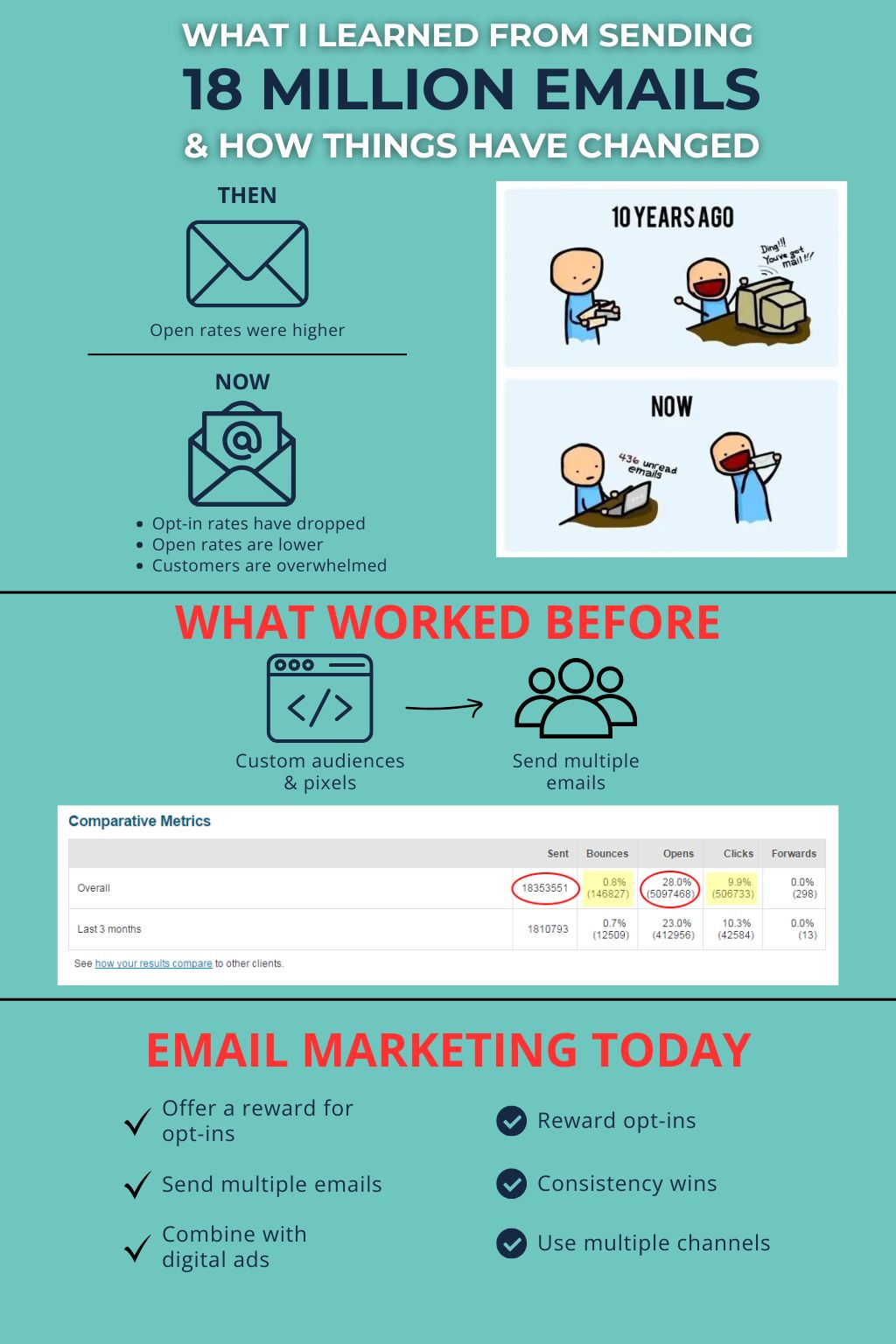
Industry studies showed open rates of 28% or higher, and getting someone to opt into your email list was much easier than it is today.
A well-written email could reach thousands of people and generate leads almost immediately.
At the time, the strategy was simple:
- Build a large email list.
- Send one or two high-quality emails each month.
- Generate leads and engagement quickly.
Because inboxes were less crowded, email marketing felt almost like a direct line to your audience.
But one major change shifted the entire industry.
The Day Email Marketing Changed
One of the biggest turning points in email marketing happened when Gmail introduced the Promotions tab.
Before this change, most marketing emails landed directly in the primary inbox. When someone opened their email, your message appeared alongside personal messages from friends, colleagues, and clients.
Once Gmail introduced the Promotions tab, marketing emails began getting filtered into a separate category specifically designed for promotions and advertising.
For users, this was a fantastic improvement. Their primary inbox became cleaner and easier to manage.
For marketers, however, it changed everything.
Instead of competing with a few personal emails, your message was now competing with dozens — sometimes hundreds — of marketing emails sitting inside the Promotions tab.
As a result, open rates across the entire industry began to decline. Email marketing didn’t disappear, but it became much harder to stand out.
Why Email Marketing Is Harder Today
Fast forward to today, and several factors make email marketing more challenging than it used to be.
1. Opt-In Rates Have Dropped
People are far more cautious about sharing their email addresses.
Your inbox is personal space, and most people protect it carefully. Simply asking someone to “subscribe to our newsletter” is rarely enough anymore.
Today, audiences expect clear value in exchange for their email address.
2. Open Rates Are Lower
Between spam filters, promotions tabs, and inbox clutter, many marketing emails never get opened.
Even a great subject line can go unnoticed if it’s buried in a crowded inbox.
3. Customers Are Overwhelmed
Your ideal customer might receive dozens or even hundreds of emails every day.
Cutting through that noise requires more than just sending a message. It requires relevant content, consistent communication, and multiple touchpoints.
Why Email Still Matters
Despite these challenges, email is still incredibly valuable.
In fact, there are certain types of communication where email remains essential:
- Sending invoices
- Important client updates
- Contract discussions
- Long-form explanations
- Documentation and records
When someone gives you their email address, they are giving you direct access to communicate with them without relying on platform algorithms.
That alone makes email one of the most valuable assets a business can have.
But relying on email alone is no longer enough.
The Shift Toward Pixel Tracking and Retargeting
Over the years, our marketing strategy has increasingly shifted toward something many businesses still underestimate:
Pixel tracking and retargeting.
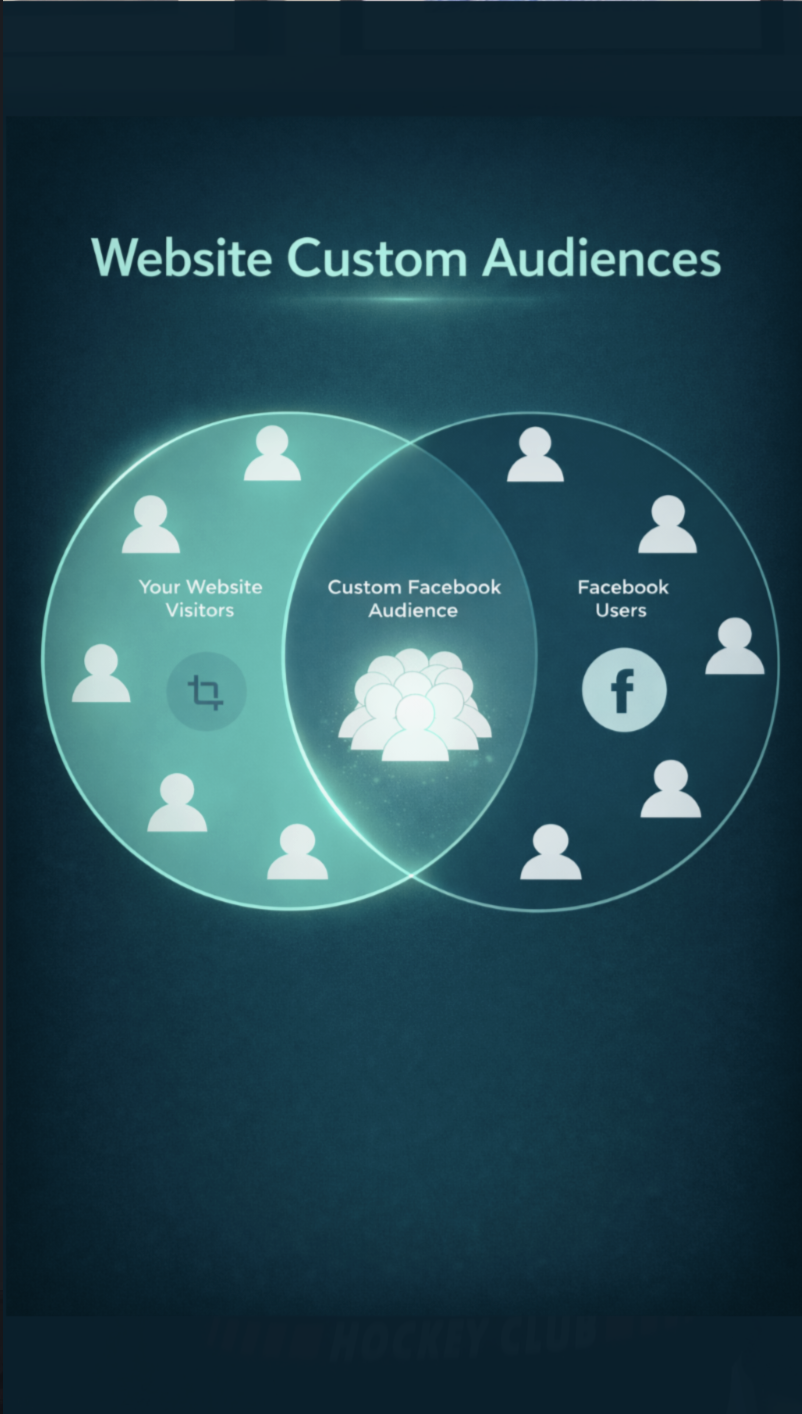
When someone visits your website, a small tracking pixel can place that visitor into a custom audience.
This allows you to show targeted advertisements to that person later across different platforms.
For example, Facebook allows businesses to create custom audiences of website visitors for up to 180 days.
That means someone who visits your website today could continue seeing your ads six months later, even if they never open another email from you.
Instead of relying on a single email to convert a prospect, you create multiple brand touchpoints across different platforms.
This dramatically increases visibility and long-term conversion rates.
Email + Retargeting Is Where the Real Power Is
The most effective strategy today isn’t email or retargeting.
It’s email combined with retargeting.
A typical marketing journey might look like this:
- Someone reads a blog post on your website.
- They join your email list.
- They receive helpful content and insights through email.
- At the same time, they begin seeing your ads across social media.
- Over time, repeated exposure builds trust and familiarity.
Instead of relying on a single message to drive action, your brand becomes visible across multiple channels.
By the time someone is ready to buy, sell, or inquire, your business is already top of mind.
Modern Email Marketing Strategies
Email marketing still works but the strategy needs to evolve.
Here are several approaches that continue to perform well today.
1. Offer Real Value for Opt-Ins
People need a reason to share their email address.
This could include:
- Free guides
- Checklists
- Exclusive insights
- Industry reports
- Helpful educational content
The key is to make the value clear and immediate.
2. Send Multiple Thoughtful Emails
Modern email marketing is not about sending one message.
It’s about nurturing relationships over time.
A strong sequence might include:
- A welcome email introducing your brand
- Follow-up emails that build trust
- Educational emails that provide useful insights
- Occasional offers or opportunities
Consistency matters far more than volume.
3. Combine Emails With Ads
Email becomes significantly more powerful when combined with advertising.
For example:
Someone may open your email but not click. Later, they see your brand again through a retargeted ad.
This repeated exposure strengthens brand recognition and increases conversion rates.
4. Segment Your Audience
Not every subscriber has the same interests.
Segmenting your list allows you to send more relevant messages.
For example:
- Prospective buyers vs business sellers
- Different industries
- Past engagement behavior
Segmented emails consistently outperform generic campaigns.
5. Focus on Subject Lines and Timing
Your subject line determines whether someone opens your email.
Short, clear, benefit-driven subject lines typically perform best.
Timing also plays a role. Testing different send times can reveal when your audience is most likely to engage.
Key Takeaways
After analyzing millions of emails over the years, several important lessons stand out.
Quality Beats Quantity
Sending too many emails can overwhelm your audience. Focus on delivering useful, relevant content rather than constant messages.
Trust Is Everything
People are protective of their inboxes. Consistency, transparency, and value are essential for maintaining trust.
Incentives Drive Signups
A clear reward for subscribing dramatically improves opt-in rates.
Consistency Wins
Email marketing is about long-term relationships, not one-off campaigns.
Use Multiple Channels
Email works best when combined with other channels like retargeting ads and content marketing.
Always Experiment
Email marketing is constantly evolving. Testing subject lines, timing, and content formats is essential for improving results.
How Businesses Can Apply These Lessons Today
Whether you’re running a startup, a professional service firm, or a brokerage like ours, these strategies can help improve your marketing results.
Create a valuable lead magnet
A guide on buying or selling a business can attract the right audience.
Segment your email list
Separate potential buyers from sellers and tailor your communication accordingly.
Use multiple touchpoints
Combine email marketing with retargeting ads and valuable content.
Test and improve continuously
Subject lines, content structure, and timing should always be optimized.
Final Thoughts
Sending 18 million emails taught me something important:
Numbers alone don’t create results.
What really matters is building trust, delivering value, and staying visible to your audience over time.
Email marketing is not dead. It has simply evolved.
Today, the most successful businesses combine:
- Email marketing
- Website tracking
- Retargeting campaigns
- Consistent content creation
This multi-channel approach ensures your brand stays in front of your audience long after their first interaction.
At VI Business Brokers, we don’t just help sell businesses. We also help owners grow, automate, and position their companies for long-term success.
Because the best business exits start with strong, well-built companies.