AI is transforming many industries and music is no exception. Lately you may have noticed more “AI music” everywhere, especially on YouTube and even on your Spotify playlists. From AI-generated soul vibes to remixes that sound eerily like familiar voices, technology today is making music creation faster and more automated than ever.
But the big question remains: how long until Spotify is all AI music? In this article, we’ll explore what’s happening now, what’s legal, what’s ethical, and why Spotify is unlikely to become all AI in the near future.
What We Mean By AI Music
AI music refers to songs that are created, partly or fully, using artificial intelligence. That includes:
-
Music where melodies and rhythms are generated by AI
-
Vocals created or cloned by AI models
-
Remixed or recreated classics using digital tools
-
Channels like AI Smoke Sessions that put soul or classic vibe spins on tracks using AI
This trend is spreading fast on platforms like YouTube and TikTok. For example, some channels use AI to mimic the feel of old school soul or hip-hop beats. You might have even seen AI music with voices that sound like famous artists, or playlists that seem almost entirely synthetic.

Where AI Music Is Already Making Waves
AI Bands on Spotify
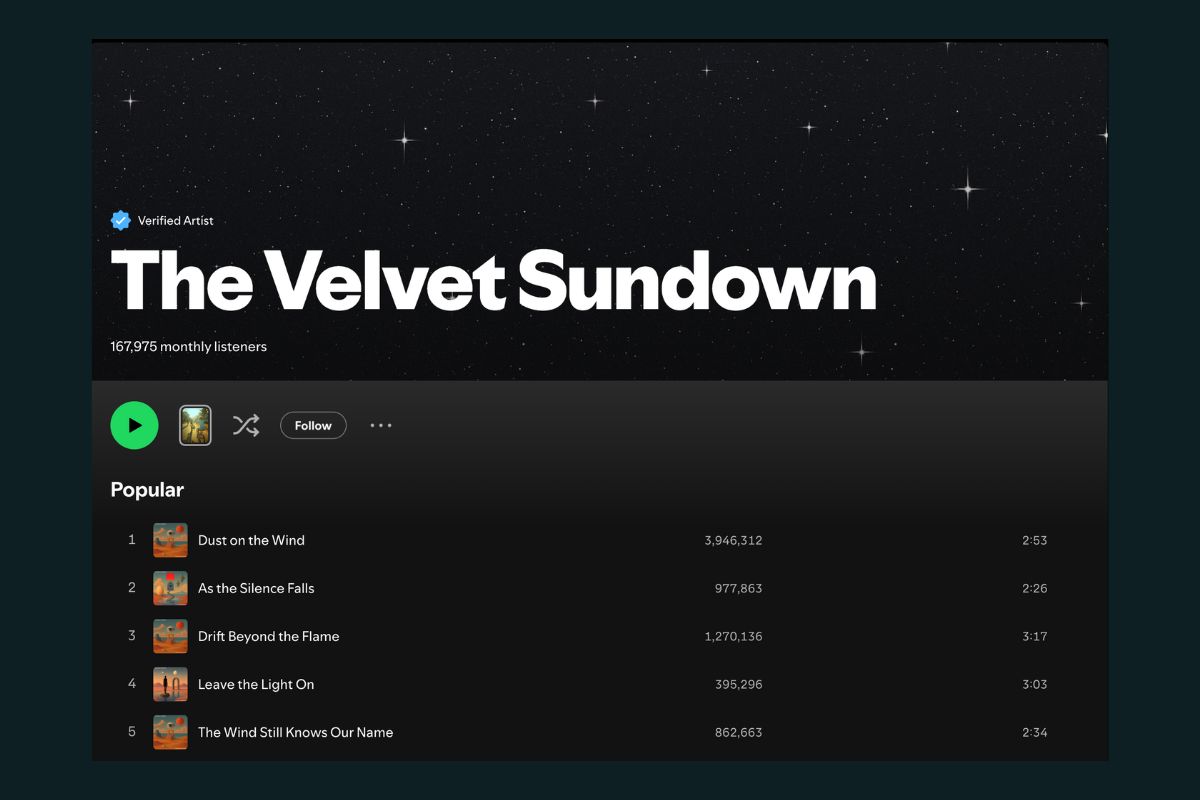
A striking example of AI music is The Velvet Sundown, a band that built profiles, artwork, backstory, and two albums entirely using AI and then gained over 1 million monthly streams on Spotify before people realized it wasn’t a real human band. Music insiders later questioned whether listeners should be warned about synthetic content and called for clearer labeling standards on streaming services.
This case sparked wider debate about transparency and authenticity in music streaming. Critics note that when listeners don’t know they’re streaming AI music, they can’t make informed choices and independent artists could be overshadowed by machine-generated tracks trained on unknown data.
Fraud and Bot Streaming
Another issue emerging alongside AI music is fraudulent streams. On some platforms, such as Deezer, up to 70 % of AI track streams were suspected of being generated by bots in order to collect royalties fraudulently. This problem highlights how automation can be used not just for creativity but for exploitation.
How AI Music Tools Like Udio and Suno Work
Udio and AI Music Creation
Tools such as Udio provide an AI-based text-to-music generation platform. Users can type in prompts including lyrics, musical style, genre, and emotional direction and Udio will output a song with instrumentation and vocals. The service aims to be accessible for beginners and professionals alike.
Originally, Udio allowed users not only to generate songs but also to download them and use them if rights were clear. However, changes in legal frameworks and settlements with major labels like Universal Music have led to restrictions such as removing download features and evolving toward licensed models, meaning original music and training datasets will need to be authorized.
Udio and similar platforms like Suno are examples of how generative models are becoming mainstream tools for music production and how the law is adapting to balance innovation with rights protection.
User Upload and Remix
Some AI tools also allow creators to upload their own recordings (like stems or vocal tracks) and remix them using AI-assisted style tools. This level of control means artists can use AI as a creative partner rather than a replacement allowing humans to shape sound while AI handles some of the technical generation.
Artists are experimenting with this already, using AI to expand their sound, remix old material, or produce background tracks quickly.
Legal and Ethical Challenges
Voice Cloning and Star Voices
One of the big concerns around AI is whether it can legally mimic the voices of real artists. Platforms generally prohibit uploading tracks that impersonate famous artists without permission, and services like Spotify enforce these policies when they are alerted to violations.
A notable example from 2023 was Heart on My Sleeve, a viral track that used AI vocals claiming to be Drake and The Weeknd. That song was taken down for infringing content.
Rights Ownership and Royalties
When AI systems are trained on existing music (especially without warranty, licensing, or compensation) artists and rights holders raise concerns. Music industry groups and labels have called for clear rules requiring AI generated content to include transparent royalty arrangements and consent.
Spotify itself is working on industry-standard AI disclosures, which will allow creators to indicate in credits how much AI was involved in making a track.
Rights Issues: What Happens With AI Music?
Rights and royalties are central issues in the AI music future.
Who Owns the AI Music?
When AI generates music, questions arise like:
- Who owns the rights?
- Should original artists be compensated if their work was used to train an AI?
- How do streaming royalties work for AI creations?
These questions are still being worked out globally, and research is underway into fair royalty models and copyright frameworks.
Spotify and other platforms are part of industry talks about transparency and fair compensation.
Why AI Music Is Everywhere on YouTube
YouTube has a lot of AI music content because it allows users to upload creative experiments and remix culture thrives there. There are channels like AI Smoke Sessions that explore AI soundscapes and soul vibes using AI tools. These experiments often reach big audiences and can feel like they’re shaping trends.
However, YouTube also labels generative AI content and has its own rules for synthetic audio. That means audiences can often still tell the difference between official releases and experimental AI tracks.
Real Examples You May Have Noticed
Here are some things people are talking about online:
-
Users on Reddit reporting AI music spam in Spotify discover playlists.
-
AI artists accumulating significant listeners even without clear human creators.
-
Some AI-generated tracks being pulled for copyright reasons.
These cases show that AI music exists and is growing, but platforms and artists are pushing back to maintain control.
The Listener’s Perspective
Many listeners don’t even realize when a song is AI-made, some surveys have shown that most people can’t distinguish AI-generated music from human-created tracks.
For listeners, this raises questions like:
- Should AI music be labeled clearly?
- Do you want algorithms playing AI tracks in your playlists?
- Should real and AI musicians compete on the same streaming platform?
These are not just technical decisions and they affect how we value creativity and culture.
The Future: Balance Between AI and Human Artistry
So how long till Spotify is “all AI music”?
The answer in 2025 is: not anytime soon.
AI is becoming more important in creation, but human artistry still matters more for:
- Original emotional expression
- Live performance and culture
- Legal rights and ownership
- Fan connection and identity
Instead of replacing human musicians, most experts see AI as another tool in the creative toolbox. Something that might help create music faster, remix tracks in new ways, and experiment with sound.
Spotify and the wider industry are figuring out systems to balance innovation with rights and authenticity. That includes protecting artists, enforcing copyright, and possibly labeling AI content in the future.
Why Spotify Won’t Be All AI Music Soon
Despite the growth of AI music, several factors make an all-AI future on Spotify unlikely in the near term:
Legal Requirements
Copyright, licensing, performer rights, and royalties still control what can be published and monetized. AI tracks must respect these or face takedown actions and legal challenges.
Platform Policies
Spotify and others refine rules to protect human artists and ensure listeners aren’t misled. AI may be part of the ecosystem, but transparency and fairness are priorities.
Listener and Artist Preferences
Most listeners value human creativity, story, and emotion in music — attributes AI cannot fully replicate. Many artists and fans want to support real human artistry, not synthetic clones.
Conclusion
So how long until Spotify is all AI music?
The simple answer is: not anytime soon.
AI music will continue to grow, and more tools like Udio and Suno are making it easier for creators to experiment with AI-generated sounds. But legal rights, platform guidelines, artist pushback, and listener preferences will keep human music at the heart of streaming platforms for the foreseeable future.
Instead of replacing human artists, AI is likely to become another creative tool, helping musicians explore new ideas, remix classics, and generate inspiration — while the industry evolves rules to protect creativity and fairness.