Buying an existing website is one of the fastest ways to start earning online. That’s if you pick the right platform and do proper due diligence. Below are four reputable marketplaces you can use to find websites and online businesses that fit different budgets and risk profiles. I explain who each marketplace is best for, the kinds of listings you’ll find, and a quick note on common valuation multiples (many smaller sites still trade in the ~1–2× revenue range).
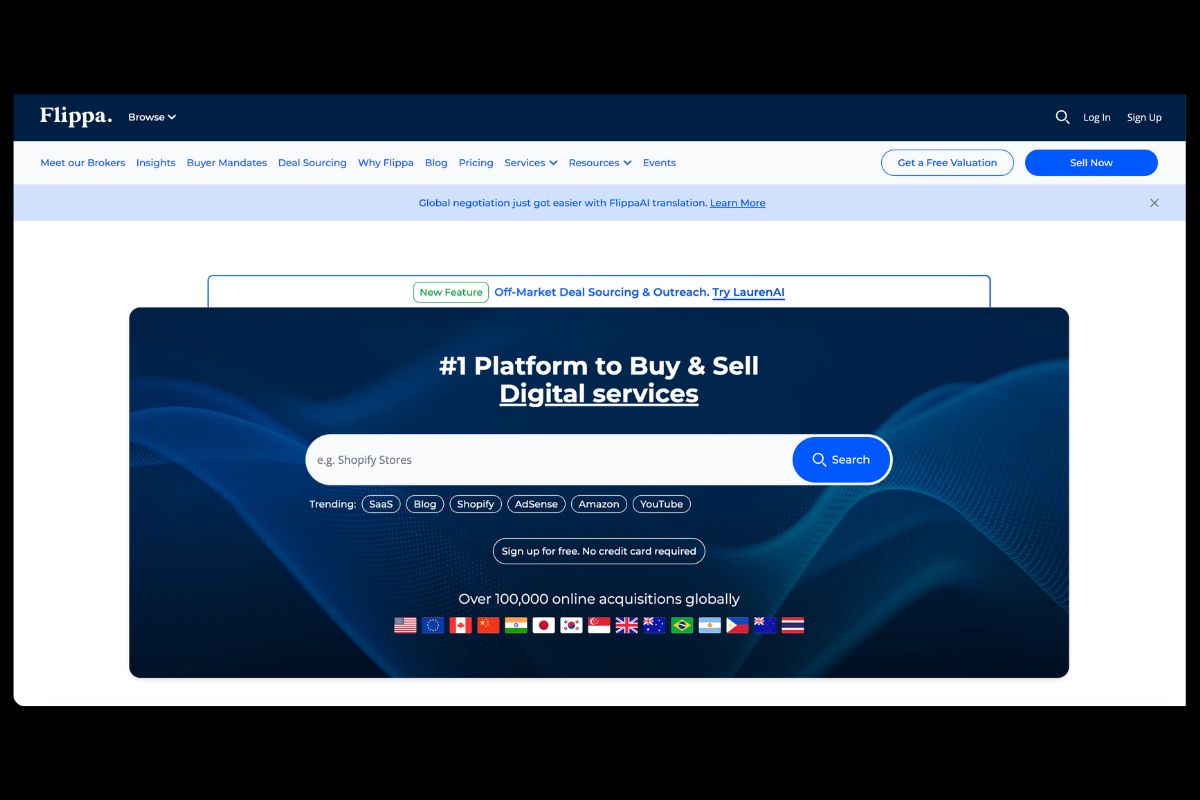
1. Flippa — Good for variety and bargain hunting
Flippa remains one of the oldest and largest marketplaces for websites, apps, and digital assets. It lists a broad variety of assets — from content sites and blogs to e-commerce stores, SaaS projects, Amazon FBA or Shopify businesses, and more. Flippa is ideal if you want many options, different price ranges, and the opportunity to bid or negotiate.
What to expect:
-
A very wide range of quality and risk: some listings are early-stage or low revenue, others more mature.
-
Auctions and bidding: you can often find lower-cost deals, but this can come with higher risk.
-
Transparency is mixed — many sellers show traffic or revenue data, but you should always verify them yourself.
-
Good for buyers with smaller budgets or those who want to test website acquisition with modest investment.
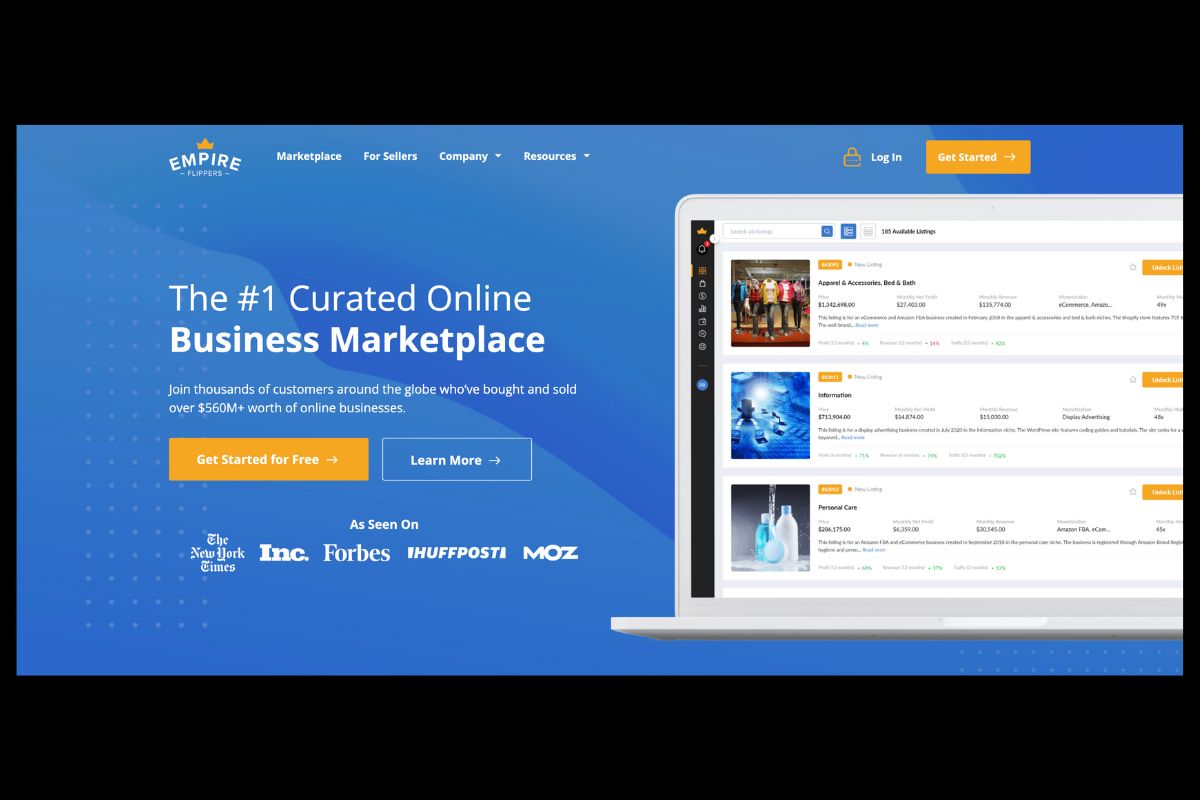
2. Empire Flippers — Curated, income-producing websites
Empire Flippers tends to list more vetted, performing online businesses. The platform is known for its curated approach: listings generally need to meet minimum revenue and traffic thresholds, and sellers usually provide verified income docs or performance metrics. This makes Empire Flippers a popular choice for buyers seeking lower-risk, income-generating websites.
What to expect:
-
Listings skew toward e-commerce, content, Amazon/FBA, or digital businesses with real revenue.
-
A more careful sale process — often higher prices, but also better vetting, due diligence support, and smoother transfers.
-
Good balance between quality and selection; ideal for buyers who care more about stable returns than just low price.
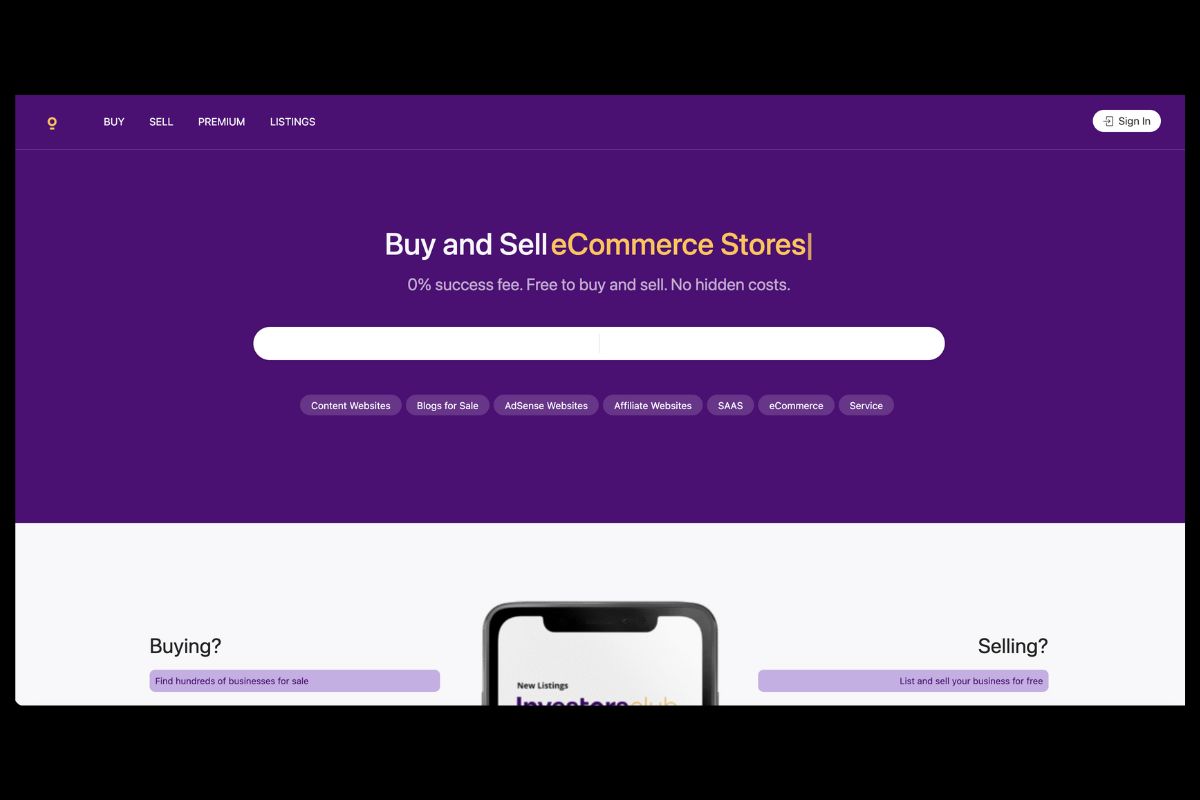
3. Investors Club — For curated & affordable content/e-commerce websites
Investors Club is a curated marketplace focusing on content websites, e-commerce stores, SaaS and other online businesses. Its main appeal: it tends to only list businesses that already generate revenue (minimum requirement: at least US$ 30/month and 12 months of history) — which helps avoid sub-par “starter sites.”
Why Investors Club stands out:
-
No listing or success fees for sellers — which sometimes translates to lower asking prices.
-
Mix of listings: many under US$100,000 (which suits first-time buyers or investors with limited budget), while offering some higher-value deals as well.
-
Direct communication with sellers — you can make offers, negotiate, and buy without a middleman.
-
Good for buyers looking for manageable deals, content sites, affiliate websites, small- to mid-size e-commerce, or modestly profitable websites.
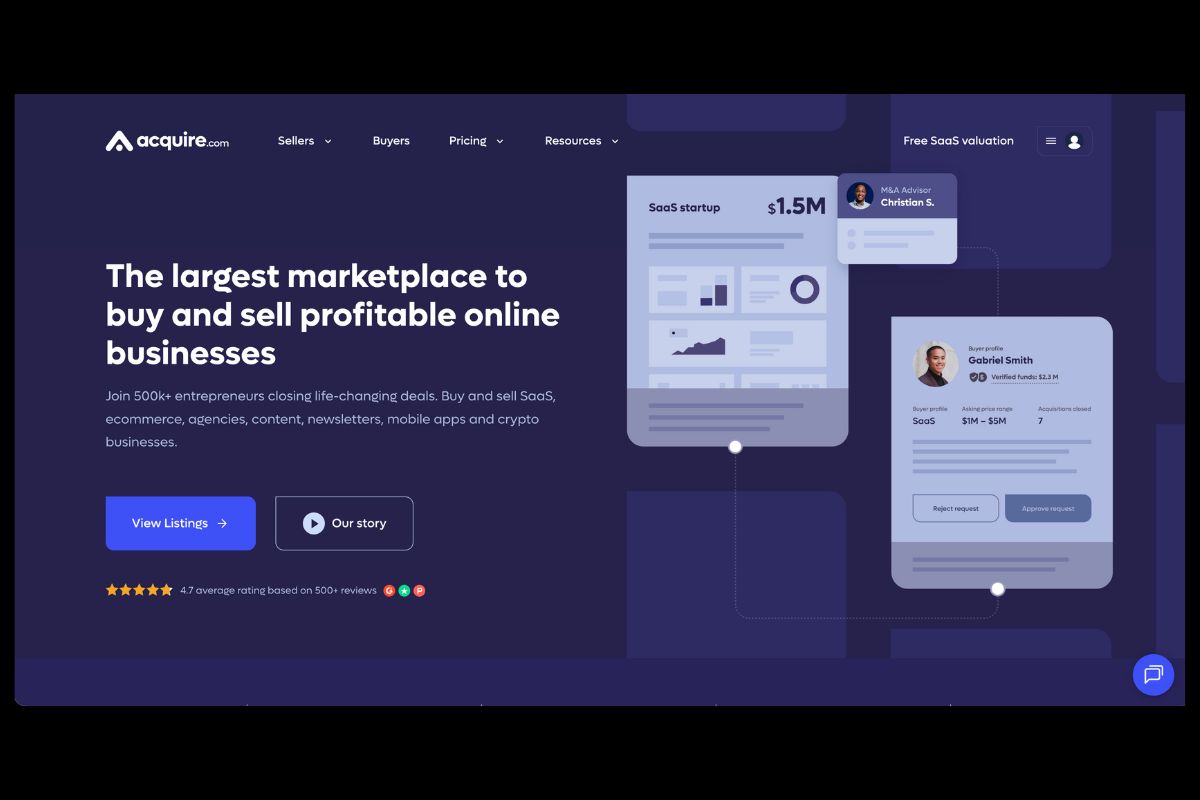
4. Acquire.com — For startups, SaaS, and growth-oriented acquisitions
Acquire.com (formerly MicroAcquire) is a marketplace that positions itself as a startup acquisition platform. While it includes a variety of online businesses, it tends to have a strong presence of SaaS, tech, and recurring-revenue businesses. Though other models like e-commerce, agencies, content sites, or apps also appear.
What you get with Acquire.com:
-
Thousands of listings — great breadth and likely overlap with many business types and sizes.
-
Tools and support for acquisitions: legal document builders, escrow via Escrow.com, and optional financing (for qualified buyers) which helps standardize and simplify the purchase process.
-
Flexible price ranges: from modest side businesses to larger startups. Because it’s fairly open and broad, you may find both high-risk deals and more mature ones.
-
Good fit if you’re comfortable evaluating startup-style assets, perhaps with growth potential, or if you want recurring revenue models rather than just static content or retail.
Quick note on valuation: many smaller sites still trade at ~1–2× revenue
Valuation of online businesses depends on many factors: revenue consistency, profit margins, traffic quality, business model (e.g. ad-based, e-commerce, SaaS), growth trends, and risk. In many cases, you might see asking prices around 1–2× annual revenue, especially for smaller, newer, or riskier websites. However, this multiple can increase significantly for stable, high-margin, recurring-revenue businesses or well-established sites.
Whether you look at sites on Flippa, Investors Club, or Acquire.com, take time to understand if the price is based on revenue, profit (SDE/EBITDA), or other metrics and whether the business’s history justifies it.
Because some platforms are curated (like Investors Club), while others have more open marketplaces (like Acquire.com or Flippa), the quality varies so due diligence is key.
How Website Valuations Work and What Multiples You Can Expect
Valuing a website or online business is rarely an exact science. Instead, most marketplaces and brokers apply a multiple (usually based on net profit or sometimes revenue) to help estimate a fair price. Factors that influence the multiple include the business model (e.g. SaaS, e-commerce, content), stability of earnings, quality of traffic or customers, growth trends, and how owner-dependent the site is.
The marketplace Acquire.com (formerly MicroAcquire), which many buyers use alongside Flippa, has also published recent data showing that SaaS businesses sold on its platform in 2023 fetched, on average, about 4.3× annual profit down from ~5.4× in 2022.
Here’s a rough breakdown of what multiples look like, according to Flippa’s recent analysis of its marketplace and broader industry data.
| Business Type / Asset Model | Typical Valuation Multiple (profit / earnings)¹ |
|---|---|
| Content (blogs, niche sites) | ~2.5 – 4.5 × annual profit (Flippa) |
| E-commerce / Retail websites | ~2 – 3.5 × annual profit (depending on margins, traffic sources) (Flippa) |
| SaaS / Subscription-based businesses | Often higher — 4 × up to 6 × annual profit (or more, in premium cases) (Flippa) |
| Newsletters / small recurring-income sites | 2.5 – 3.75 × annual profit (or 30 – 45 × monthly profit, per some guides) (Flippa) |
*These are approximations; actual multiples vary widely based on niche, growth, traffic quality, profit stability, and other risk factors.
Why Multiples Vary
-
Business model matters: Recurring-revenue models (like SaaS or subscription membership) tend to command higher multiples because the future income is more predictable and scalable.
-
Profit consistency & margin: A website with stable monthly profit, good margins, diversified monetization (ads, affiliate, subscriptions), and documented operational processes will fetch a better multiple than a volatile or owner-dependent site.
-
Traffic or customer quality: Organic traffic, strong SEO, evergreen niche, repeat customers, or high retention can add to valuation because they reduce the risk that revenue suddenly drops.
-
Age and track record: Older, established businesses with at least 12–24 months of stable earnings are viewed more favorably than brand-new or unproven sites.
What That Means for Buyers & Sellers
-
Many smaller or starter-level websites still sell in the 1–2× annual revenue range. That’s often because revenue is low, earnings are unstable, or traffic/revenue depends heavily on owner involvement which are factors that heighten risk for buyers.
-
If you find a listing with consistent profit, diversified monetization, and good traffic, expect to pay more: perhaps 2–4× profit (for content or e-commerce) or 4–6× (or more) for recurring-revenue or SaaS-type assets.
-
For buyers, this means that there are deals on marketplaces like Flippa or others but you need to carefully verify profit, traffic, and stability before assuming the multiple is justified.
-
For sellers, it means boosting valuation should focus on improving profitability, reducing risk (owner-dependence, traffic concentration), documenting systems, and diversifying income rather than just chasing revenue.
Recent Real-Sale Data & Multiples from Marketplaces
| Example / Source | Business Type / Notes | Profit (or Monthly Earnings) | Sale Price / Asking / Multiple* |
|---|---|---|---|
| Flippa — 2023 “average multiple” across deals | Mixed (content, SaaS, ecommerce, etc.) | Monthly profit (varies by asset) | On average 3.03× monthly profit (Investors Club) |
| Flippa — high-end content site “trading-education.com” 2023 | Content / niche website | Annual profit (verified) | Sold at 5.93× annual profit (highest multiple for a content site that year) (Investors Club) |
| Flippa — various small sites / apps / e-commerce under US$50K deals | Apps, small content/e-commerce, early-stage | Monthly or very modest profit | Mixed multiples; some apps or micro-sites reportedly sold at very high multiples (top-quartile) per Flippa’s aggregated data table. (Investors Club) |
| Empire Flippers — 2025 internal report (content-site deals) | Content websites (curated, income-producing) | Varies by site | Reported average sale price rising: from ≈ US$175,000 (2023) to ≈ US$240,000 (2024), and in first half of 2025 sites sold averaging ~US$325,000. (Empire Flippers) |
| Empire Flippers — a 6-yr-old cooking/recipe site listed in 2025 | Content/ads + some brand partnership | ~$8,922/mo | Listed at US$269,760 — approx 30× monthly profit multiple (The Website Flip) |
| Empire Flippers — a 4-yr-old membership-based education platform (2025 listing) | Membership / paid-content model | ~$4,187/mo | Listed at US$167,480 — approx 40× monthly profit multiple (The Website Flip) |
| Empire Flippers — 7-yr-old language-learning platform (2025 listing) | Niche content / membership | ~$6,003/mo | Listed at US$312,156 — ~52× monthly revenue multiple (though unusually high; may represent revenue rather than profit) (The Website Flip) |
| Empire Flippers — 8-yr-old “reality TV niche” site (2025 listing) | Content & display ads | ~$10,350/mo | Listed at US$368,275 — ~36× monthly profit multiple (The Website Flip) |
How to choose the right marketplace for you
-
If you want many options and low-cost entry: go with Flippa or browse Investors Club for curated but more affordable content/e-commerce websites.
-
If you want vetted, income-producing sites with lower risk: Empire Flippers or Investors Club are good picks.
-
If you’re interested in startups, SaaS, or growth-oriented businesses: consider Acquire.com, especially if you don’t mind doing some vetting and want access to varied listings and acquisition tools.
Due diligence: what to check before buying
- Verify the financials. Ask sellers for real profit & loss statements, bank or payment processor statements, tax records if available.
- Check traffic and traffic sources. Are visits organic or paid? Is traffic stable or seasonal? Low-quality traffic (click farms, bots, ad-driven spikes) can be risky.
- Evaluate the business model. Is income recurring (e.g. SaaS, subscription, membership) or one-time (ad revenue, affiliate)? Recurring models tend to be more stable and valuable.
- Review owner dependency. Some websites rely heavily on the original owner (for content, networking, relationships). Ensure you can maintain or grow the business post-transfer.
- Make a proper transfer plan. Domain, hosting, content, analytics, social accounts, ad accounts, supplier or affiliate relationships — all should be transferred properly. Consider using escrow or legal agreements to safeguard the transaction (especially on platforms like Acquire.com that support escrow).
Final thoughts
Buying an existing website or online business can be an excellent shortcut to generating revenue but success depends a lot on research and selecting the right marketplace.
-
If you’re starting out and want to test the waters with modest investment, Flippa or Investors Club offer a lower barrier to entry.
-
If you prefer more stable, income-producing websites, Empire Flippers and Investors Club tend to offer better-vetted listings.
-
If you are open to startup-style acquisitions and perhaps scaling up fast, Acquire.com adds flexibility and tools for more ambitious buyers.
No matter where you buy: treat listings as starting points, always verify metrics, understand the business model and risks, and plan asset transfer carefully.