
If you’ve ever been hit with a fraudulent chargeback, this story will make your blood boil. Imagine someone buying and returning the same anvil hundreds of times while the marketplace keeps approving it. It sounds unbelievable, but it highlights a much bigger problem facing online businesses today.
If you have ever sold products online, there is a good chance you have dealt with a chargeback dispute. For many business owners, chargebacks are no longer just a customer service issue. They have become a major financial problem.
What started as a legitimate consumer protection tool has evolved into something many sellers now see as organized abuse. From fake “item not received” claims to people using products for months before disputing the transaction, businesses are losing millions every year.
One recent viral story perfectly highlights how ridiculous things have become.
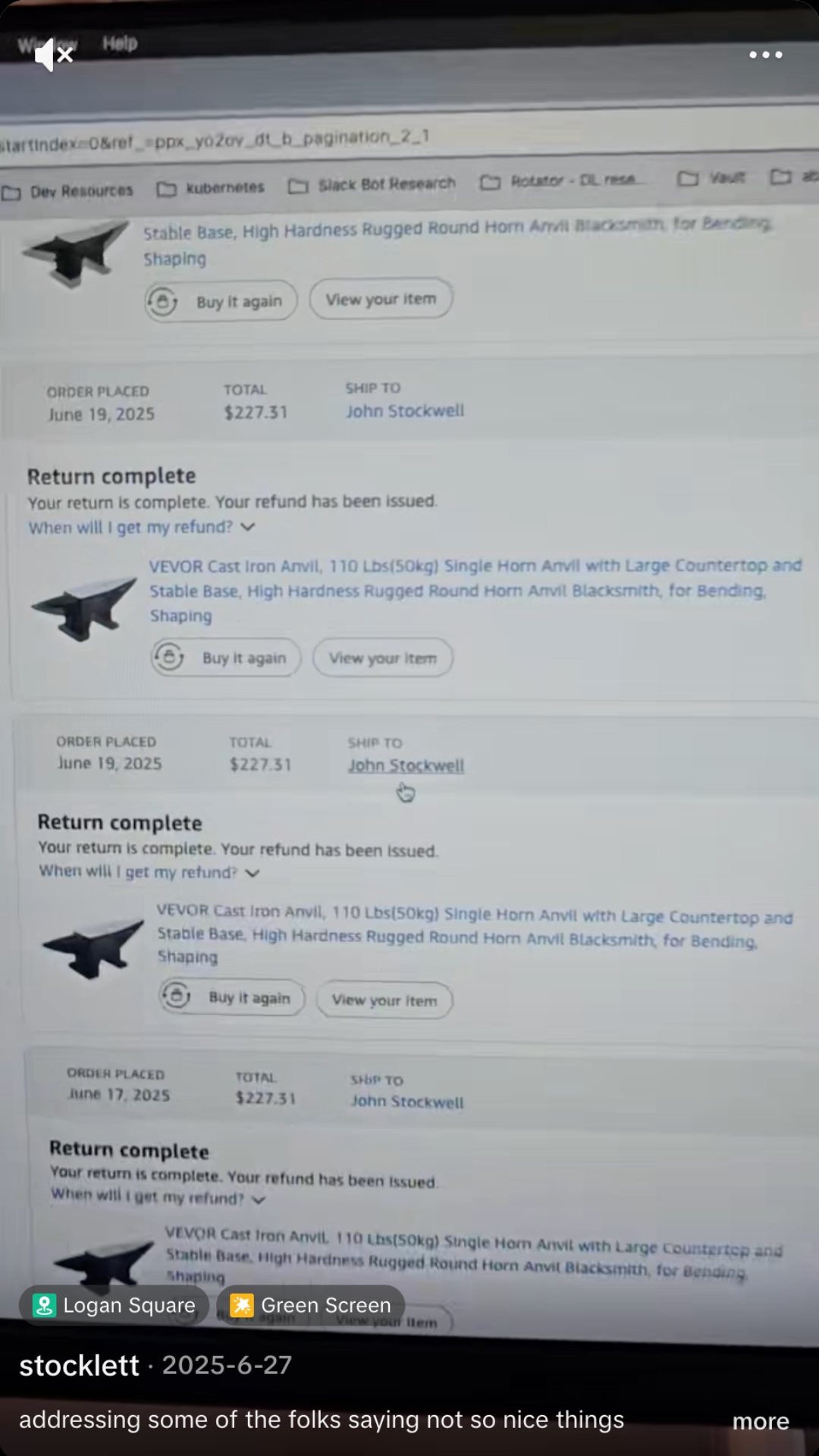
A man went viral online after repeatedly buying and returning anvils on Amazon over 300 times as part of what started as a joke. The story spread across social media and news outlets because people found it funny. But for sellers, it raised a serious question. Who actually pays for all of this?
According to the report from Yahoo Finance Canada, the returns became so excessive that it turned into a symbol of how broken some ecommerce systems have become for vendors.
For consumers, chargebacks can seem harmless. For businesses, especially small businesses, they can be devastating.
What Is a Chargeback?
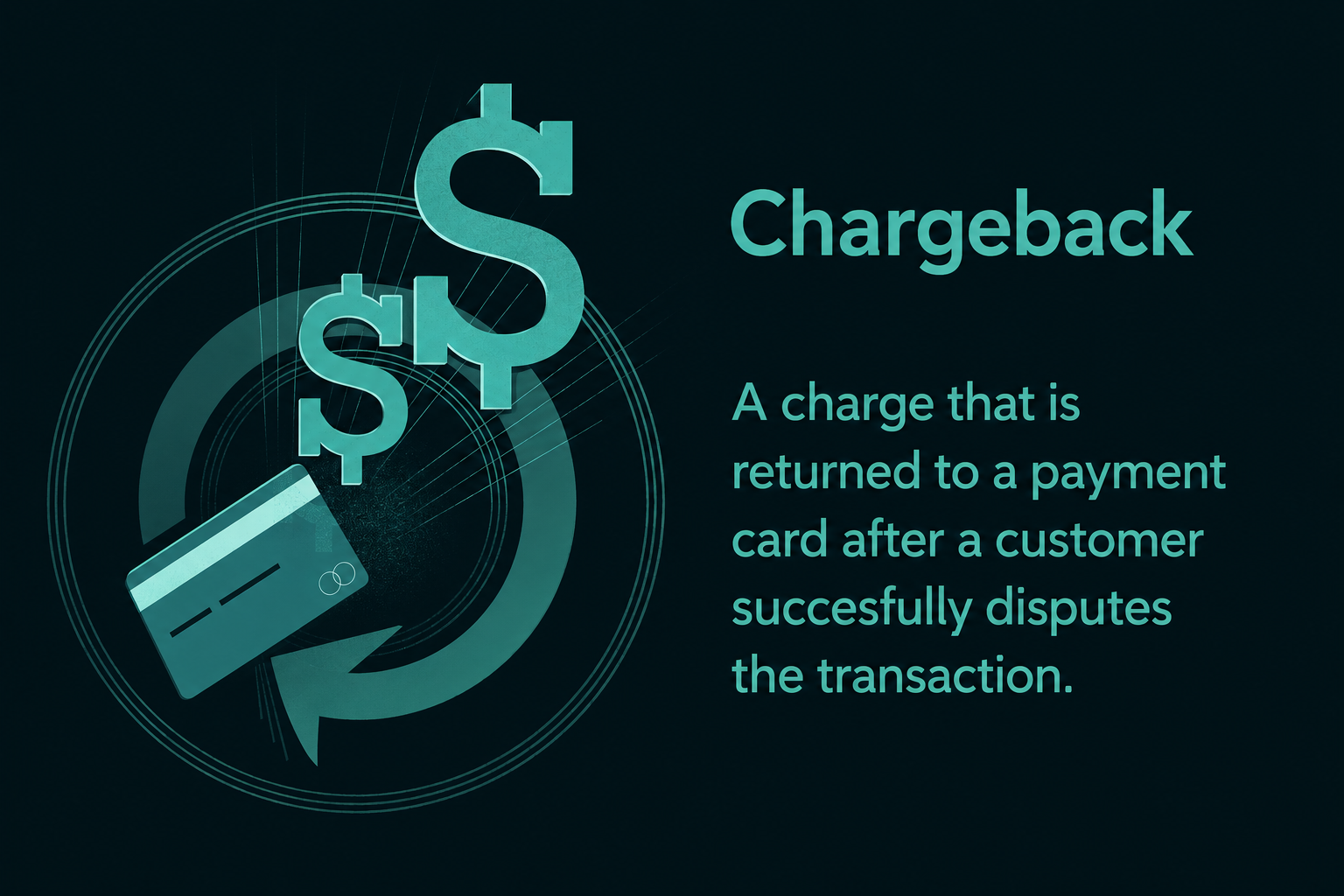
A chargeback happens when a customer disputes a credit card transaction through their bank instead of dealing directly with the business.
Originally, chargebacks were created to protect consumers from:
- Stolen credit cards
- Fraudulent transactions
- Businesses that never delivered products
- Unauthorized purchases
In theory, this sounds fair. And in many cases, it is.
The problem is that chargebacks are now heavily abused by people who knowingly use the system to get free products, free services, or avoid paying legitimate bills.
This type of abuse is often called “friendly fraud,” although most vendors would not describe it as very friendly.
The Rise of Friendly Fraud
Friendly fraud happens when someone purchases a product legitimately and later disputes the charge anyway.
Common examples include:
- Claiming the package never arrived
- Saying the transaction was unauthorized
- Returning a different or damaged item
- Using a product for weeks or months before requesting a refund
- Ordering digital services and later disputing payment
- Family members making purchases and pretending they did not authorize them
Many online sellers have stories about customers receiving products successfully and still winning disputes.
Anyone who sold on platforms like Amazon, eBay, Shopify, or PayPal during the early ecommerce boom probably experienced it firsthand.
Some sellers even report situations where carriers confirmed delivery, signatures were provided, photos were taken, and disputes were still decided in favor of the customer.
PayPal especially became infamous among online vendors for siding with buyers. Many long time ecommerce sellers claim they lost nearly every dispute, even with proof that the customer received and used the product.
For small businesses operating on thin margins, repeated losses like this can destroy profitability quickly.
How Big of a Problem Is This?
Chargebacks are no longer rare.
According to the Canadian Bankers Association, credit card fraud and digital payment abuse continue to rise as ecommerce expands across Canada.
Industry reports estimate that friendly fraud now represents a significant percentage of all chargebacks globally. Some payment analysts estimate that up to 70 percent of chargeback claims may involve some form of abuse or false reporting.
The financial damage goes beyond just the product cost.
The Numbers Behind Chargeback Fraud
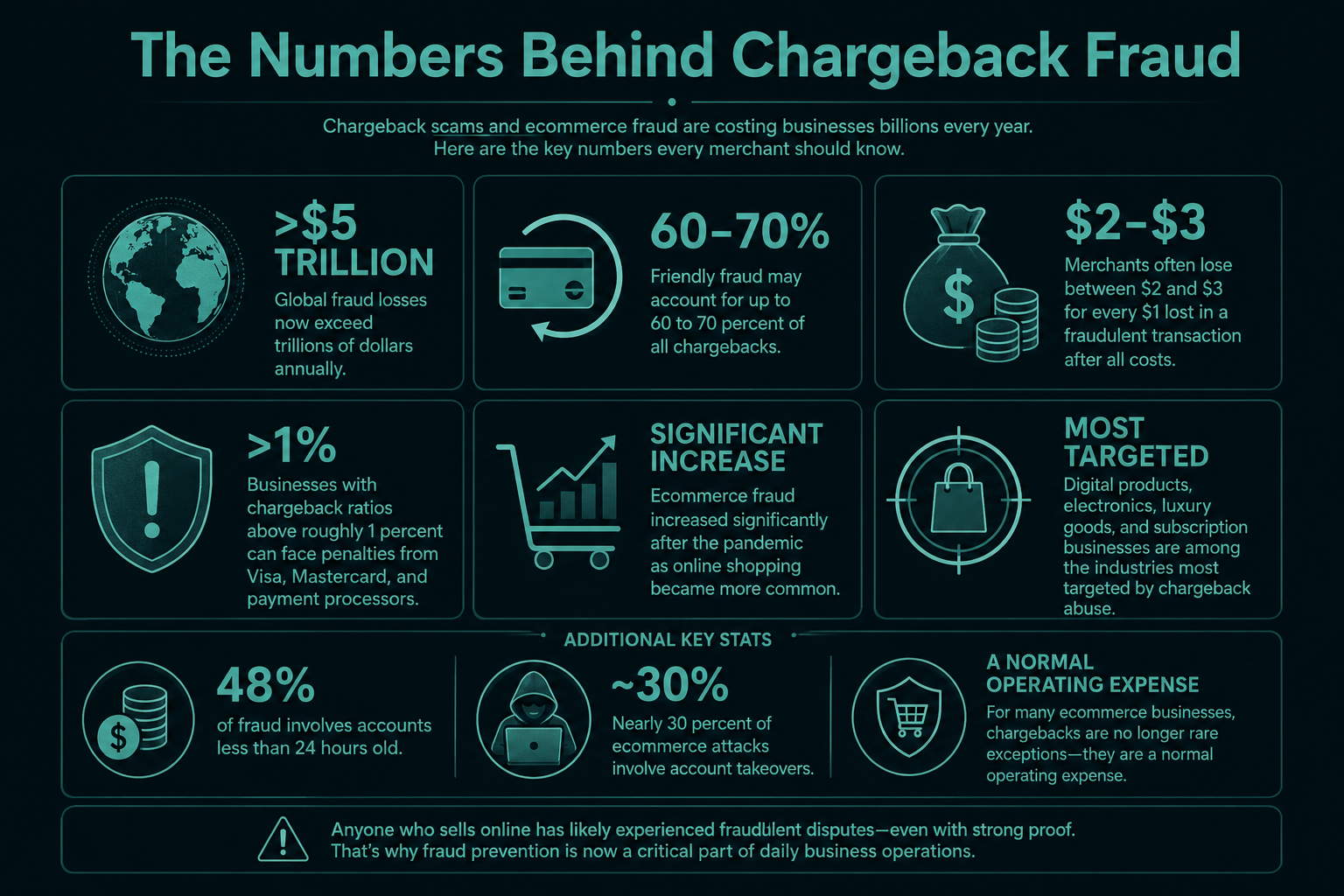
Chargeback scams and ecommerce fraud have quietly become a massive global problem. While many consumers think of chargebacks as isolated disputes, the reality is that online fraud now costs businesses billions every year.
Some recent fraud studies and industry reports estimate:
• Global fraud losses now exceed trillions of dollars annually
• Friendly fraud may account for up to 60 to 70 percent of all chargebacks
• Merchants often lose between $2 and $3 for every $1 lost in a fraudulent transaction once shipping, labour, advertising, and processing fees are included
• Businesses with chargeback ratios above roughly 1 percent can face penalties from Visa, Mastercard, and payment processors
• Ecommerce fraud increased significantly after the pandemic as online shopping became more common
• Digital products, electronics, luxury goods, and subscription businesses are among the industries most targeted by chargeback abuse
It is also estimated that global fraud costs exceed $5 trillion annually and noted that nearly 30 percent of ecommerce attacks involve account takeovers. Another statistic claimed that 48 percent of fraud involves accounts less than 24 hours old.
For many online sellers, these numbers are not surprising.
Anyone who operated an ecommerce business during the growth of Shopify, Amazon, PayPal, and Facebook Marketplace has probably experienced fraudulent disputes firsthand. Some businesses report losing disputes even after providing:
• Delivery confirmations
• Tracking numbers
• Signature verification
• Customer communication records
• Photos and video evidence
This is why many businesses now treat fraud prevention as part of daily operations instead of just occasional customer service issues.
Chargebacks are no longer viewed as rare exceptions. For many ecommerce businesses, they have become a normal operating expense.
When a chargeback happens, sellers often lose:
- The product itself
- Shipping costs
- Transaction fees
- Chargeback penalties
- Advertising costs used to acquire the customer
- Staff time spent handling disputes
This becomes even more painful when you consider the real cost of acquiring customers online today. Between advertising, shipping, and payment processing, losing a single fraudulent dispute can wipe out profits entirely. We talked more about this in our article on cost of acquisition per customer.
Many payment processors also punish businesses with high dispute rates.
Too many chargebacks can lead to:
- Higher processing fees
- Frozen merchant accounts
- Reserve holds on funds
- Account terminations
- Difficulty getting approved for future payment processing
For some businesses, a high chargeback rate can threaten the entire company. High dispute rates can also impact how buyers and investors view an ecommerce business. Excessive chargebacks may affect profitability, operational risk, and even valuation multiples during a sale process. You can learn more in our guide on how to value a business.
Online Marketplaces Made the Problem Worse
Large ecommerce platforms made online shopping incredibly easy. Unfortunately, they also made abuse easier. At the same time, advertising costs have increased dramatically for ecommerce brands over the last few years. Many online stores are now paying significantly more just to acquire customers through social media platforms. We covered this shift in our article about how Facebook ads have changed.
Companies like Amazon built customer friendly return systems that consumers now expect everywhere. While this improved customer confidence, it also opened the door to abuse.
Some people now openly discuss refund tricks online.
You can even find Facebook Marketplace listings where people sell “refund methods” or offer to teach others how to dispute purchases successfully.
There are entire online communities dedicated to exploiting return systems, digital payment loopholes, and chargeback policies.
For honest businesses, this often feels less like customer service abuse and more like organized theft.
Public Shaming Is Becoming More Common
Some businesses are becoming so frustrated that they are starting to publicly call out abusive customers.
One example that gained attention online came from Camellia Coffee Roasters on Facebook, where the company publicly addressed a problematic customer dispute situation.
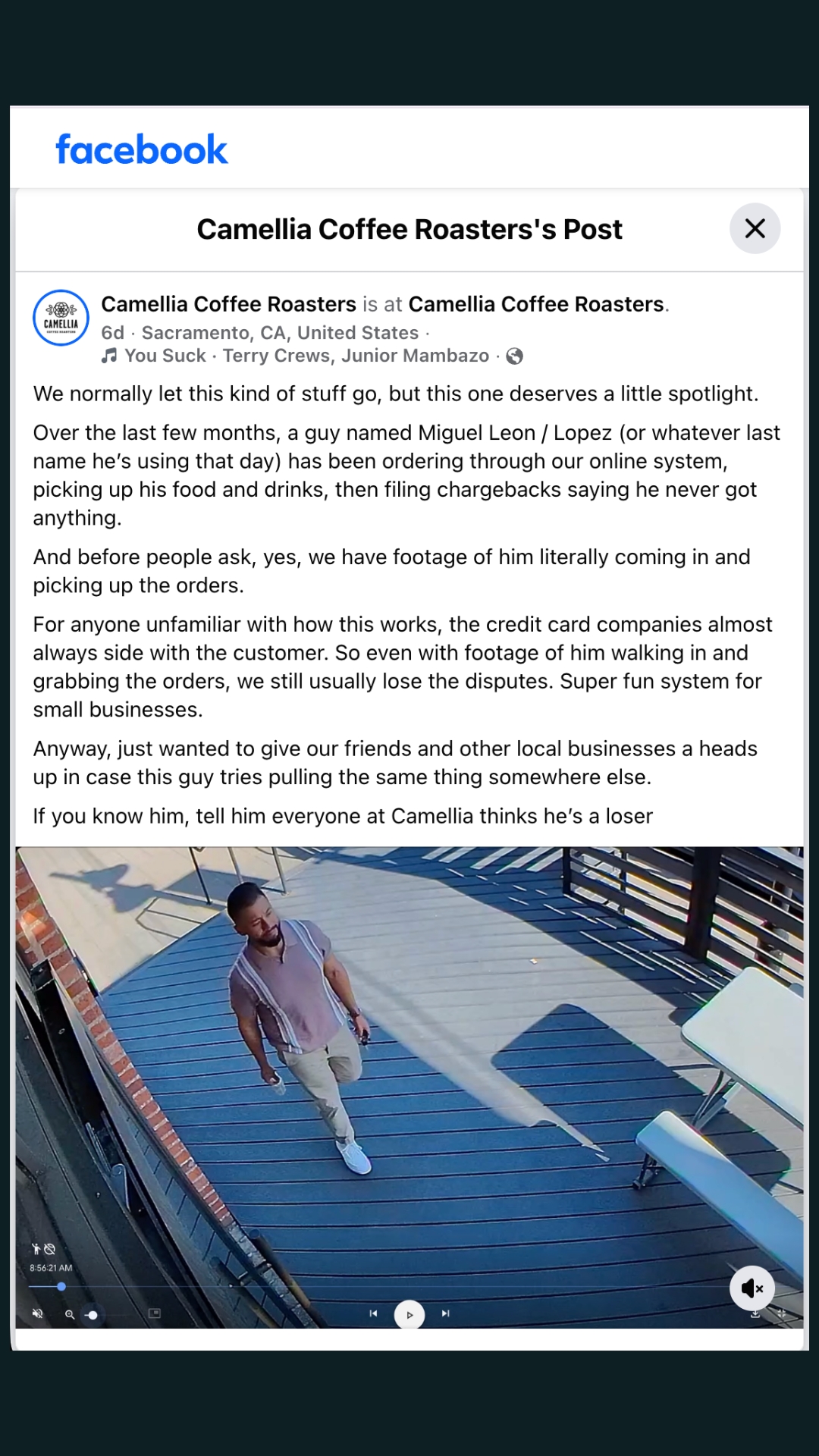
While businesses need to be careful legally when naming customers publicly, these types of posts show how emotionally exhausting repeated fraud can become for owners and staff.
Many small business owners feel completely powerless against large payment processors and banks.
How Vendors Are Fighting Back
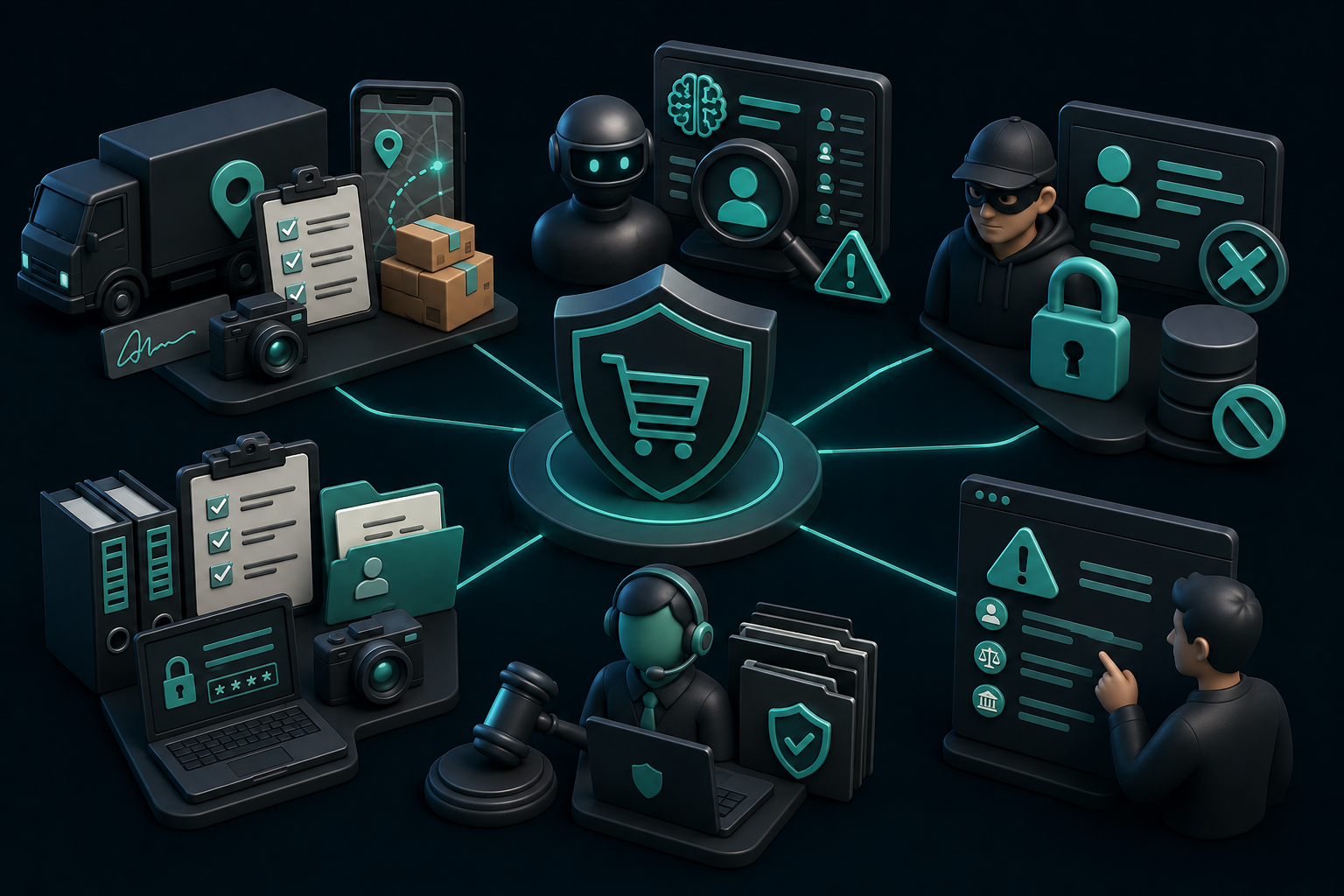
Businesses are no longer accepting chargebacks quietly. Vendors are getting smarter and more aggressive about protecting themselves.
Some of the most common strategies now include:
Better Delivery Tracking
Businesses increasingly use:
- Signature confirmation
- Delivery photos
- GPS tracking
- Adult signature requirements
- Video packaging documentation
Some warehouses now film the entire packing process to prove the correct item was shipped.
Fraud Detection Software
Modern ecommerce stores use AI powered fraud systems that flag suspicious orders before shipment.
These systems analyze:
- IP addresses
- Device fingerprints
- Order patterns
- Shipping mismatches
- High risk locations
- Previous dispute history
Payment processors are also improving fraud detection tools for merchants.
Blocking High Risk Customers
Some businesses permanently ban customers who abuse refund systems.
Others share fraud databases internally to identify repeat offenders.
Retailers are becoming far less tolerant of excessive return behavior.
Stronger Terms and Documentation
Businesses now document everything.
This includes:
- Customer communications
- Tracking records
- Product photos
- Serial numbers
- Usage logs
- Signed agreements
Digital businesses especially rely on login histories, IP logs, and usage records to fight false claims.
Chargeback Management Services
An entire industry now exists around fighting disputes.
Companies specialize in helping merchants respond to chargebacks with evidence packages and legal documentation.
Some vendors outsource the entire process because handling disputes internally consumes too much time.
Educating Customers
Some businesses are becoming more direct about the consequences of fraudulent disputes.
Many websites now warn customers that false chargebacks may lead to:
- Account bans
- Collections
- Legal action
- Fraud investigations
This alone can discourage abuse.
Why This Matters for Canadian Businesses
Small and medium sized businesses are already dealing with inflation, rising wages, shipping costs, and increased competition.
Chargeback fraud adds another layer of financial pressure that many owners simply cannot absorb forever.
The reality is that when fraud losses increase, prices often increase too. Honest customers end up indirectly paying for abusive behavior through higher product costs and stricter policies.
This is one reason many retailers now have tighter return windows, restocking fees, or stricter refund verification processes.
Most customers are honest. Chargebacks remain an important protection against real fraud.
But there is clearly a growing problem with abuse.
When people intentionally manipulate refund systems, dispute legitimate purchases, or exploit ecommerce loopholes, it hurts real businesses and real workers behind the scenes.
The viral anvil return story may seem funny online, but for sellers who deal with fraudulent returns every week, it highlights a much larger issue in modern ecommerce.
Businesses are adapting, improving fraud prevention, and fighting back harder than ever before.
Because at some point, repeated false chargebacks stop looking like customer service problems and start looking a lot more like theft.