
Discover how aging demographics across Vancouver Island are creating opportunities for service businesses in health, home support, transportation, maintenance, and more.
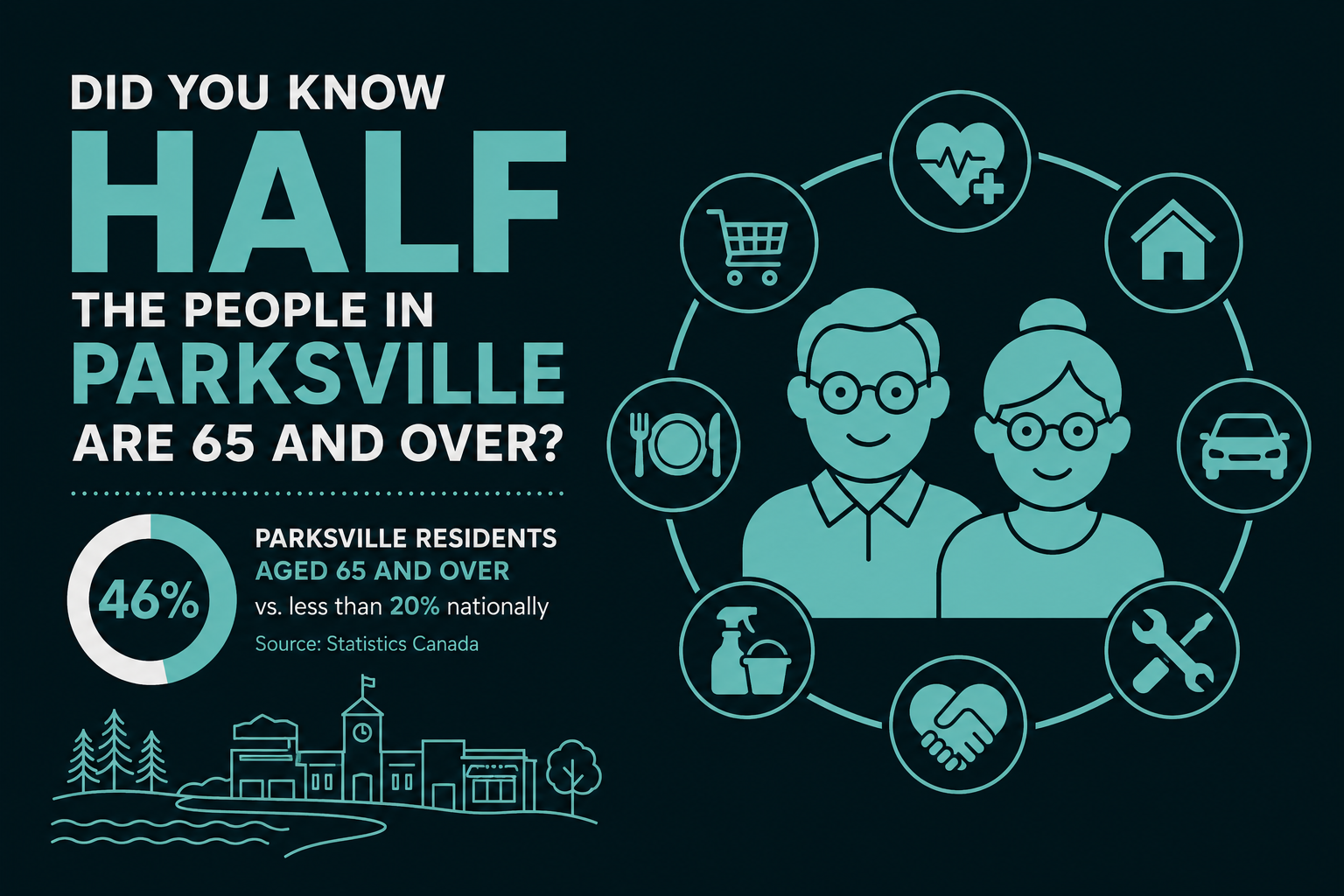
Did You Know Half the People in Parksville Are 65 and Over?
When people think about economic growth, they usually picture technology, construction, or major infrastructure projects.
But across Vancouver Island, one of the biggest business shifts happening right now is much simpler.
People are getting older, and that changes what people buy, what communities need, and ultimately creates more demand for service businesses.
A statistic report that surprises a lot of people is this: Parksville has one of the oldest populations in Canada, with roughly 46% of residents aged 65 and older, compared with less than 20% nationally according to Statistics Canada population data.
That means nearly one out of every two people in Parksville is in retirement age, which is a remarkable statistic when compared with most communities across Canada. This is not simply a temporary trend or a short term population fluctuation. It reflects a long term demographic shift that has been developing over decades as retirees continue choosing Vancouver Island for lifestyle, climate, and quality of life, while existing residents also remain in their communities longer.
For business owners and investors, that shift matters more than many people realize. Demographics often influence local economies in quiet but powerful ways, changing how people spend money and what types of businesses become more valuable over time. While products and consumer trends constantly change, services tend to become increasingly essential as populations age. People place greater value on convenience, support, maintenance, health, and solutions that help them maintain independence and quality of life.
Vancouver Island Is Getting Older and Demand Keeps Rising
Parksville and Qualicum are often the first places people think about when talking about retirement communities, but the trend stretches across much of Vancouver Island.
What makes these communities stand out is not simply that they attract retirees, but that they reflect a broader demographic shift happening across the region. Vancouver Island has long been viewed as an appealing destination for retirement because of its climate, lifestyle, access to healthcare, and strong sense of community. As a result, many people choose to relocate here later in life, while existing residents are also remaining in their homes and communities longer than previous generations.
Communities throughout the Island continue seeing median ages rise as retirees relocate and long term residents age in place.
This gradual change affects more than population statistics. It influences housing patterns, local spending habits, workforce availability, and the types of businesses that experience sustained demand. As households age, priorities often shift toward convenience, maintenance, health support, and services that improve quality of life and reduce day to day responsibilities.
Population reporting continues to show aging demographics across many Island communities, reinforcing that this is not isolated to one or two retirement hubs but part of a larger long term trend shaping the regional economy.
Here are a few examples that show the broader trend:
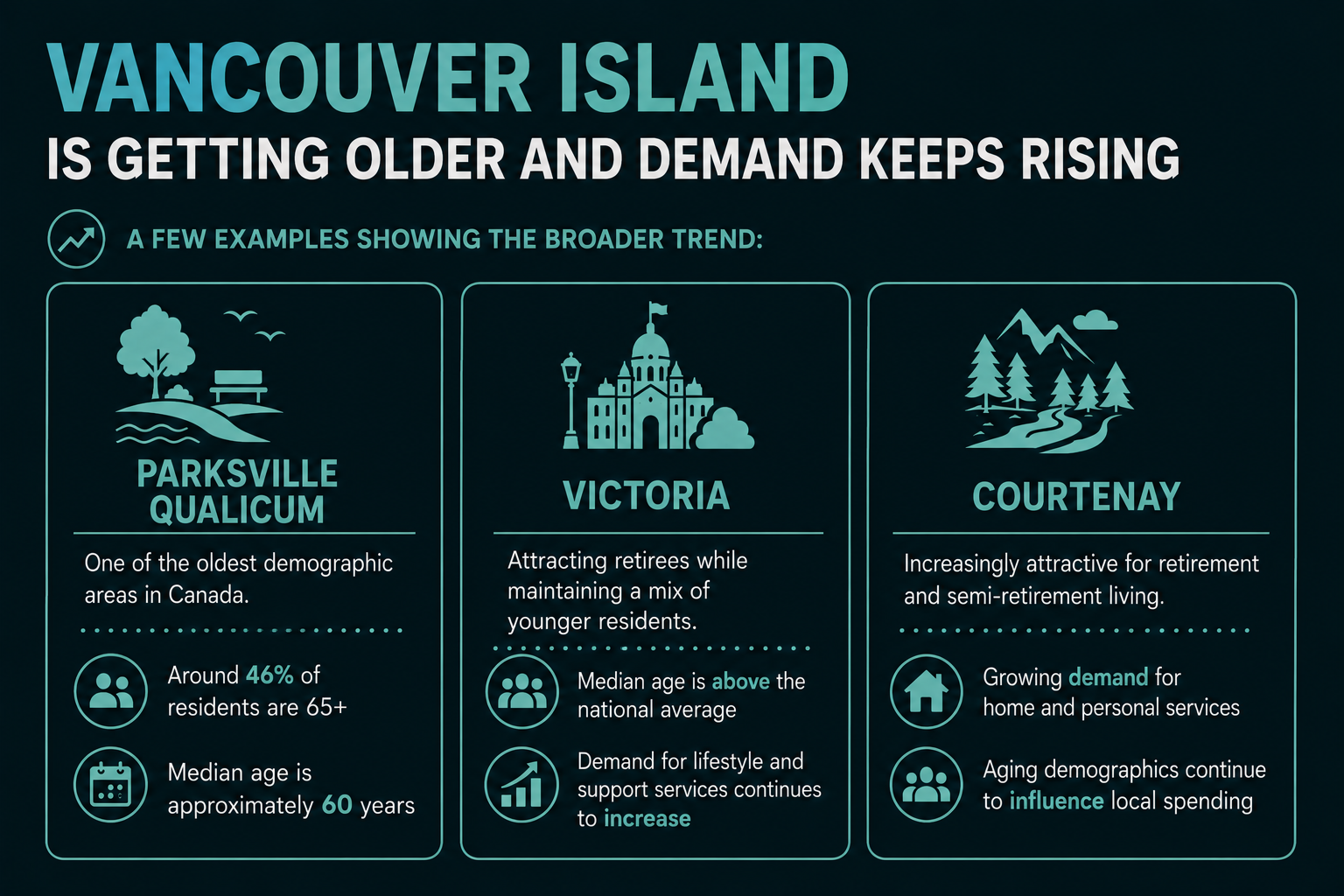
Across these communities, one thing becomes clear: as populations age, spending patterns shift. People generally begin spending less on products and more on convenience, health, maintenance, support, and time saving services. That creates a steady customer base for businesses that solve everyday problems. Unlike trend driven industries, many service businesses become more valuable because their demand becomes consistent. This is why many owners are noticing something important—demand is not slowing, and it will likely keep accelerating.
What Happens When Communities Age?
Aging does not mean communities stop growing. In many cases, communities continue expanding and remain economically active, but the nature of that growth begins to change over time. As populations mature and more residents move into retirement years, spending habits and daily needs evolve. Rather than focusing heavily on products or large discretionary purchases, demand increasingly shifts toward services that provide convenience, support, reliability, and improved quality of life.
Older households often choose to outsource tasks they once handled independently, whether because of lifestyle preferences, time savings, mobility considerations, or simply wanting to make everyday life easier. Services that reduce effort and create convenience become more valuable and more frequently used. This shift creates opportunities across a wide range of industries and encourages the growth of businesses that help people maintain independence, comfort, and flexibility as their needs change.
Examples include:
- Home cleaning services
- Lawn and landscaping companies
- Mobile healthcare and wellness services
- Transportation businesses
- Home maintenance and repair
- Meal preparation services
- Personal care support
- Property management
- Senior relocation services
- Housekeeping and organizing
- Accounting and bookkeeping services
- Technology setup and support
Statistics Canada continues to report that aging populations increase demand for support services, healthcare, and aging in place solutions.
Many of these businesses do not require huge facilities or large inventories.
Instead, they are built around people, relationships, recurring customers, and reliable operations.
Service Businesses That May Continue Growing
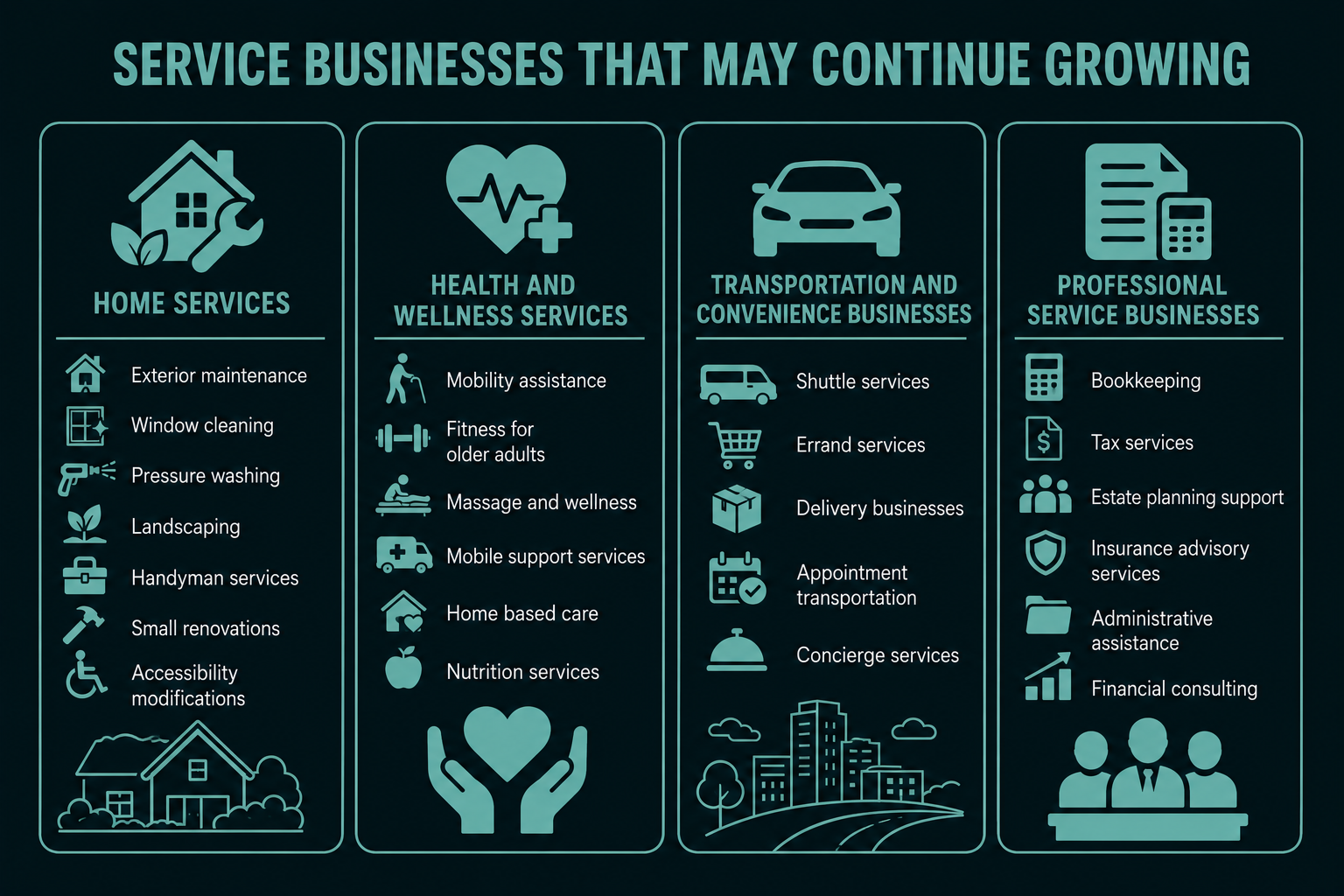
Home Services
This may be one of the biggest growth categories across Vancouver Island and other aging communities.
Older homeowners are increasingly choosing to remain in their homes longer rather than downsizing or moving into assisted living environments. Aging in place has become a strong preference for many households, but it often creates new maintenance and support needs over time.
As a result, demand continues growing for businesses that help homeowners keep their properties safe, functional, and comfortable without requiring them to manage everything themselves.
Demand rises for:
- Exterior maintenance
- Window cleaning
- Pressure washing
- Landscaping
- Handyman services
- Small renovations
- Accessibility modifications
These businesses often benefit from repeat customers and referral networks.
Health and Wellness Services
Healthcare demand naturally increases as populations age.
But growth is not limited to medical services.
There is increasing interest in:
- Mobility assistance
- Fitness for older adults
- Massage and wellness
- Mobile support services
- Home based care
- Nutrition services
Canadian population aging reports continue to identify healthcare and wellness services as areas of increasing demand.
As older populations continue expanding, these services become part of everyday living rather than occasional support.
Transportation and Convenience Businesses
Transportation becomes increasingly valuable in aging communities.
Many people eventually prefer alternatives to driving regularly.
Opportunities may include:
- Shuttle services
- Errand services
- Delivery businesses
- Appointment transportation
- Concierge services
Convenience becomes a premium service.
Professional Service Businesses
Not every opportunity involves physical work.
Professional service businesses also benefit from aging demographics.
Examples include:
- Bookkeeping
- Tax services
- Estate planning support
- Insurance advisory services
- Administrative assistance
- Financial consulting
As retirement transitions increase, many people want help simplifying paperwork and managing decisions.
Why Service Businesses Can Be Attractive to Buyers
Service businesses often share characteristics that buyers look for:
- Recurring revenue
- Lower inventory requirements
- Established customer relationships
- Flexible operating models
- Opportunities to expand service areas
In aging communities, many businesses also benefit from stable local demand.
A customer who needs ongoing support usually returns.
That can create stronger long term revenue visibility than industries that depend heavily on trends.
For buyers evaluating acquisitions, demographic trends become part of the decision making process. Buyers evaluating service businesses should also understand valuation drivers and what influences business pricing over time. Read our guide on how to value a business.
The question becomes less about whether demand exists and more about whether operations can scale.
This growing demand is one reason many analysts expect continued business ownership transitions across Canada. Learn more about the $300 billion business transfer wave.
The Opportunity Is Bigger Than One Community
Parksville and Qualicum often receive the most attention because the demographic shift toward an older population is especially visible in those communities, but they are far from the only areas experiencing change. Across Vancouver Island, communities continue evolving as population patterns shift and household needs change over time. Victoria remains a popular destination for retirees while still attracting working professionals and younger residents, creating a diverse mix of service demands. Courtenay continues to grow and has become increasingly attractive for retirement and semi-retirement living, contributing to changing local spending habits and consumer expectations.
Other communities across the Island are seeing similar trends in age distribution, with more residents choosing to age in place or relocate for lifestyle reasons. Data continue to show that aging populations are becoming an increasingly important factor in local economic planning and long term community development decisions.
While each community develops its own unique mix of needs and opportunities, the broader direction remains consistent. Older populations generally create stronger demand for support services, convenience based businesses, maintenance providers, healthcare related offerings, and specialized professional services. For entrepreneurs and business buyers who understand local demographics and changing consumer behaviour, these shifts can create meaningful opportunities for long term growth and business stability.
Demographics Are Quietly Reshaping Business
Population trends rarely receive the same attention as emerging technologies, major developments, or economic headlines, yet they often have an even greater influence on local economies over time. Across Vancouver Island, the population continues to age, and that shift is already changing how people spend money, what services they prioritize, and where new business opportunities are emerging. As households evolve and lifestyles change, demand increasingly moves toward convenience, support, maintenance, health, and services that make everyday life easier.
Service businesses sit directly in the middle of this transition. Whether it is home services, transportation, professional support, wellness, or personal assistance, many of these businesses are becoming more essential rather than optional. For owners thinking about growth, or buyers looking for opportunities, understanding demographic trends may become just as important as understanding financial statements or market conditions. When demand is connected to long term population changes instead of short term consumer trends, businesses that solve practical everyday problems are often the ones that continue growing and creating lasting value over time.
If acquiring an established service business is part of your plan, our guide on how to buy a business step by step walks through the process.