
Every quarter, the BizBuySell Insight Report provides one of the best snapshots of the small business acquisition market in North America. While the report focuses on the United States, many of the same trends are relevant here in Canada because buyers, lenders, and business brokers are facing similar economic conditions.
The biggest takeaway from the Q2 2026 report is simple. Businesses are still selling, buyers are still looking, but they are becoming much more selective about what they purchase.
If you are thinking about selling your business over the next few years or planning to buy one, understanding these trends can help you make better decisions.
Deal Activity Slowed But Buyer Demand Remains Strong
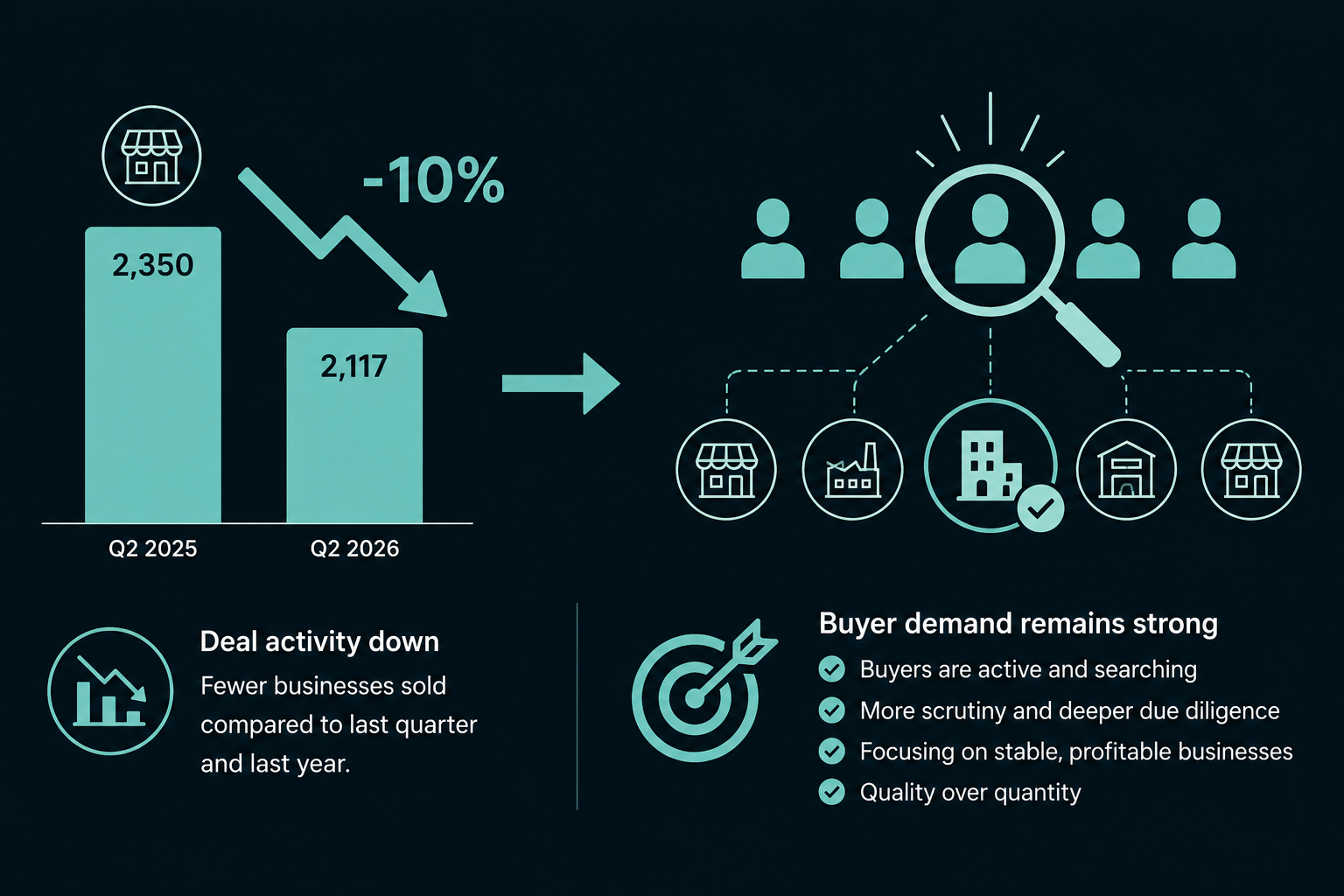
The report found that 2,117 businesses sold during the second quarter of 2026, representing a 10 percent decline compared with both the previous quarter and the same period last year.
At first glance, that might sound like the market is slowing down significantly. However, the report suggests something different.
Instead of a market with fewer buyers, what we are really seeing is a market with fewer businesses that meet today’s expectations. Qualified buyers are still actively searching for opportunities, but they are taking a much closer look at each one before moving forward. They are spending more time reviewing financial statements, asking tougher questions about operations and risk, and walking away from businesses that do not show clear stability or strong fundamentals. In many ways, this has become a quality over quantity market, where well prepared businesses attract serious attention and weaker ones struggle to gain traction.
For Canadian business owners, this trend should feel familiar. Buyers are no longer purchasing based solely on future potential. They want businesses that already have proven systems, consistent profits, and reliable financial records.
Valuations Hold Firm Despite Slower Deal Activity
One encouraging finding is that business valuations have remained surprisingly stable despite the slowdown in transaction volume. Average cash flow multiples actually increased slightly, while revenue multiples stayed relatively unchanged, and median selling prices only slipped by about one percent. This suggests that strong businesses continue to command excellent prices, even in a more selective market. Rather than lowering valuations across the board, buyers are clearly distinguishing between exceptional businesses and average ones, rewarding companies with solid financial performance, predictable earnings, and lower risk.
Businesses that typically receive premium valuations often have several things in common.
- Consistent and growing cash flow
- Clean financial statements
- Stable customer base
- Recurring revenue
- Low owner dependence
- Experienced management team
Owners who have invested time into building a transferable business continue to benefit from strong buyer competition.
If you are wondering how buyers determine what a business is worth, our guide on average business valuations explains the common valuation methods, earnings multiples, and the factors that influence selling prices in today’s market.
Financing Becomes a Major Deal Hurdle
One of the biggest challenges highlighted in the report is financing, and it continues to be a major factor shaping business sales.
Banks and lenders are applying stricter underwriting standards than they did several years ago. Buyers now need stronger financial qualifications, and lenders are taking a much closer look at business performance before approving acquisition loans.
While the report discusses changes to SBA lending in the United States, Canadian buyers are seeing similar expectations from lenders. In both markets, financing is becoming more selective, and buyers must be better prepared to meet lender requirements.
Banks want to see businesses with predictable earnings, healthy cash flow, and financial statements that clearly support debt repayment. They are looking for evidence that the business can comfortably service the loan without creating unnecessary risk.
For sellers, this means preparing for lender scrutiny before listing the business. A business that is organized, financially transparent, and easy to underwrite will usually attract more serious buyers and move through the sale process more smoothly.
A business that qualifies easily for financing usually attracts:
- More qualified buyers
- Stronger offers
- Faster closings
- Fewer financing conditions
Preparation before going to market can make a tremendous difference.
Buyers should also prepare themselves before approaching lenders. Our article on how to be bankable when buying a business covers the financial documents, credit profile, and lender expectations that can improve your chances of securing financing.
Seller Financing Continues to Bridge the Gap
Another interesting finding involved seller financing. Most buyers expect some level of seller financing to be included in a transaction, yet relatively few sellers are willing to offer it. In practice, seller financing can be a valuable tool for both sides because it helps bridge the gap between what a buyer can afford upfront and what a seller hopes to receive at closing. For buyers, it reduces the amount of cash required at the outset and can also make lenders more comfortable by showing that the seller has confidence in the business’s future performance. For sellers, it can widen the pool of qualified buyers, create more flexibility during negotiations, and sometimes support a stronger overall valuation by making the deal more attractive and easier to complete.
In many Canadian transactions, seller financing has become a practical tool rather than a last resort. Even a relatively small seller note can help move negotiations forward when buyers and sellers have different expectations.
Demand Continues to Outpace the Supply of Quality Businesses
One of the strongest themes throughout the report is that buyer demand continues to exceed the supply of high quality businesses. In other words, there are still plenty of people looking to buy, but far fewer businesses that truly meet their expectations and investment criteria.
Several factors are contributing to this trend. Many professionals are leaving corporate careers in search of more independence, flexibility, and control over their future. At the same time, Entrepreneurship Through Acquisition continues to grow, and search funds and investment groups are actively looking for established businesses that already have a proven track record.
Retiring business owners are also entering the market more slowly than many experts expected, which keeps the supply of quality opportunities tight. This creates intense competition whenever a well prepared business becomes available. Rather than choosing from dozens of strong options, buyers often find themselves competing against multiple offers for the same opportunity, and that competition benefits sellers who have taken the time to prepare properly.
In competitive markets, sellers often prioritize buyers who have already completed buyer prequalification and proof of funds, since these buyers are more likely to close successfully and with fewer delays.
Buyers Want Stable Businesses
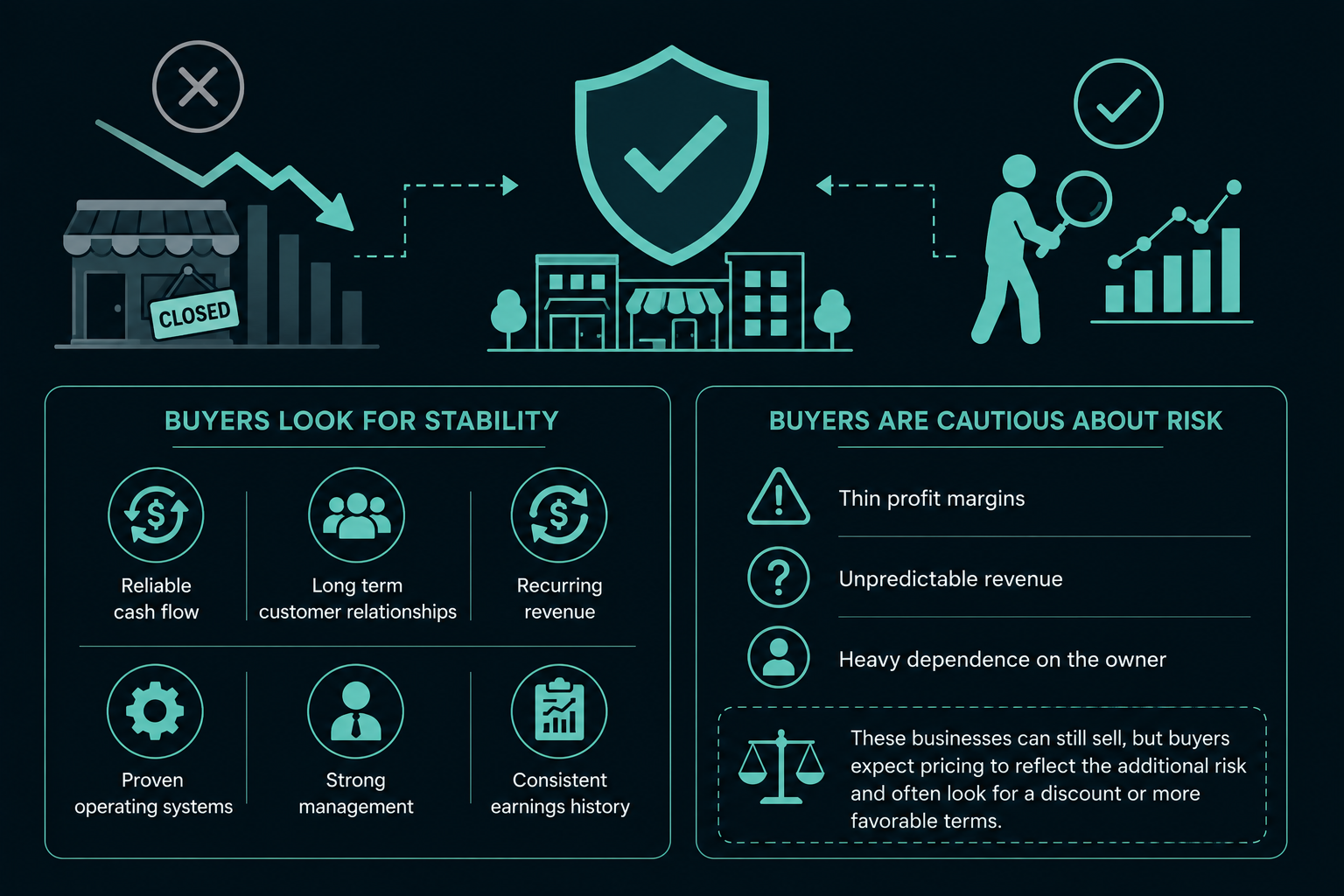
The report also highlights a noticeable shift in buyer priorities. Instead of chasing rapid growth at any cost, buyers are placing much greater value on stability, consistency, and predictable performance. As a result, businesses that continue to perform well during uncertain economic periods are attracting the strongest interest and often standing out as the most desirable opportunities in the market.
Many buyers specifically look for businesses that have:
- Reliable cash flow
- Long term customer relationships
- Recurring revenue
- Proven operating systems
- Strong management
- Consistent earnings history
Buyers are becoming increasingly cautious about businesses with thin profit margins, unpredictable revenue, or a heavy dependence on the owner because those factors can make future performance harder to forecast and increase the overall risk of the purchase. This does not mean those businesses cannot sell, since many still attract interest from buyers who understand the opportunity and are willing to take on more complexity. It simply means buyers expect pricing to reflect the additional risk, and they are usually looking for a discount or more favorable terms when a business carries those concerns.
Preparation Becomes a Competitive Advantage
Perhaps the biggest lesson from the entire report is that preparation has become one of the most valuable assets a seller can have. In today’s market, businesses that are organized, well documented, and financially transparent tend to attract more serious buyers and stronger offers. Sellers who take the time to prepare are often in a much better position to negotiate confidently and close a deal on favorable terms.
Many owners know they will eventually sell, but surprisingly few have taken meaningful steps to prepare. It is common for business owners to think about an exit years in advance without actually putting a plan in place. As a result, they may wait until they are ready to sell before addressing issues that could have been improved long before the business went to market.
According to the report, only a small percentage of owners have completed a professional business valuation. That means many sellers are entering the market without a clear understanding of what their business is truly worth. A professional valuation can provide a realistic starting point, help set expectations, and reduce the risk of pricing the business too high or too low.
Many either estimate their business value themselves or admit they have no idea what their company is worth. This can create major problems during negotiations because buyers and lenders often rely on objective financial analysis rather than guesswork. Without a solid valuation, owners may struggle to justify their asking price or recognize where improvements could increase value before a sale.
Preparation should include much more than simply deciding on a selling price. It should involve reviewing financial statements, improving profitability, reducing owner dependence, organizing key documents, and understanding how buyers will evaluate the business. The more prepared a seller is, the more likely they are to attract qualified buyers and achieve a successful outcome.
Business owners should consider:
- Organizing financial records
- Improving profitability
- Reducing owner dependence
- Documenting operating procedures
- Understanding current market value
- Reviewing financing eligibility
Businesses that complete this work before going to market often experience smoother transactions and stronger offers.
What Canadian Business Owners Can Learn
Although the report focuses on the American market, the overall message applies just as well in Canada because many of the same buyer, seller, and lender dynamics are playing out here too. Strong businesses continue to sell, especially when they have clean financials, stable cash flow, and a clear path for a new owner to step in successfully. Qualified buyers remain active in the market, but they are being far more selective and are spending more time evaluating opportunities before making an offer. Financing has become more challenging as lenders apply stricter standards and look more closely at business performance, which makes preparation more important than ever for owners who want to achieve a strong sale.
Whether you plan to sell next year or five years from now, improving the quality of your financial reporting, reducing operational risk, and building predictable cash flow will likely increase both your business value and buyer interest.
Canadian business owners can also benefit from understanding financing programs such as the Canada Small Business Financing Program, which helps many entrepreneurs acquire businesses through eligible asset purchases. More information is available through Innovation, Science and Economic Development Canada.
Likewise, understanding business valuations and succession planning can help owners prepare well before listing their company for sale.
Final Thoughts
The latest BizBuySell Insight Report paints a positive picture despite lower transaction numbers.
The market has not weakened. Instead, it has matured.
Buyers are still competing aggressively for businesses that demonstrate strong financial performance, predictable earnings, and professional management.
For business owners, this is encouraging news.
If you invest time preparing your business before selling, maintain accurate financial records, and understand how buyers and lenders evaluate opportunities, you will likely be in a much stronger position when it comes time to exit.
In today’s market, preparation is no longer optional. It is one of the biggest competitive advantages a seller can have.