
Buying a business? Learn why lease assignment and landlord approval can make or break your acquisition and how to avoid costly surprises.
Buying a business can feel exciting. If you want a broader overview of the process, our step by step guide to buying a business is a helpful companion piece. You finally find a company that looks profitable, the numbers seem to make sense, financing is starting to line up, and you begin imagining what ownership will actually look like once the deal closes. It is easy to get caught up in the momentum at that stage because everything seems to be moving in the right direction. But then something unexpected can show up and change the whole picture.
That something is often the landlord.
A lot of people in business hear the old saying, “The landlord is the only one who wins.” It sounds a little dramatic, but there is a reason people say it. When you are buying a business, one of the most overlooked parts of the deal is whether the buyer can actually take over the existing lease. Buyers often spend a lot of time reviewing financial statements, equipment lists, employee information, customer data, and other important details, but the lease sometimes gets pushed to the side until later in the process. That can become a very expensive mistake.
In many cases, buying the business does not automatically mean you get to keep the location. The lease is usually a separate agreement, and the landlord may need to approve the buyer before the lease can be assigned. If that approval is not granted, or if the landlord decides to renegotiate the terms, the whole deal can change very quickly. What looked like a solid purchase on paper can suddenly become much less attractive once the real occupancy costs are known.
The Lease Is Often More Valuable Than People Realize
For many businesses, location is a huge part of the value. A restaurant, retail store, service business, fitness studio, medical clinic, or other local operation often depends heavily on being in the right place. Customers already know where to find it, staff know the layout and routine, and the business has usually been built around that specific space over time. That is why the location is not just a physical address. It is often part of the goodwill and overall value of the business itself.
But the lease is usually a separate contract between the seller and the landlord, and that is where buyers can run into trouble. When ownership changes, the landlord may need to approve the transfer of the lease to the buyer through something called a lease assignment.
In some cases, the landlord may be fine with that. In other cases, they may want to review the buyer’s financial strength, business experience, and plans for the space before agreeing. If approval is required and does not happen, the buyer may not be able to keep operating from that location, even if the business itself has been purchased.
That is why lease review should happen early in the process, not after everything else has already been negotiated. Buyers need to know what the lease says, whether assignment is allowed, and whether the landlord has the right to change the terms or require a brand new lease. If those details are left too late, the deal can become much more expensive or even fall apart completely.
What Is a Lease Assignment?
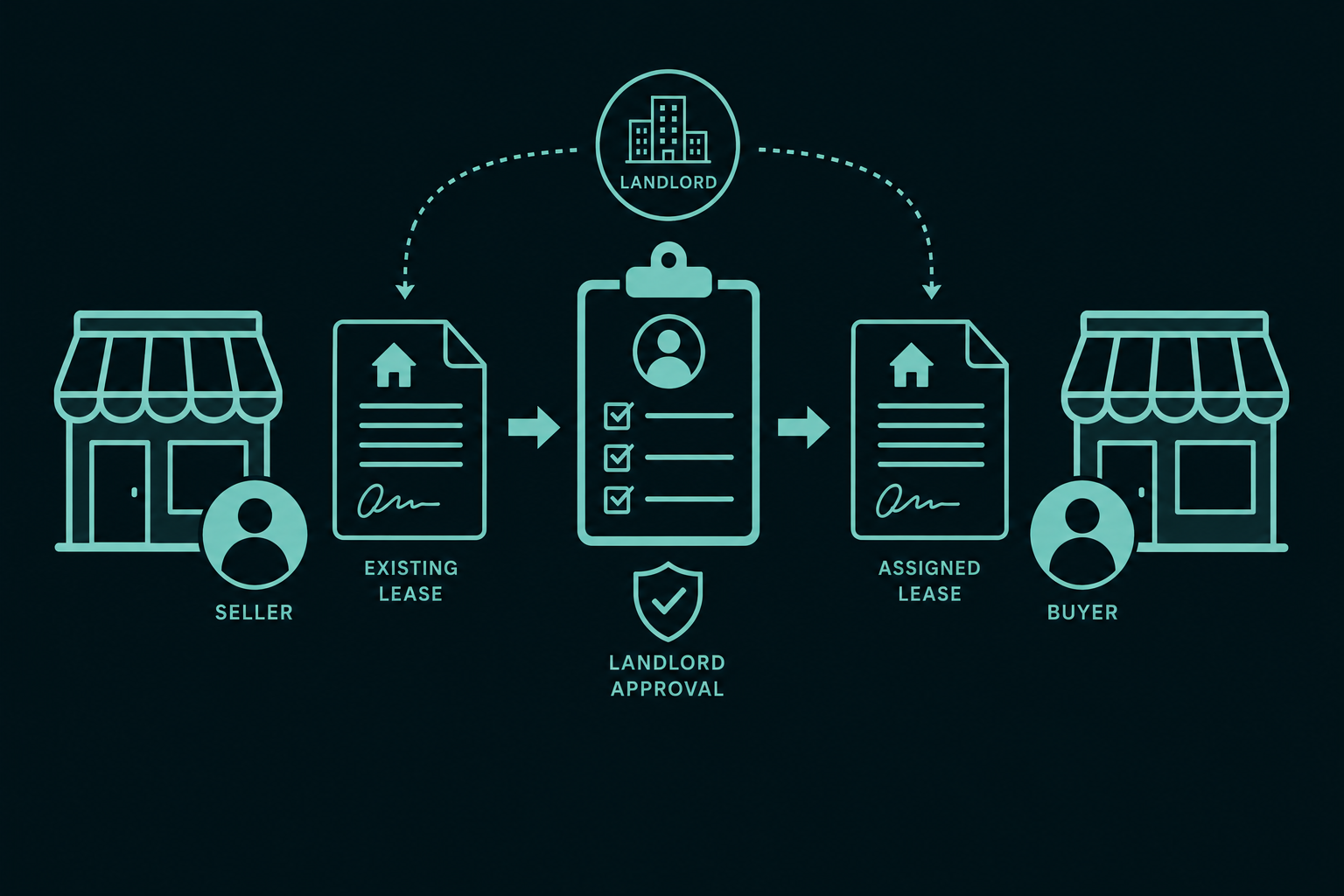
A lease assignment is when the current tenant transfers their rights and obligations under the existing lease to a new tenant. In a business acquisition, this usually means the seller is trying to pass the lease over to the buyer so the business can keep operating in the same location. That transfer is often subject to landlord approval, and it also depends on the wording in the original lease agreement. In some cases, the lease may clearly allow an assignment with consent, while in other cases the landlord has much more control over whether the transfer can happen at all.
On the surface, that sounds pretty straightforward. The buyer takes over the business, the seller steps away, and the lease continues under the new owner. But in real life, this is often where things start to get complicated. The landlord may want to review the buyer’s financial strength, business experience, and overall suitability before agreeing to the transfer. Sometimes the landlord is fine with the assignment, but other times they use the opportunity to renegotiate the lease or ask for new terms that were never part of the original deal.
It is a good reminder that the wording in the lease matters a lot, and small details can have a big impact on whether the transfer goes smoothly.
That is why buyers need to pay close attention to the lease early in the process. What looks like a simple transfer can quickly turn into a major issue if the landlord is not willing to approve the assignment on the existing terms. If the lease changes, the rent changes, or the landlord refuses consent altogether, the whole deal can be affected.
Commercial leases often contain clauses that require:
- Written landlord consent
- Financial review of the buyer
- Assignment application fees
- Personal guarantees
- Updated insurance requirements
- New security deposits
- Additional legal documentation
Sometimes the landlord agrees to assign the lease exactly as written, which is obviously the best case scenario for a buyer. In that situation, the new owner can step into the existing lease terms without having to renegotiate everything from scratch, which makes the transition much smoother and far less stressful.
Other times, the landlord sees the ownership change as an opportunity to negotiate. That can mean asking for higher rent, new conditions, a fresh personal guarantee, or even a completely new lease agreement. From the landlord’s point of view, this may be their chance to reset the terms, especially if the business has become more valuable or the location is in high demand.
When Landlords Ask for a Brand New Lease
This is where deals can really start falling apart.
We have seen situations where buyers assumed they were inheriting the existing lease terms, only to discover the landlord wanted a completely new lease with different conditions, new obligations, and sometimes a much higher rent.
That can mean:
- Higher monthly rent
- Shorter lease periods
- Additional operating costs
- New renovation requirements
- Different renewal options
And yes, sometimes rent increases significantly. When you build a business valuation based on the current rent and then later find out the landlord wants to change the lease terms, the numbers can shift fast. A deal that looked solid on paper may suddenly become much less attractive once the new rent, extra conditions, or added costs are factored in. That is why lease review matters so much during due diligence. Buyers often focus on revenue, expenses, and financing, but rent is one of the biggest ongoing costs in any location based business, so even a moderate increase can have a major impact on cash flow and profitability.
This happens more often than people expect because landlords understand how tied a business can become to a specific location. If the business has already invested heavily in leasehold improvements, such as custom build outs, equipment, signage, or renovations, moving to a new space is not simple. It can be expensive, disruptive, and sometimes unrealistic. That gives the landlord a lot of leverage, especially if the buyer really wants to keep the same location. In some cases, that leverage can lead to a much higher rent or a completely new lease structure, which is exactly why buyers need to look at the lease early and make sure the deal still makes sense if the terms change.
Why Leasehold Improvements Can Create Leverage for the Landlord

Many business owners invest heavily into making a space work, and those improvements can add a lot of value to the day to day operation of the business. A restaurant may need custom kitchen layouts and ventilation systems, while a retail store may rely on branding, shelving, flooring, lighting, and a customer friendly layout. Service businesses often put money into electrical upgrades, specialized equipment, private offices, or treatment rooms that are designed specifically for that location. In many cases, these improvements are not easy to move, and they usually stay with the property when the lease ends or the business changes hands.
That is exactly why landlords understand how much leverage they may have. If a business has already spent a significant amount of money improving the space, relocating becomes expensive, time consuming, and disruptive. A buyer may look at the business and think the location is just one part of the deal, but for many businesses the location is a major part of the value. The landlord knows that if the tenant wants to keep operating in that space, there may be limited room to walk away or push back on new terms.
That does not mean landlords are doing anything wrong. Their job is to protect their property, manage risk, and make sure the lease arrangement still works for them. But buyers need to understand that the negotiating position can change quickly once everyone is emotionally committed to the deal. What looked like a straightforward purchase can suddenly become much more expensive if the landlord wants a new lease, higher rent, or additional conditions before approving the transfer.
That is why lease issues should be identified early, before conditions are removed and before the buyer has gone too far down the road. Once the deal is close to closing, there is very little room to react if the lease terms change in a way that affects the numbers.
Questions Every Buyer Should Ask Before Buying
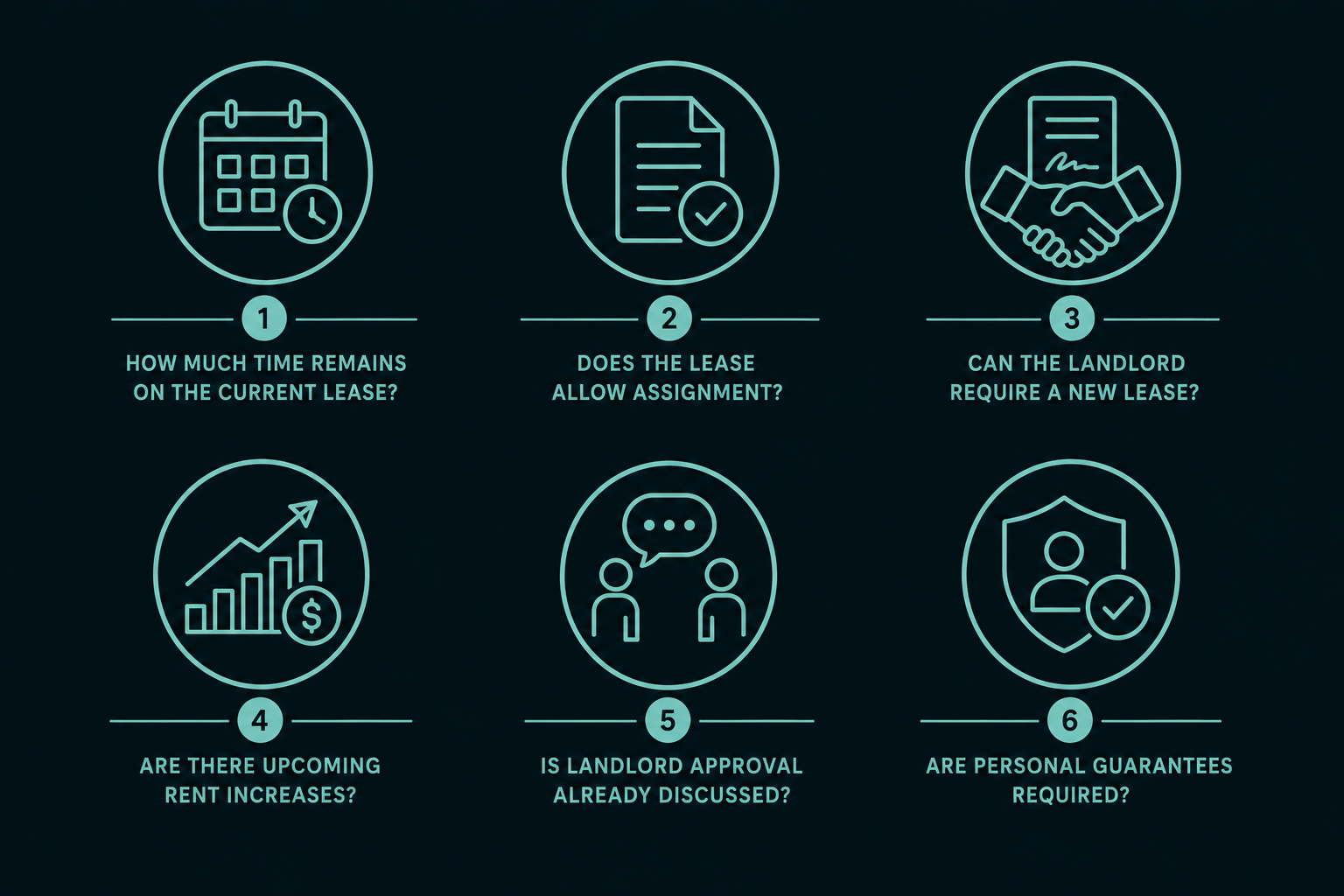
Before moving too far into a business acquisition, ask questions like:
How much time remains on the current lease?
A business can look strong on paper, but if the lease is close to expiring, that creates real uncertainty for the buyer. A location with only a few months left on the lease may not give enough time to recover the cost of the purchase, especially if the business depends heavily on that space. It is much easier to plan with confidence when there are several years left on the lease and clear renewal options are already built in.
Does the lease allow assignment?
This is one of the most important questions to ask early. Some commercial leases allow assignment as long as the landlord gives consent, while others have stricter rules, extra conditions, or even limits on who can take over the lease. Buyers should read the exact wording carefully because the lease may require financial statements, references, or formal written approval before the transfer can happen. If the assignment language is unclear, that is a sign to get legal advice before going any further.
Can the landlord require a new lease?
In some cases, the landlord may not agree to simply transfer the existing lease. Instead, they may want to negotiate a brand new lease with different terms, which can change the whole deal. That might mean higher rent, fewer renewal rights, stricter obligations, or new conditions that were not part of the original agreement. Buyers need to know whether they are stepping into the current lease as it stands or whether the landlord has the power to reopen the deal and change the rules.
Are there upcoming rent increases?
Even if the current rent looks manageable, future increases can have a big impact on cash flow. Many commercial leases include escalation clauses that raise rent over time, and those increases may be tied to fixed amounts, inflation, or market adjustments. A buyer should understand not just what the rent is today, but what it will be next year and beyond. If the rent is set to rise sharply, the business may still be profitable, but the numbers need to be reviewed carefully before making a final decision.
Is landlord approval already discussed?
It is always better to bring the landlord into the conversation early rather than wait until the last minute. If the landlord is likely to have concerns about the buyer, the location, or the lease terms, it is much better to find that out before conditions are removed. Early communication can help avoid surprises, reduce delays, and give everyone time to work through any issues. In many deals, a simple conversation early on can save a lot of stress later.
Are personal guarantees required?
Buyers should also understand whether they will be personally responsible for the lease. Some landlords require a personal guarantee, which means the buyer could be held liable if the business cannot meet its lease obligations. That can be a serious risk, especially for first time buyers or anyone taking on a business with tight margins. Before signing anything, it is important to know exactly what personal liability is being asked for and whether there is any room to negotiate those terms. If financing is part of the deal, it also helps to understand how to be bankable when buying a business, because lenders will also look closely at the numbers and the lease.
Protect Yourself With Conditions in the Offer
One of the smartest ways to reduce risk is making landlord approval and lease assignment conditions part of the purchase offer. It is also smart to have a solid buyer prequalification and proof of funds package ready so the seller and landlord know you are serious.
That gives buyers time to:
- Review lease documents
- Speak with legal advisors
- Confirm assignment terms
- Get written landlord approval
- Recalculate numbers if lease costs change
Without those protections, buyers can spend time and money only to discover the location no longer works. That can mean the rent is too high, the landlord will not approve the transfer, or the lease terms change in a way that makes the business far less profitable than expected. By the time that happens, the buyer may already have invested heavily in legal fees, due diligence, financing, and transition planning, making it much harder to walk away.
Sellers Should Prepare Early Too
This is not just a buyer problem. Sellers benefit a lot when lease questions are addressed before the business goes to market because it helps prevent delays, confusion, and last minute surprises during negotiations. If the lease is reviewed early, the seller can understand whether landlord approval will be needed, whether the lease can be assigned, and whether there are any issues that could affect the sale price or closing timeline.
That kind of preparation makes the business look more organized and gives buyers more confidence in the deal. It also helps the seller avoid losing momentum after a buyer has already shown serious interest. When lease concerns are handled ahead of time, the whole process tends to move more smoothly, and the chances of the deal falling apart later are much lower.
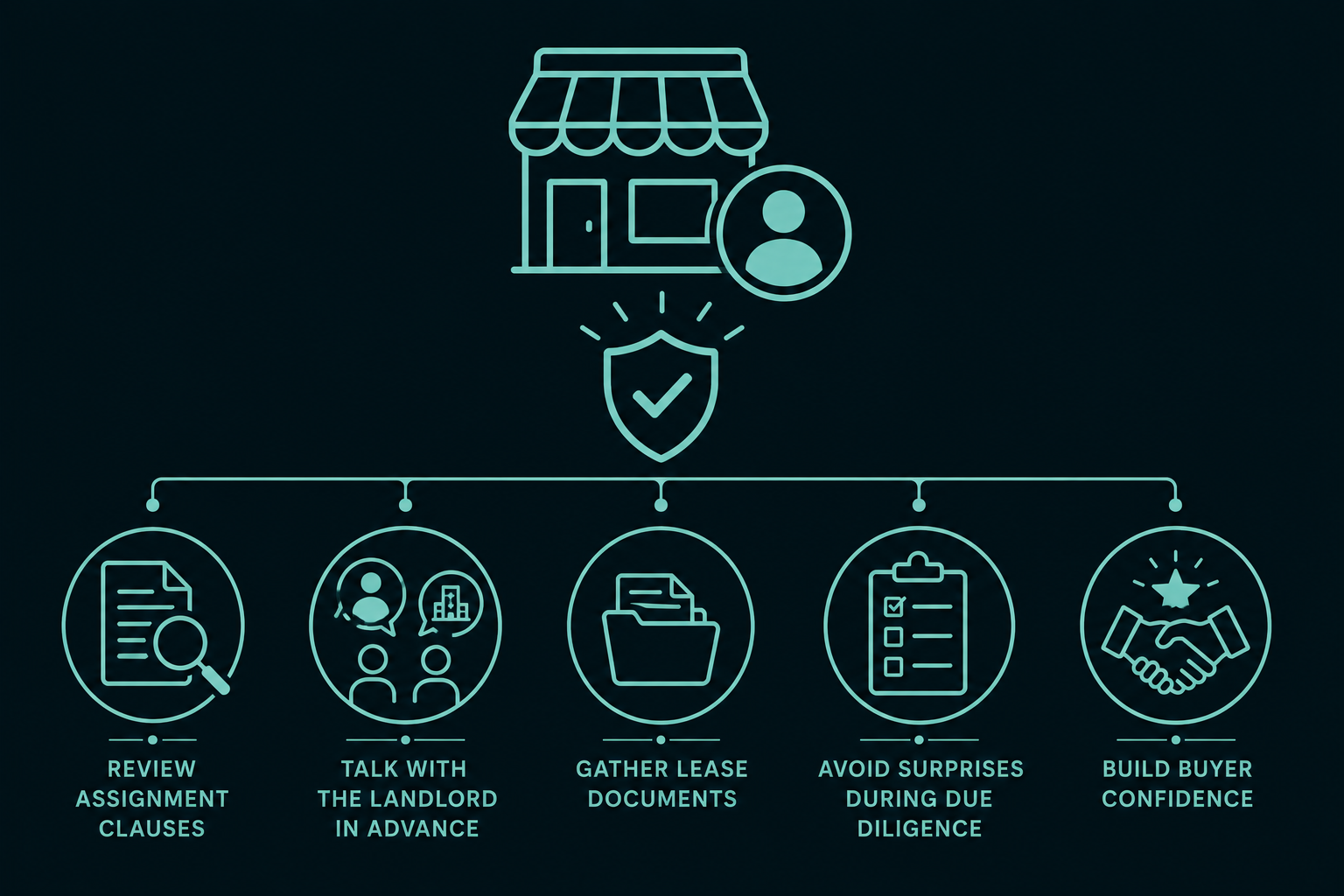
If sellers prepare early, they can:
- Review assignment clauses
- Talk with the landlord in advance
- Gather lease documents
- Avoid surprises during due diligence
- Build buyer confidence
It is a good reminder that sellers should not wait until the buyer is already deep into the process before checking the lease.
Nothing slows momentum like discovering a major lease issue late in negotiations.
Why the Lease Can Make or Break the Deal
Buying a business is already complex, and there are a lot of moving parts that need attention at the same time. You have financing to secure, legal documents to review, due diligence to complete, working capital to plan for, and a transition period to think through. On top of that, there are employees, customers, suppliers, and day to day operations that all need to keep running smoothly. With so much happening, it is easy for the lease to get pushed down the list, but that is exactly where buyers can get into trouble.
Do not let the lease become the issue that quietly kills the deal. A business may look incredible on paper, with strong sales, good margins, and a solid reputation, but if you cannot operate from that location under reasonable lease terms, the whole deal can change very quickly. A rent increase, a landlord refusal, or a requirement for a brand new lease can turn a good opportunity into a bad one. That is why the lease should always be reviewed early, not after everything else is already in motion.
Before committing to a purchase, make sure you understand exactly what happens to the lease and whether the landlord must approve the transfer. Ask the right questions, review the lease carefully, and make sure the numbers still work if the terms change. Because sometimes the lease is not just paperwork. Sometimes it is the deal.