
A clear guide to business valuation methods, key financial metrics, and factors that affect what a business is worth.
Whether you’re planning to sell your business, bring in investors, or prepare for retirement, knowing the true value of your company is essential. Business valuation isn’t just about profit; it includes risk, assets, market trends, and the strength of your operations. Fortunately, understanding how to value a business doesn’t have to be complicated.
This guide breaks down simple steps to help you determine what your business is worth.
Determining the true value of a business is one of the most critical steps a business owner can take. Whether you are planning for retirement, bringing in new investors, or preparing to sell, knowing what your business is worth allows you to make informed, strategic decisions.
In small and mid-sized businesses, financial statements rarely tell the complete story. Understanding the valuation process helps you bridge the gap between simple accounting numbers and real-world market value.
Why Business Valuation Matters
A proper business valuation is more than just a exercise in number-crunching but a strategic tool. An accurate valuation helps you:
- Set a realistic asking price: Avoid overpricing (which deters qualified buyers) or underpricing (which leaves money on the table).
- Negotiate with confidence: Support your asking price with clear financial data and defensible multiples.
- Plan for succession and retirement: Maximize your return as you prepare for the massive
$300 billion business transfer wave - Understand financial health: Pinpoint exact operational strengths and hidden risks before entering the market.
- Drive strategic growth: Identify key areas to improve long-term enterprise value years before listing.
Steps to Value a Business
Below is a straightforward process any business owner can follow before speaking with a professional valuator or business broker.
Step 1: Organize Your Financial Statements
The valuation process always starts with reliable, transparent financial documentation. Buyers and valuators typically require 3 to 5 years of historical financial records to evaluate performance trends.
Essential documents to gather:
- Profit & Loss (P&L) statements
- Balance sheets
- Corporate tax returns
- Cash flow statements
- A comprehensive inventory of assets and liabilities
Pro Tip: Keep your bookkeeping clean and clearly identify all personal or non-operational expenses running through the company. Clean records build buyer confidence and ensure you don’t undervalue your actual cash flow.
Small business owners frequently run discretionary expenses, one-time costs, or personal perks through their business. To determine the company’s true, ongoing earning power, you must normalize the earnings into either SDE or EBITDA.
Seller’s Discretionary Earnings (SDE)
SDE is the primary metric used for small, owner-operated businesses. It measures the total financial benefit a single full-time owner-operator derives from the business annually.
To dive deeper into how these metrics differ and which applies to your company, review our breakdown on
EBITDA
EBITDA (Earnings Before Interest, Taxes, Depreciation, and Amortization) is generally reserved for mid-sized or enterprise-level companies with an established management team where the owner plays a hands-off role.
Step 2: Choose the Right Valuation Method
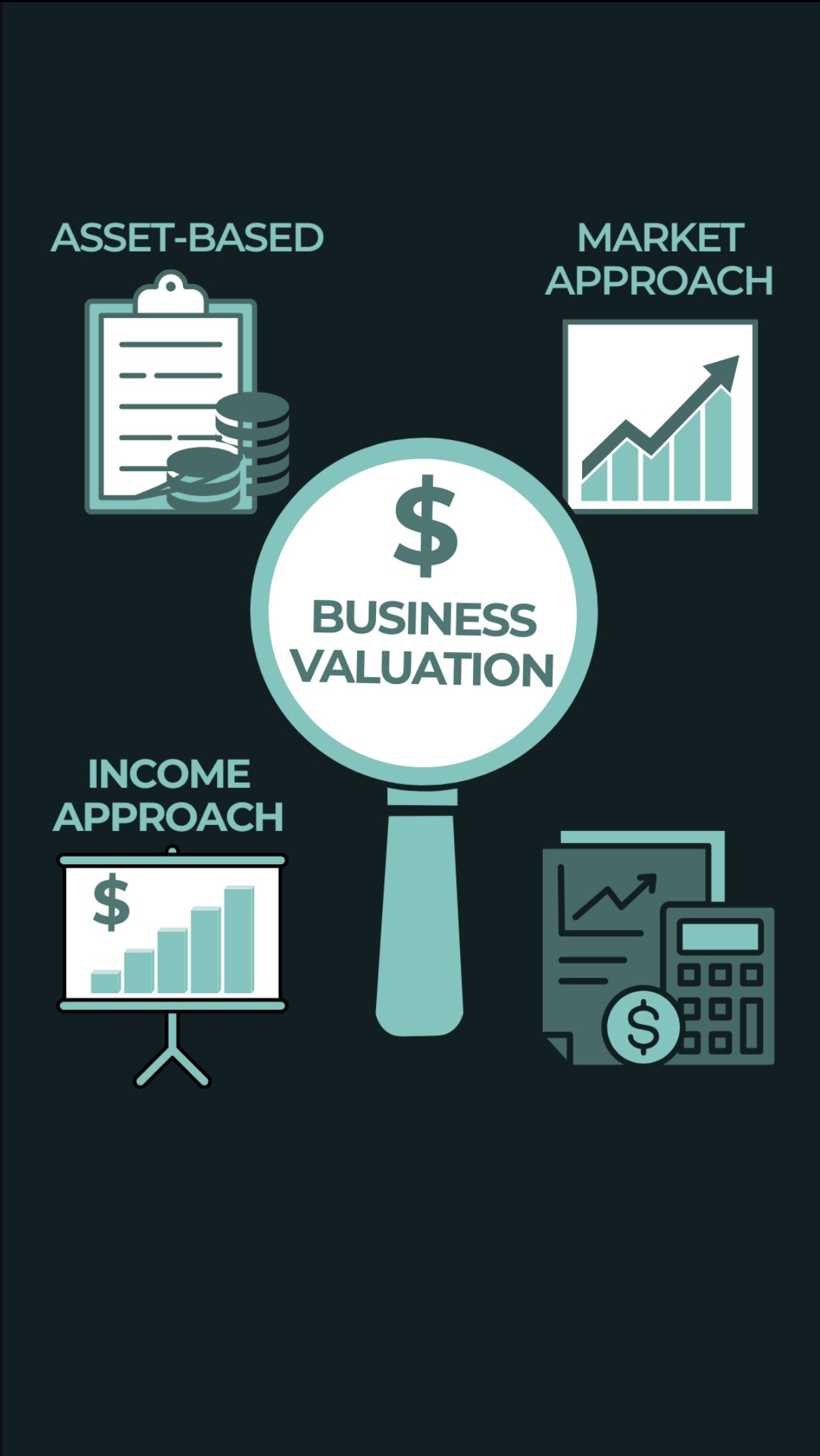
There are three common valuation methods used in the small-business marketplace.
1. Income Approach (Earnings-Based Method)
This method estimates what a buyer would pay based on expected future earnings.
The most common formula is:
Business Value = SDE × Industry Multiple
Industry multiples typically range from 1.5 to 5+ depending on factors like stability, growth, and risk.
Businesses with strong recurring revenue, long-term contracts, or strong customer concentration often command higher multiples.
2. Market Approach (Comparable Sales)
This method compares your business to similar businesses that have recently sold.
Examples include comparing:
-
Revenue size
-
Type of industry
-
Location
-
Profit margins
-
Customer base
Professional brokers have access to databases with real market sales data which often provides the most realistic market valuation.
Useful reference:
International Business Brokers Association (IBBA)
3. Asset-Based Approach
This method looks at the value of your assets minus liabilities.
It’s typically used for:
-
Asset-heavy businesses (manufacturing, construction, transportation)
-
Unprofitable businesses
-
Businesses in liquidation
Tangible assets may include equipment, vehicles, inventory, or property. Intangible assets, like brand reputation, trademarks, or customer lists, can also add value.
Step 3: Evaluate the Non-Financial Factors
Beyond numbers, buyers want to understand the qualities of the business. These factors may increase or decrease valuation:
What Increases Value
-
Strong team and management structure
-
Recurring revenue or contracts
-
Stable multi-year cash flow
-
Diverse customer base
-
High-quality equipment and systems
-
Attractive location or online presence
What Decreases Value
-
Reliance on one customer or one key employee
-
Outdated equipment or technology
-
Declining revenue trends
-
Poor documentation or messy bookkeeping
These elements influence the risk profile, which directly affects the multiplier used in the income approach.
Step 4: Assess the Market Conditions
Market conditions heavily dictate buyer behavior and valuation multiples. When evaluating your business, consider external factors such as:
- Local and national industry growth trends
- Prevailing interest rates and lending environments
- Labor market conditions and workforce availability
- Regional demand and local competition
Understanding broader economic cycles helps you time your market entry effectively.
A good place to explore industry outlooks:
Government of Canada industry statistics
Step 5: Calculate the Business Value
After reviewing financial and non-financial factors, you can estimate a value.
Example:
If your adjusted SDE is $300,000 and industry multiples for your sector average 2.5–3.5, a potential valuation range might be:
$300,000 × 2.5 = $750,000
$300,000 × 3.5 = $1,050,000
Your true market value usually falls somewhere in that range depending on risk, growth, and operational strength.
Step 6: Get a Professional Valuation or Broker Opinion
While you can estimate your own valuation, a professional business broker provides access to:
-
Real comparable sales data
-
Industry-specific multiples
-
Market trends
-
Buyer demand
-
Professional negotiations
A broker also helps prepare documents, market the business confidentially, and negotiate price and terms.
For small and mid-sized Canadian businesses, working with a local broker ensures realistic pricing and a smooth selling process.
Common Mistakes to Avoid

- Focusing strictly on net income: Ignoring SDE add-backs, growth rates, and operational risk metrics.
- Overpricing the business: Setting a price based on personal financial need rather than realistic market multiples.
- Failing to prepare financials early: Rushing to market with messy books leads to lower offers and failed due diligence.
- Ignoring deal structure: A high valuation with poor terms or high tax liability can yield less cash at closing than a lower valuation with a favorable structure.
Conclusion
Valuing a business isn’t just about crunching numbers but it’s about understanding earnings, market conditions, and operational strength. Whether you’re preparing to sell or simply want a clearer picture of your business’s financial health, following these steps will help you estimate a realistic value.
A professional business broker can further refine the valuation, provide market insights, and guide you through the full selling process.
If you’re considering selling your business on Vancouver Island or want help determining its market value, the team at VI Business Broker can provide expert support tailored to your industry and business size.