There is a big difference between using AI tools and actually being an AI first company.
Most businesses today are still experimenting with automation or using AI for small tasks like writing, summaries, or customer replies. That is helpful, but it is not transformation.
A true AI first company is built differently from the ground up. AI is not something added later. It is the core operating system of the business.
Instead of asking where AI can help, the question becomes how the entire business should function if AI is already part of every workflow, decision, and system.
AI First vs AI Assisted
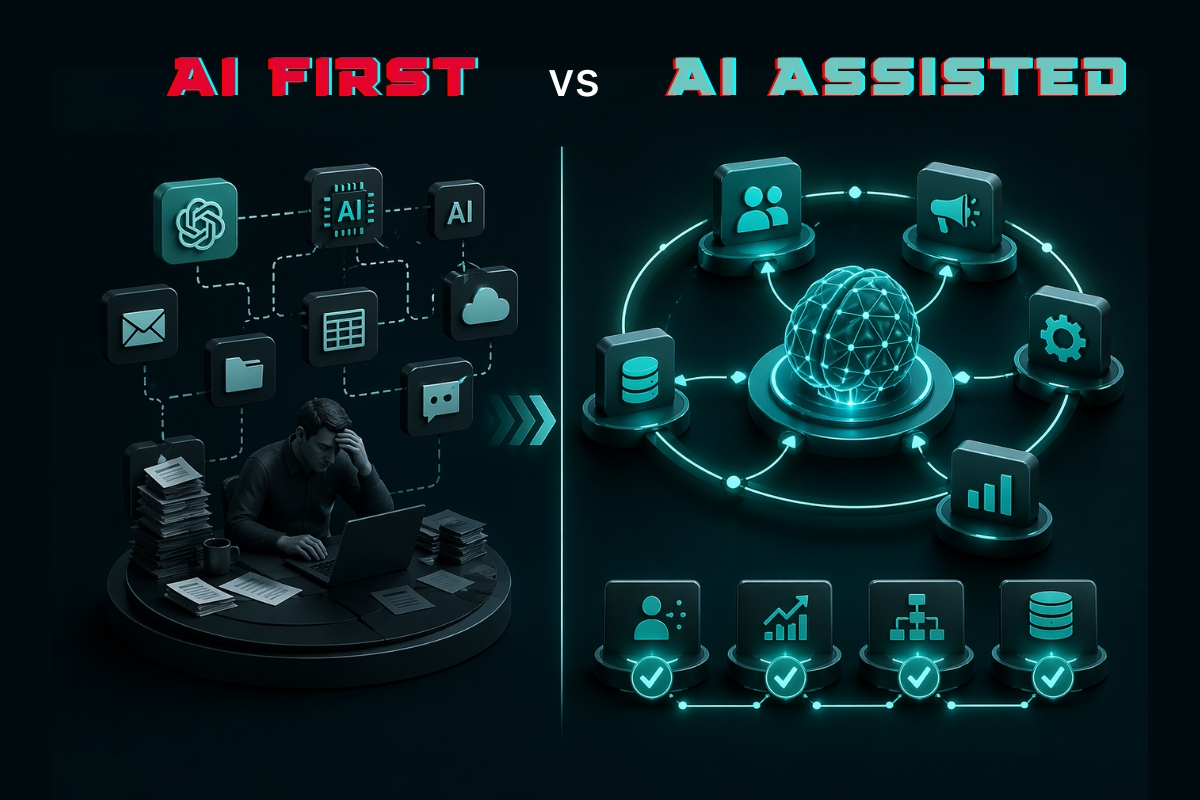
Most companies today are still AI assisted.
They might use tools like ChatGPT or Claude for content, research, or communication. This improves efficiency, but the underlying business structure stays the same.
AI assisted means you still rely heavily on manual input, human decision making, and disconnected systems.
AI first means the system itself learns and improves continuously.
For example:
- Every customer interaction is captured and analyzed
- Every campaign improves the next one automatically
- Every workflow becomes more efficient over time
- Every decision is supported by structured data
According to the Government of Canada’s guidance on digital transformation, organizations that adopt data-driven systems improve service delivery and efficiency over time.
Why Most Businesses Are Not AI First Yet
Real talk, most businesses are not there yet.
If you are still manually checking emails, updating spreadsheets, or copying information between systems, you are operating in a traditional model.
Even if you use tools like Slack or basic automation, you might still be far from a fully connected system.
The biggest barrier is not technology. It is structure.
Most companies were not designed for AI. They were designed for people doing repetitive tasks.
That is why transitioning takes intentional redesign, not just new tools.
Statistics Canada has consistently shown that digital adoption directly impacts productivity and business performance across industries.
What a True AI First Company Actually Looks Like
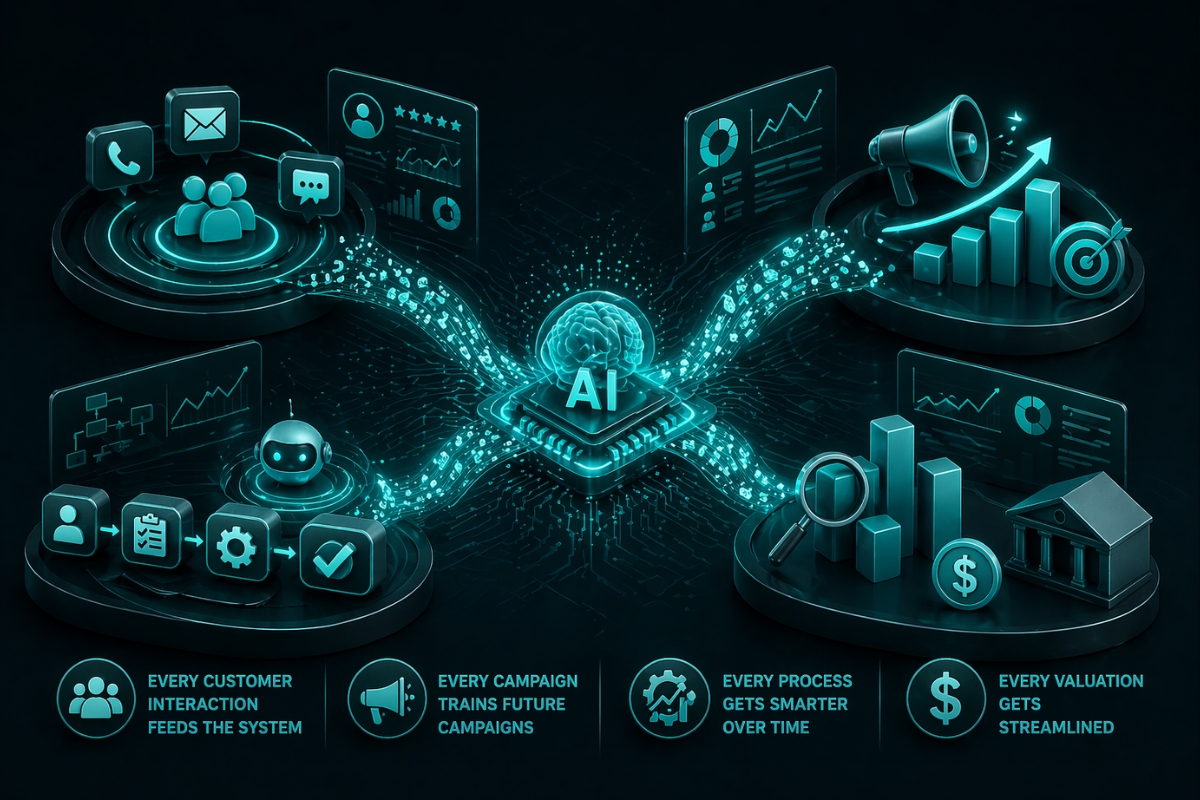
To make this real, here is what defines a true AI first company in practice.
Every Customer Interaction Feeds the System
Every call, email, chat, and transaction becomes data.
Instead of sitting in inboxes or CRM notes, that information is analyzed and used to improve future interactions. Customer service gets faster. Sales messaging gets sharper. Issues get resolved before they escalate.
Organizations like Canadian Digital Service emphasize the importance of using data loops to continuously improve service delivery. AI makes that possible at scale.
Every Campaign Trains Future Campaigns
Marketing is no longer guesswork.
Campaign results automatically feed into models that refine targeting, messaging, and timing. Instead of starting from scratch every time, each campaign builds on the last one.
This reduces wasted ad spend and increases consistency in results.
Every Process Gets Smarter Over Time
Manual workflows are replaced or enhanced with systems that learn.
Whether it is onboarding clients, managing deals, or handling internal communication, processes improve as more data flows through them.
Think of it as compounding efficiency. The longer the system runs, the better it gets.
Every Valuation Gets Streamlined
In traditional businesses, valuation is often slow and inconsistent.
In AI first systems, valuation becomes structured and repeatable using historical data, benchmarks, and predictive modeling.
Understanding how business valuation works in Canada also helps owners prepare for better financial outcomes.
This is where companies like VI Business Brokers operate, helping owners understand and improve business value before a sale.
Real Talk Why Most Businesses Are Not There Yet
This is where things get honest.
You are probably not a true AI first company if:
- You still check and respond to emails manually as your primary workflow
- Your data lives in separate tools that do not talk to each other
- Your processes rely heavily on memory, people, or manual steps
- Your automation is limited to surface level tasks
And again, that is normal.
Even companies experimenting with tools like Slack integrations or AI assistants are often still early in the transition.
The issue is not effort. It is structure.
Most businesses were not built with AI in mind. Retrofitting old systems is always harder than building new ones.
The Shift From Manual Work to System Driven Work
A key sign you are moving toward AI first is when you start asking different questions.
Instead of “How do I do this faster?” you ask “Why am I doing this manually at all?”
Take something simple like time tracking.
If you start automatically tracking everything you do across desktop and mobile, you begin to see patterns. You identify low value tasks. You spot inefficiencies. You start eliminating work instead of optimizing it.
That is where real gains come from.
This is also where experimentation matters. Testing different support systems, ticketing platforms, and integrations with tools like Claude or Slack is how you find what actually works for your business.
Building an AI First Company Step by Step
You do not need to rebuild your company overnight. But you do need to move intentionally.
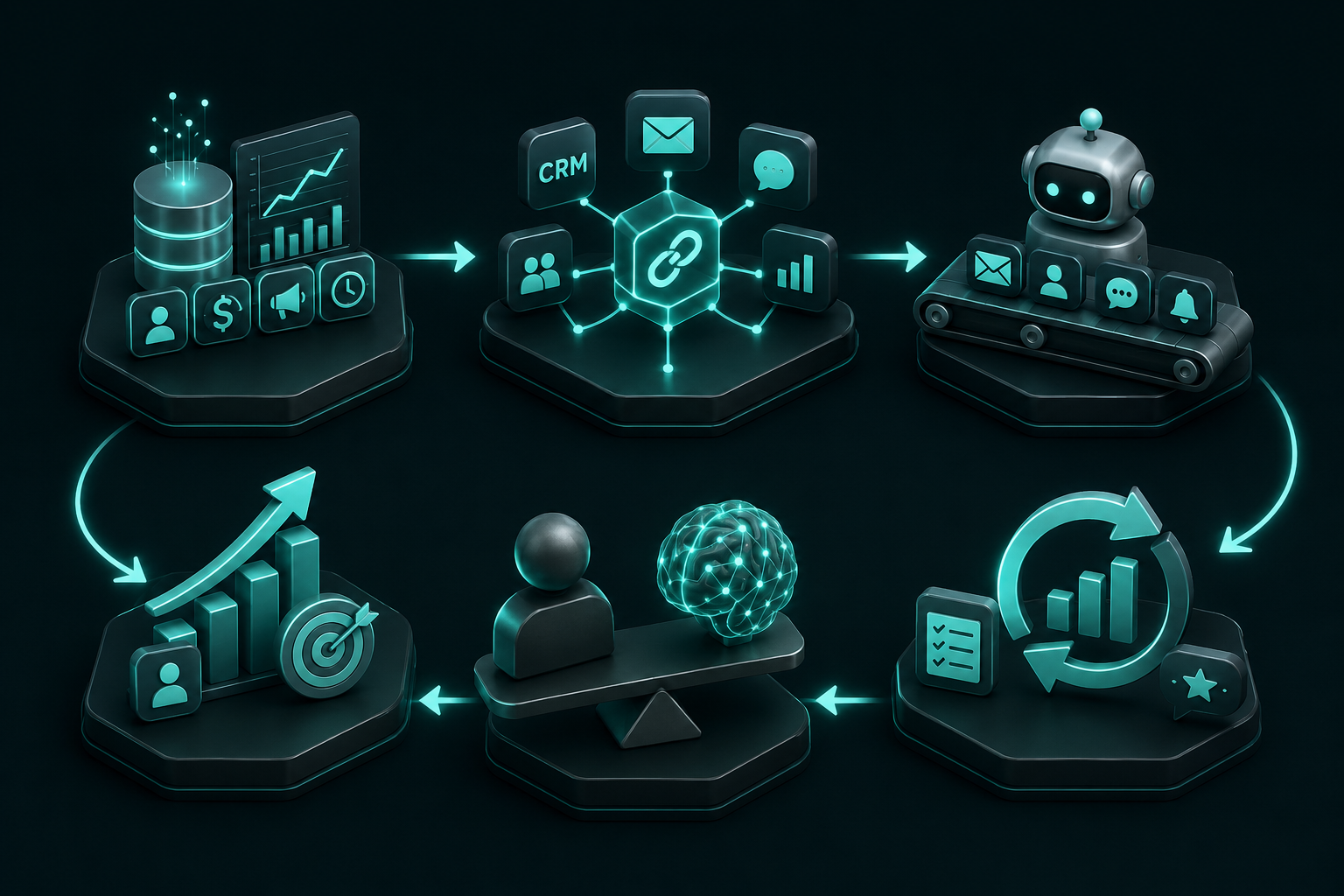
Start With Data Capture
Make sure every meaningful action in your business is being tracked.
- Customer interactions
- Sales activity
- Marketing performance
- Time usage
If the data is not captured, it cannot be improved.
Connect Your Systems
Silos kill AI potential.
Your CRM, communication tools, marketing platforms, and operations systems need to talk to each other. This is where integrations become critical.
Automate the Obvious First
Start with the tasks you know should not be manual.
- Email sorting
- Lead routing
- Basic customer responses
- Internal notifications
These are quick wins that free up time immediately.
Build Feedback Loops
This is where most companies fall short.
Every system should learn from outcomes. If a campaign performs well, that insight should feed into the next one. If a customer issue repeats, the system should flag and address it.
Keep Humans in the Loop
AI first does not mean human free.
It means humans focus on higher value work like strategy, relationships, and decision making, while systems handle repetition and scale.
All-in-One Support Systems That Help You Operate Like an AI First Company
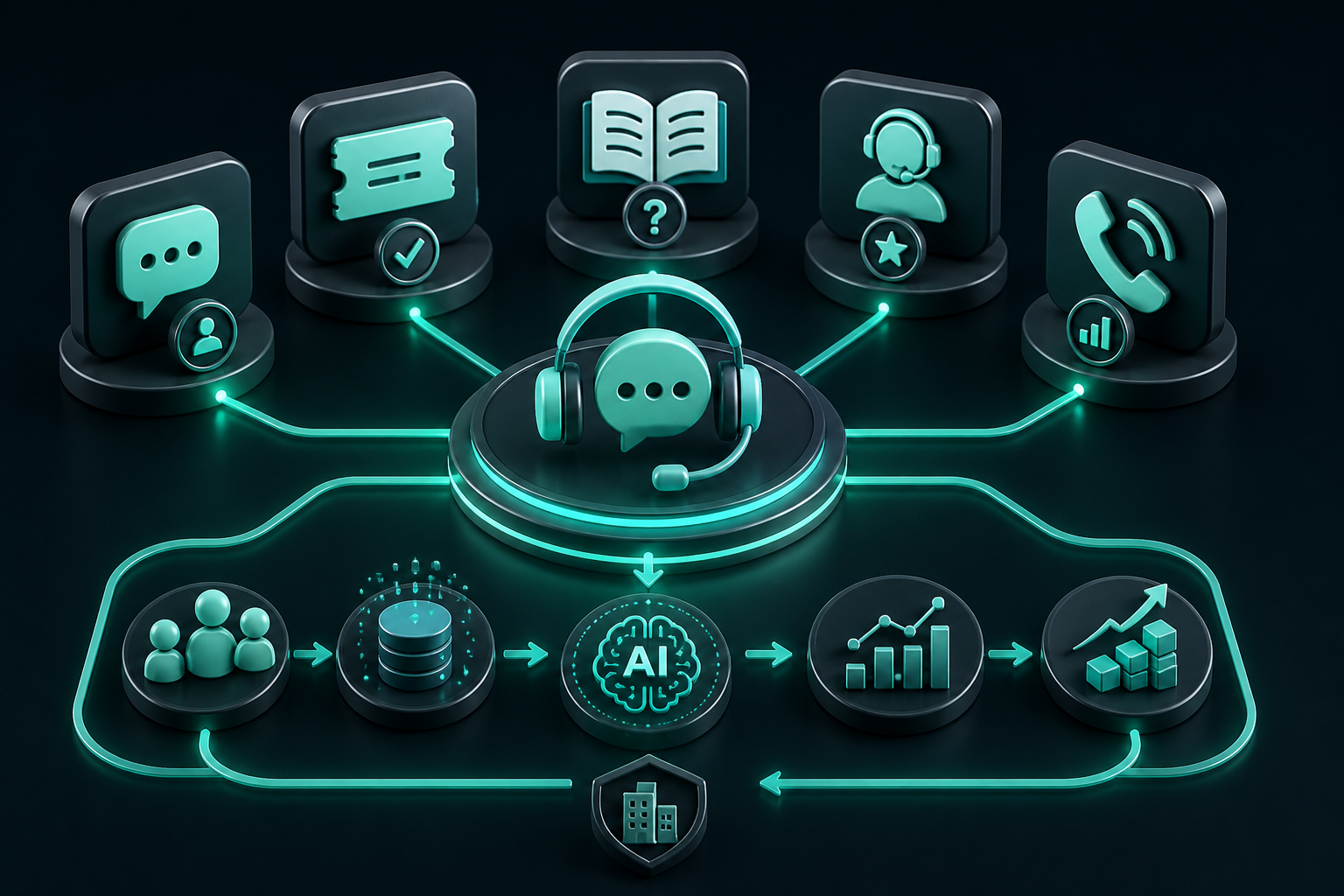
One of the fastest ways to move toward an AI first structure is to reduce the number of disconnected tools your team is juggling.
Instead of having separate systems for live chat, ticketing, FAQs, customer support, and phone communication, AI first companies aim to unify everything into a single operating layer.
This is where all-in-one platforms become important.
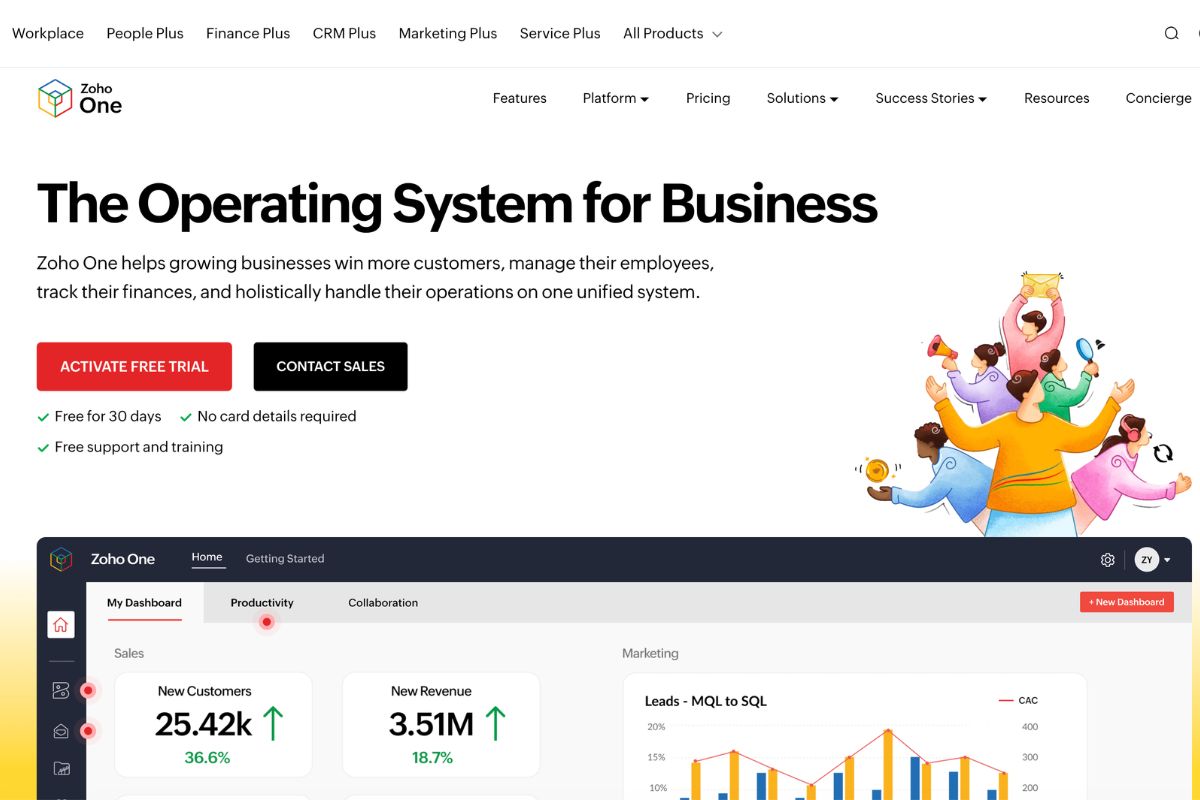
For example, systems like Zoho One are designed to bring multiple business functions together in one ecosystem. It can connect CRM, support, communication, and automation so data flows between departments instead of being trapped in silos.
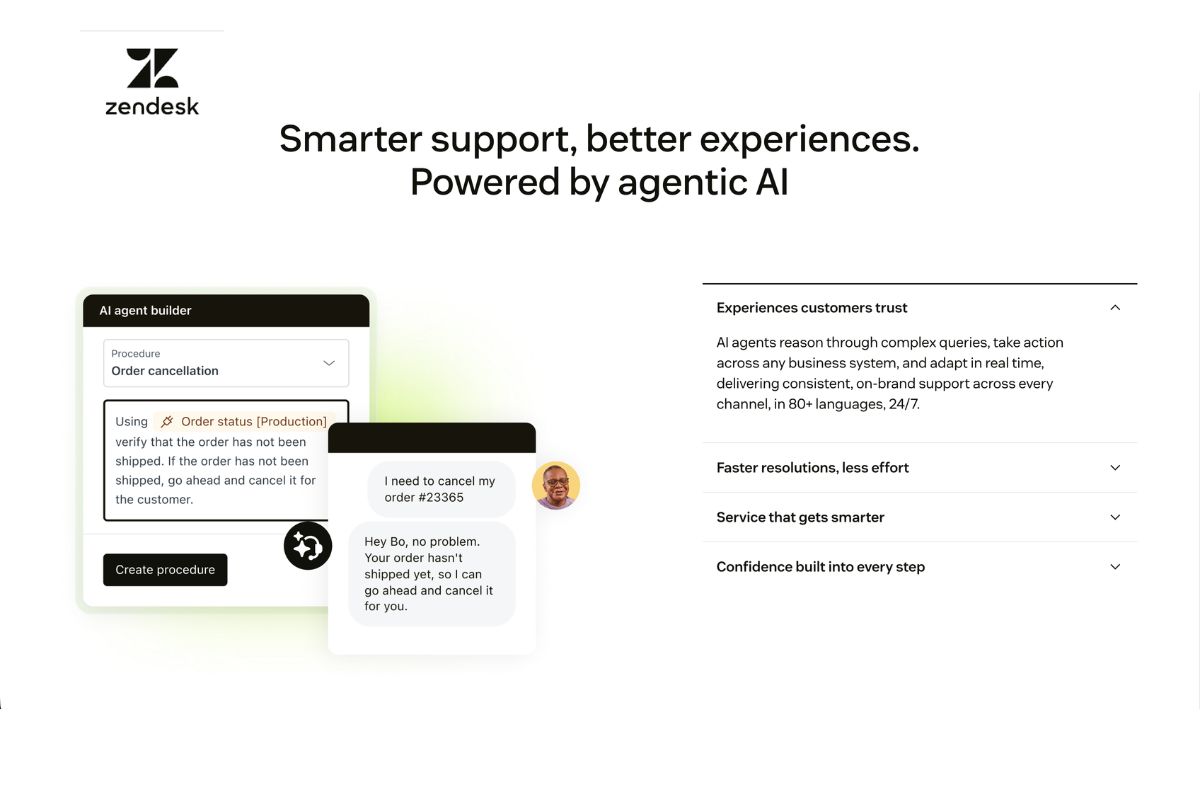
Another strong example is Zendesk, which is built specifically for customer experience. It combines live chat, ticketing systems, help centers, and phone support into one structured platform. This allows every customer interaction to be tracked, analyzed, and improved over time.
When you bring these types of systems into your business, you are not just “improving customer service.” You are actually building a feedback loop where:
- Live chat conversations become data for improving responses
- Support tickets reveal recurring issues that can be automated
- FAQs evolve based on real customer behaviour
- Phone support insights feed into product and service improvements
This is exactly what an AI first company does differently. It does not treat support as a separate function. It treats it as intelligence input for the entire business.
The goal is to move away from scattered tools and toward a unified system where every customer interaction strengthens the business automatically.
Can Every Business Become Fully AI First
Probably not to one hundred percent.
If you are not a pure software or SaaS company, there will always be some level of manual work. Physical operations, relationship driven deals, and complex negotiations still require human involvement.
But that does not mean you cannot get close.
The goal is not perfection. It is reduction.
Reduce the time spent on tasks that do not require human judgment. Reduce inefficiencies. Reduce delays.
Even cutting thirty to fifty percent of manual work can dramatically change how a business operates and scales.
Why AI First Companies Have Stronger Exit Value
One of the biggest advantages of becoming AI first is not just efficiency. It is business value.
Companies that are system driven are easier to scale, easier to manage, and easier to sell.
Learning more about selling a business in Canada shows how structure and efficiency impact valuation.
Understanding asset sale vs share sale differences also becomes important when preparing for exit.
And in some cases, owners consider how to sell a business discreetly to protect operations during transition.
Businesses that are already systemized tend to perform better during due diligence because buyers see lower risk and higher scalability.
What Happens When You Get This Right
When a company truly moves toward AI first, a few things start to happen.
- Decisions get faster because data is always available
- Operations become more consistent and predictable
- Teams spend more time on high value work
- Growth becomes easier to manage and scale
More importantly, the business becomes less dependent on any single person or manual process.
That is a major factor in valuation and sellability, especially for owners thinking long term.
The Next 30 Days Mindset
If you are starting now, the next few weeks are about observation and experimentation.
- Track everything you do
Identify what feels repetitive or unnecessary - Test tools and integrations
- Watch what you stop doing completely
You might be surprised how quickly your workflow changes.
The fun part about building or evolving a business today is that you can actually redesign systems in real time. What used to take years can now happen in weeks.