One of the most common questions we hear from business buyers is:
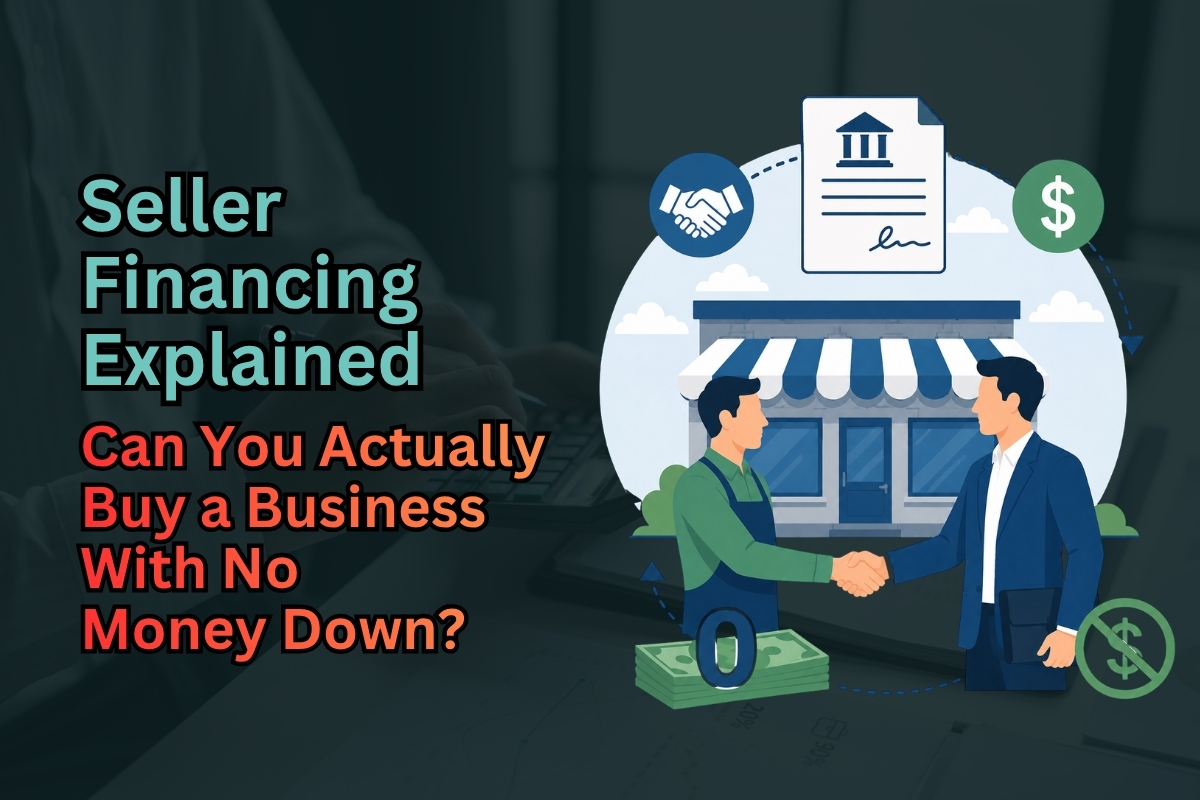
“Can I buy a business with no money down?”
The short answer is yes, it is possible.
The longer answer is that it is much more complicated than most people think.
Many first time buyers come across stories online about people buying businesses with little or no money out of pocket. While these situations do happen, they are not the norm. Most business acquisitions require some level of buyer investment, whether through cash, financing, or other assets.
That is where seller financing often comes into the conversation.
Seller financing can be a valuable tool that helps buyers acquire a business when traditional financing alone is not enough. It can also help sellers attract more qualified buyers and complete deals that might otherwise fall apart.
Let’s take a closer look at how it works.
Is Seller Financing Really a Thing?
Yes, seller financing is absolutely a real thing.
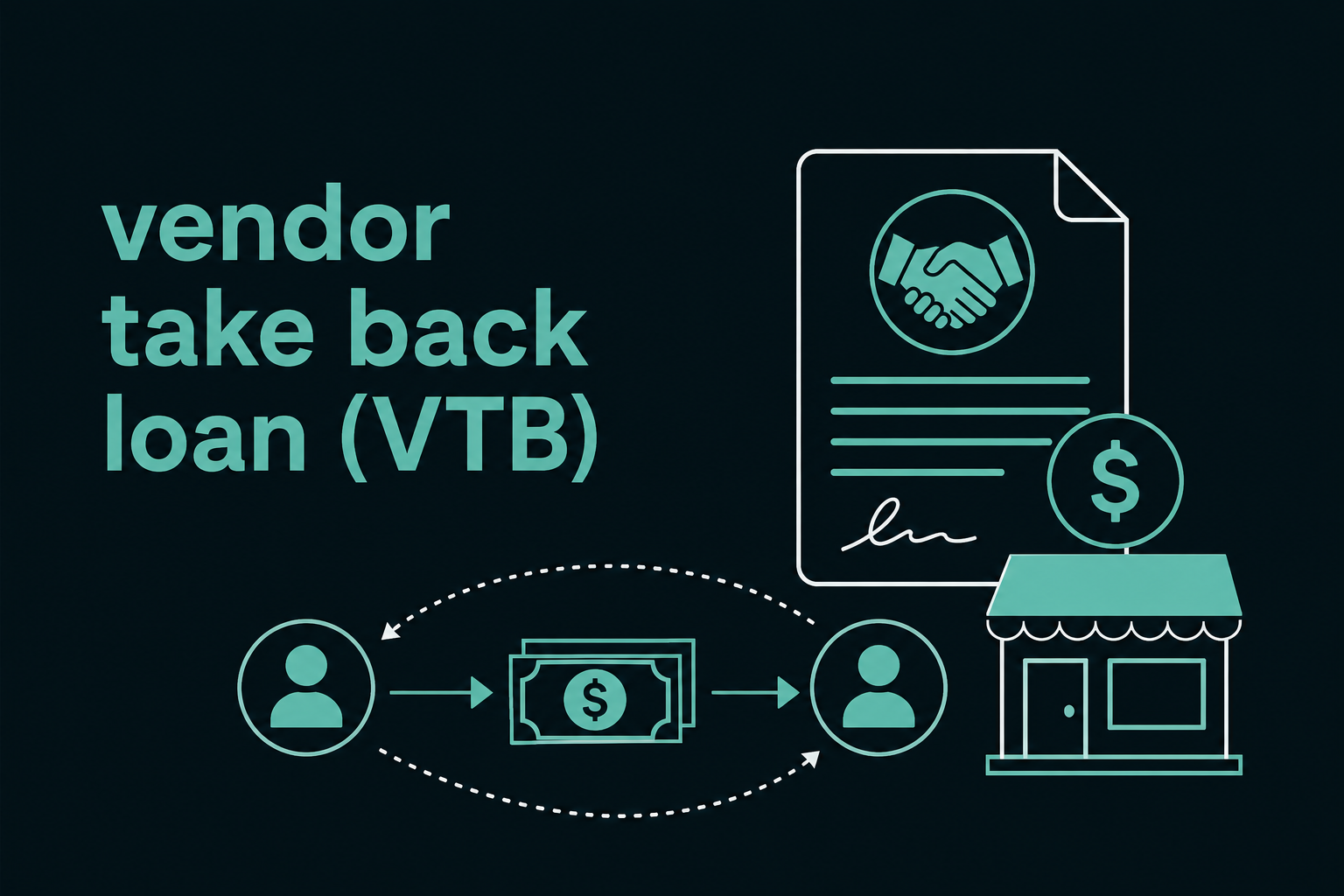
In business sales, it is often called a vendor take back loan (VTB). This means the seller agrees to finance a portion of the purchase price instead of receiving all of the money at closing.
For example, imagine a business sells for $500,000.
The buyer may contribute a down payment and secure bank financing for part of the purchase. The seller might then finance the remaining amount through a seller note.
Instead of receiving the full purchase price immediately, the seller receives regular payments from the buyer over an agreed period of time, usually with interest.
Seller financing is common in many small and medium sized business transactions across Canada. It is often used alongside bank financing rather than replacing it entirely.
For more information about business acquisition financing, the Government of Canada provides resources through the Business Development Bank of Canada (BDC).
Why Would a Seller Finance Part of the Sale?
At first glance, many business owners wonder why they would take this approach.
After all, most sellers would prefer to receive all of their money on closing day.
However, seller financing can create benefits for both parties.
A seller may agree to finance part of the purchase because it can:
- Increase the number of potential buyers
- Help complete a transaction faster
- Support a higher purchase price
- Improve the chances of bank financing approval
- Create a smoother ownership transition
- Generate interest income on the financed amount
In many cases, seller financing is not about helping an unqualified buyer. It is about finding the right structure to get a good deal completed.
When Is Seller Financing Commonly Used?
There are several situations where seller financing becomes useful.
The Buyer Has Strong Qualifications But Limited Cash
A buyer may have industry experience, good credit, and strong management skills.
However, they may not have enough cash available to cover the entire purchase price.
This is especially common among first time business buyers.
Banks typically expect buyers to contribute some of their own capital, and seller financing can help bridge the gap. Buyers who are planning to seek financing should also understand what lenders look for before applying. Read our guide on how to be bankable when buying a business.
The Bank Wants Additional Comfort
Lenders often view seller financing positively.
When a seller is willing to leave some money in the deal, it demonstrates confidence in the future success of the business.
Many lenders see this as a sign that the seller believes the business will continue generating strong cash flow after the transition.
Since lenders often focus heavily on cash flow metrics during underwriting, it is helpful to understand the difference between EBITDA and Adjusted EBITDA (SDE) when evaluating acquisition opportunities.
The Business Depends Heavily on the Seller
Some businesses rely heavily on the owner’s relationships, expertise, or reputation.
In these situations, buyers may be hesitant to pay the entire purchase price upfront.
Seller financing can reduce some of that risk and encourage the seller to remain involved during the transition period.
The Business Is Difficult to Finance
Certain businesses are more challenging for lenders.
Examples include:
- Smaller businesses
- Service based businesses with few hard assets
- Businesses with unique operating models
- Industries viewed as higher risk by lenders
Seller financing can help close financing gaps that banks are unwilling to cover.
What Does Seller Financing Usually Look Like?
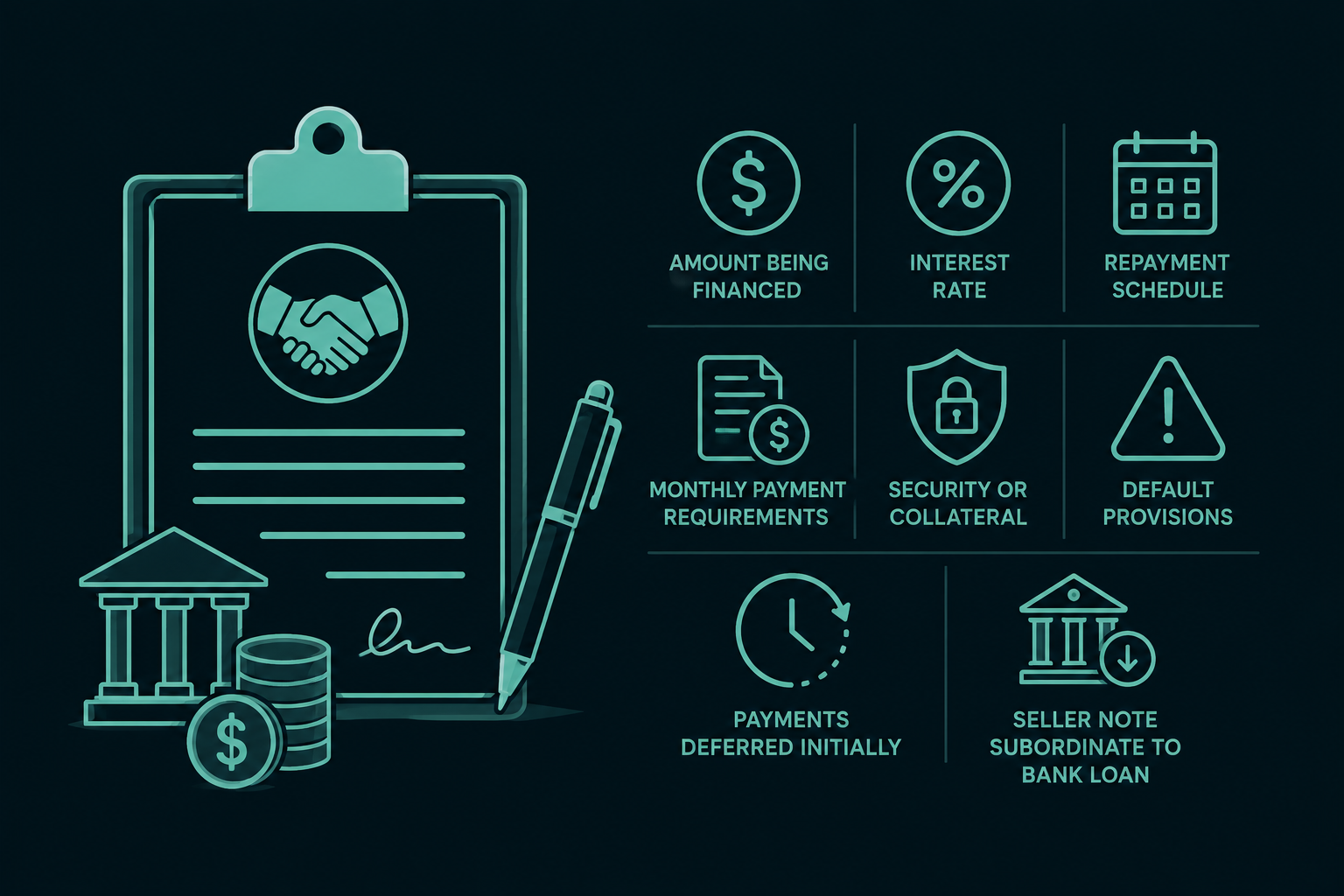
Every transaction is different, but seller financing agreements often include:
- The amount being financed
- The interest rate
- The repayment schedule
- Monthly payment requirements
- Security or collateral arrangements
- Default provisions
- Whether payments are deferred initially
- Whether the seller note is subordinate to a bank loan
Most seller notes are repaid over two to five years, although terms can vary significantly depending on the transaction.
Proper legal documentation is essential for both parties.
Organizations such as the Canadian Federation of Independent Business (CFIB) provide resources and guidance for business owners considering transactions and financing options.
Does Seller Financing Mean the Buyer Is Weak?
Not at all.
This is one of the biggest misconceptions in business acquisitions.
Many highly qualified buyers use seller financing strategically.
Buying a business involves more than simply paying the purchase price.
Buyers also need working capital for:
- Inventory
- Payroll
- Marketing
- Equipment maintenance
- Lease obligations
- Professional fees
- Unexpected expenses
Using every available dollar for the purchase can leave the business vulnerable after closing.
A properly structured financing package helps preserve cash for operations and growth.
Can You Really Buy a Business With Zero Down?
This is where things become interesting.
Technically, yes, a business can sometimes be acquired with little or no money down.
However, these deals are relatively rare and usually involve special circumstances.
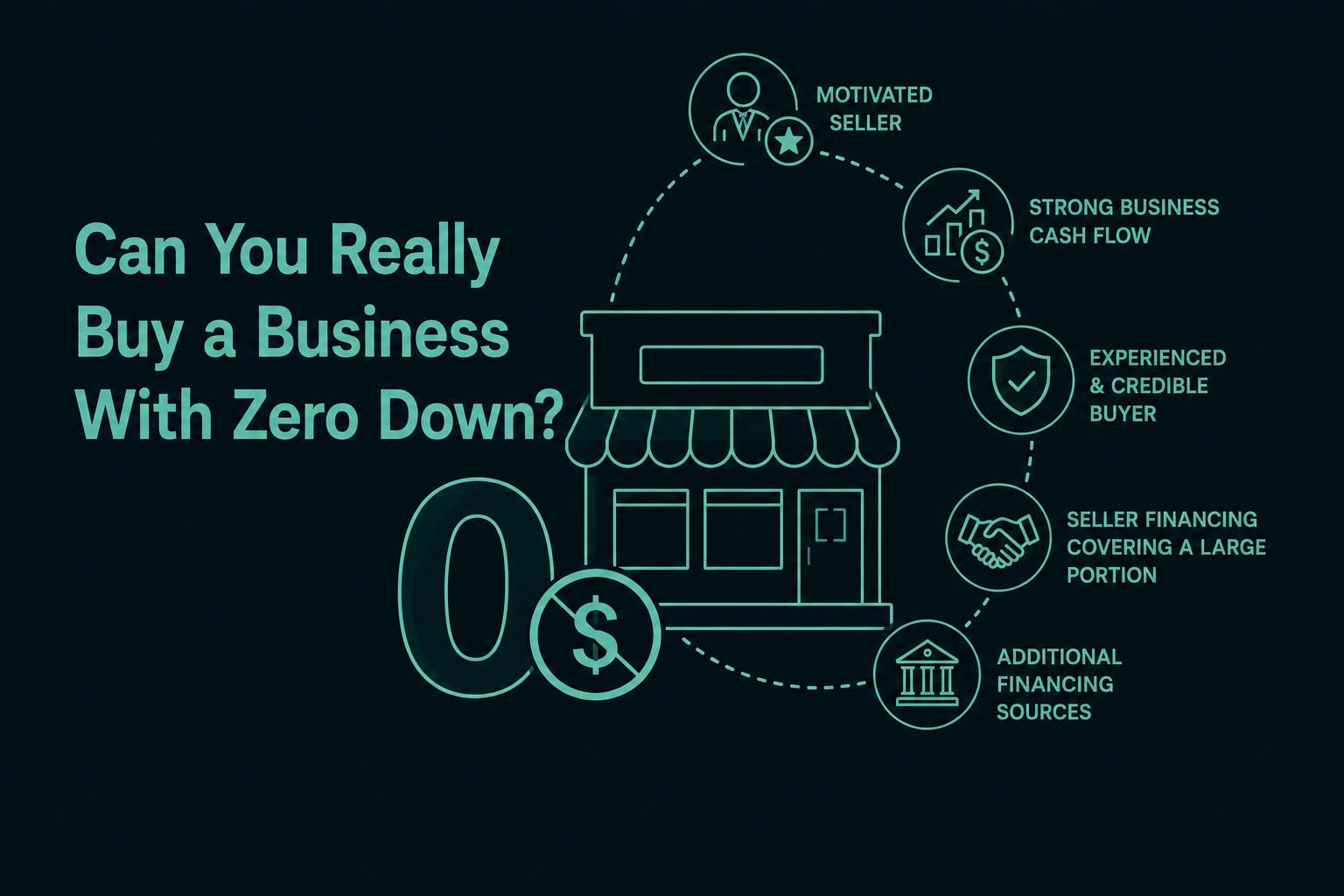
A true zero down acquisition often requires several pieces to align:
- A highly motivated seller
- Strong and predictable business cash flow
- A buyer with excellent experience and credibility
- Seller financing covering a large portion of the purchase
- Additional financing sources if needed
In some cases, buyers may use a combination of:
- Seller financing
- Earnouts
- Investor capital
- Existing business assets
- Vendor take back loans
Another structure sometimes used in lower down payment acquisitions is an earn out, where a portion of the purchase price is paid based on future business performance.
The reality is that very few sellers are comfortable financing 100% of the purchase price.
Most sellers want the buyer to have some financial commitment to the transaction.
Having personal funds invested demonstrates confidence, accountability, and commitment.

What Are the Benefits for the Seller?
Seller financing can offer several advantages.
These include:
- Access to a larger buyer pool
- Greater flexibility during negotiations
- Potentially higher sale prices
- Additional interest income
- Improved financing options for buyers
- Increased likelihood of closing the transaction
Many successful business sales involve some degree of seller participation in the financing structure.
What Are the Risks for the Seller?
Seller financing is not without risk.
The biggest concern is simple.
The buyer may fail to make payments.
Once ownership transfers, the seller no longer controls daily operations. If the buyer struggles financially or mismanages the business, repayment could become an issue.
This is why sellers should always:
- Review the buyer carefully
- Verify financial information
- Obtain legal advice
- Secure the debt appropriately
- Understand the repayment terms completely
Proper due diligence can significantly reduce risk.
What Are the Benefits for the Buyer?
For buyers, seller financing can make business ownership more achievable.
Benefits may include:
- Lower upfront cash requirements
- Greater financing flexibility
- Improved cash flow after closing
- Better chances of obtaining bank financing
- More affordable deal structures
- Stronger seller support during transition
Seller financing can often be the difference between buying a business and missing the opportunity altogether.
If you are considering an acquisition, our guide on how to buy a business step by step walks through the entire process from search to closing.
When Should Seller Financing Not Be Used?
Seller financing is not a solution for every transaction.
It may not be appropriate when:
- The business has weak cash flow
- The buyer lacks relevant experience
- The repayment plan is unrealistic
- The seller needs all proceeds immediately
- Significant operational risks exist
Financing cannot fix a bad deal.
The business still needs to be fundamentally profitable and capable of supporting debt payments.
Seller Financing Can Help Make the Right Deal Happen
Seller financing is very real, and it plays an important role in many business acquisitions across Canada.
While the idea of buying a business with zero down sounds appealing, those deals are far less common than online headlines suggest. Most successful acquisitions involve a combination of buyer capital, bank financing, and seller participation.
When structured properly, seller financing can benefit everyone involved.
For sellers, it can increase buyer interest, support stronger valuations, and help transactions close.
For buyers, it can reduce upfront cash requirements and make business ownership more attainable.
The key is ensuring the business generates enough cash flow, the buyer is qualified, and both parties clearly understand the terms of the financing arrangement.
In the right situation, seller financing can turn a difficult transaction into a successful business sale.