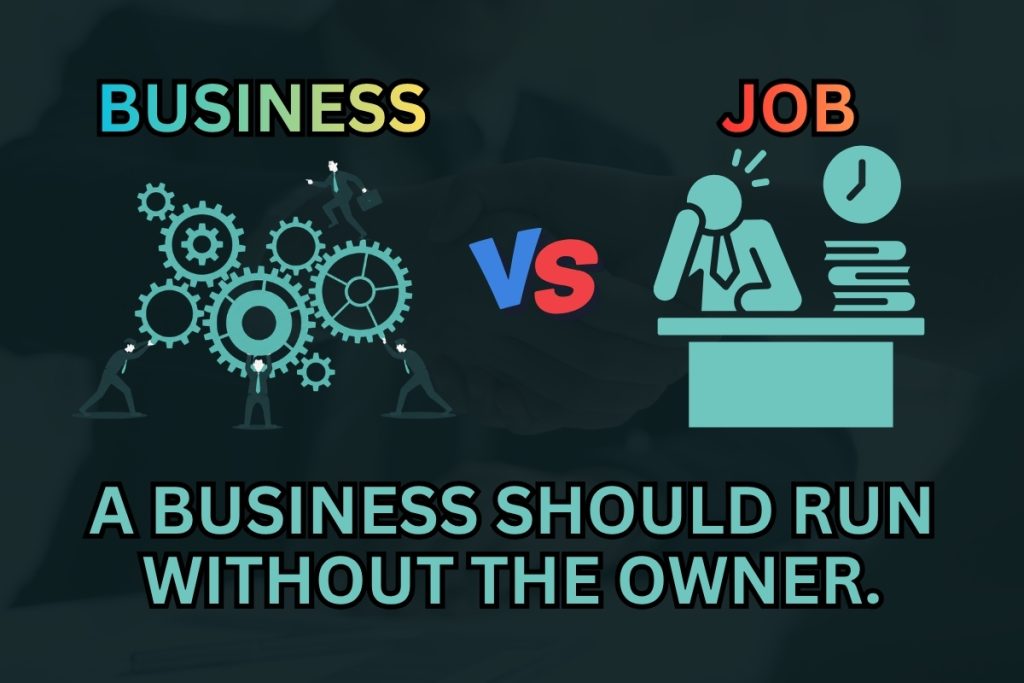
Building a business from scratch is rewarding, but growing organically can sometimes feel like a slow climb. If you want to accelerate your growth, boost your cash flow, and significantly increase your eventual exit payout, there is a powerful M&A strategy you need to understand. That strategy is called roll up equity.
While traditional private equity roll ups usually involve massive institutional investment firms buying up dozens of competitors in fragmented markets, roll up equity can also be executed on an entrepreneurial scale. An active business owner uses their core business as an anchor, acquires complementary service companies, streamlines operations, and then sells the combined entity for a much higher price tag. In this article, we will break down how roll up equity works, why the math behind it is so compelling, and how one real world founder used this exact strategy to achieve three separate successful exits.
How Roll Up Equity Differs From Standard PE Roll Ups
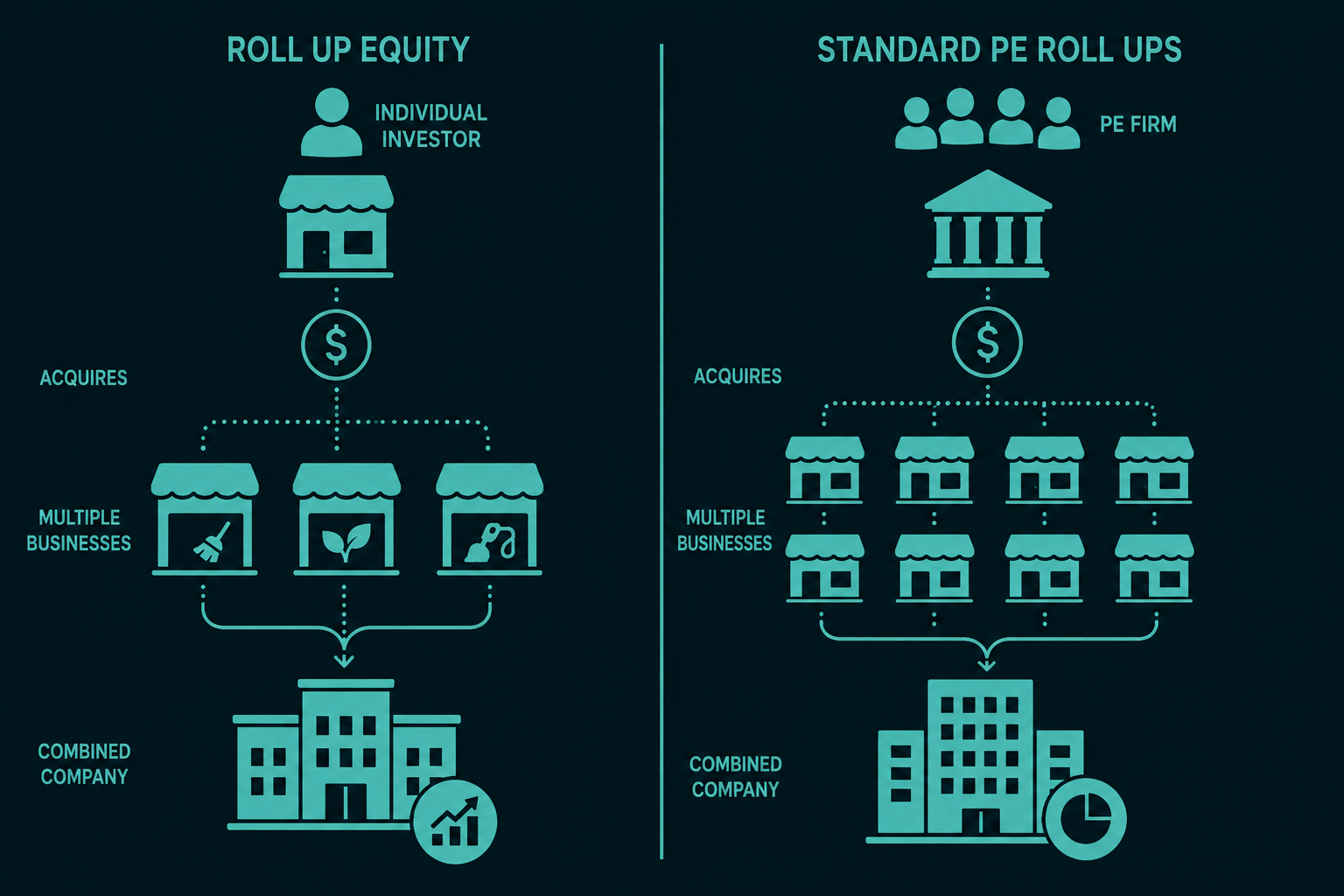
It is easy to confuse roll up equity with institutional private equity roll ups. Private equity funds typically buy up a huge number of similar small businesses across a region to build a market leader. They rely heavily on financial engineering and institutional capital to execute these large scale consolidations.
Roll up equity, on the other hand, is an approachable strategy for hands on business owners and operators. Instead of just buying direct competitors to gain market share, an entrepreneur acquires service businesses that naturally fit alongside their primary business. This hands on approach allows the owner to create immediate operational efficiencies, cross sell services across the same customer base, and build a cohesive ecosystem that commands a premium valuation when it comes time to sell. You can learn more about business acquisition funding options through Canadian institutions like
The Secret Sauce: Understanding Multiple Arbitrage
To appreciate why roll up equity works so well, you have to understand a fundamental principle of business valuation called multiple arbitrage. Small service businesses often sell for relatively low multiples of their earnings. Before calculating your target multiples, it helps to understand how earnings are measured by reviewing our breakdown of
However, larger consolidated companies sell for much higher multiples, often six to eight times earnings or more. Buyers view larger businesses as safer, more predictable, and easier to scale. When you buy three or four small companies at a three times multiple and roll them into one structured enterprise, the market values the new combined company at the higher multiple. You are essentially increasing the overall value of every dollar of earnings simply by combining the businesses under one umbrella.
A Real World Success Story: The Property Management Playbook
To see how roll up equity works in practice, let us look at a real example of an entrepreneur who executed this strategy masterfully. This founder started with a core property management company. Managing commercial and residential properties gave him direct relationships with building owners who constantly needed ongoing maintenance and exterior upkeep.
Instead of outsourcing those maintenance contracts to third party vendors, the founder decided to buy the companies that performed the work. He used his property management business as the anchor and strategically acquired three complementary businesses:
- Commercial Cleaning Company: This acquisition immediately allowed the owner to take over janitorial and interior sanitation services for all the properties under his management portfolio.
- Landscaping Company: By acquiring an established landscaping firm, he secured all the lawn care, groundskeeping, and seasonal property maintenance contracts across his buildings.
- Pressure Washing Company: Buying a exterior washing business rounded out his exterior maintenance services, allowing him to offer complete building restoration and maintenance packages.
Driving Value Through Overhead Reduction and Cross Selling
Buying these companies at roughly a three times multiple was only the first step of the strategy. The real wealth creation happened during the operational integration phase, where the founder focused on two major value drivers: cost reduction and revenue expansion.
First, he aggressively eliminated redundant overhead expenses. He did not need four separate physical offices, four separate administrative teams, or four different accounting setups. By consolidating all operations into his existing property management office, he eliminated direct administrative costs and slashed overhead expenses across all four entities overnight.
Second, he unlocked massive growth through cross selling. His property management company already had trusted relationships with dozens of property owners. He introduced his newly acquired cleaning, landscaping, and pressure washing services to those existing clients. At the same time, he offered property management services to the client lists of the acquired businesses. Revenues skyrocketed without spending a dollar on traditional advertising.
The Big Payoff: Exiting at a Premium
When the founder decided it was time to sell, the transformation was remarkable. Instead of trying to sell four small, independent businesses for a low multiple, he presented buyers with a single, highly profitable, fully integrated property services powerhouse.
Because the combined company generated strong cash flow, had a centralized administrative team, and boasted a loyal customer base, buyers were eager to pay a premium valuation. The founder exited at a significantly higher multiple than the three times he originally paid for the individual service companies. Even better, this founder loved the playbook so much that he repeated the exact same roll up equity process three separate times throughout his career, generating massive wealth with each exit.
Key Steps to Plan Your Own Roll Up Equity Strategy
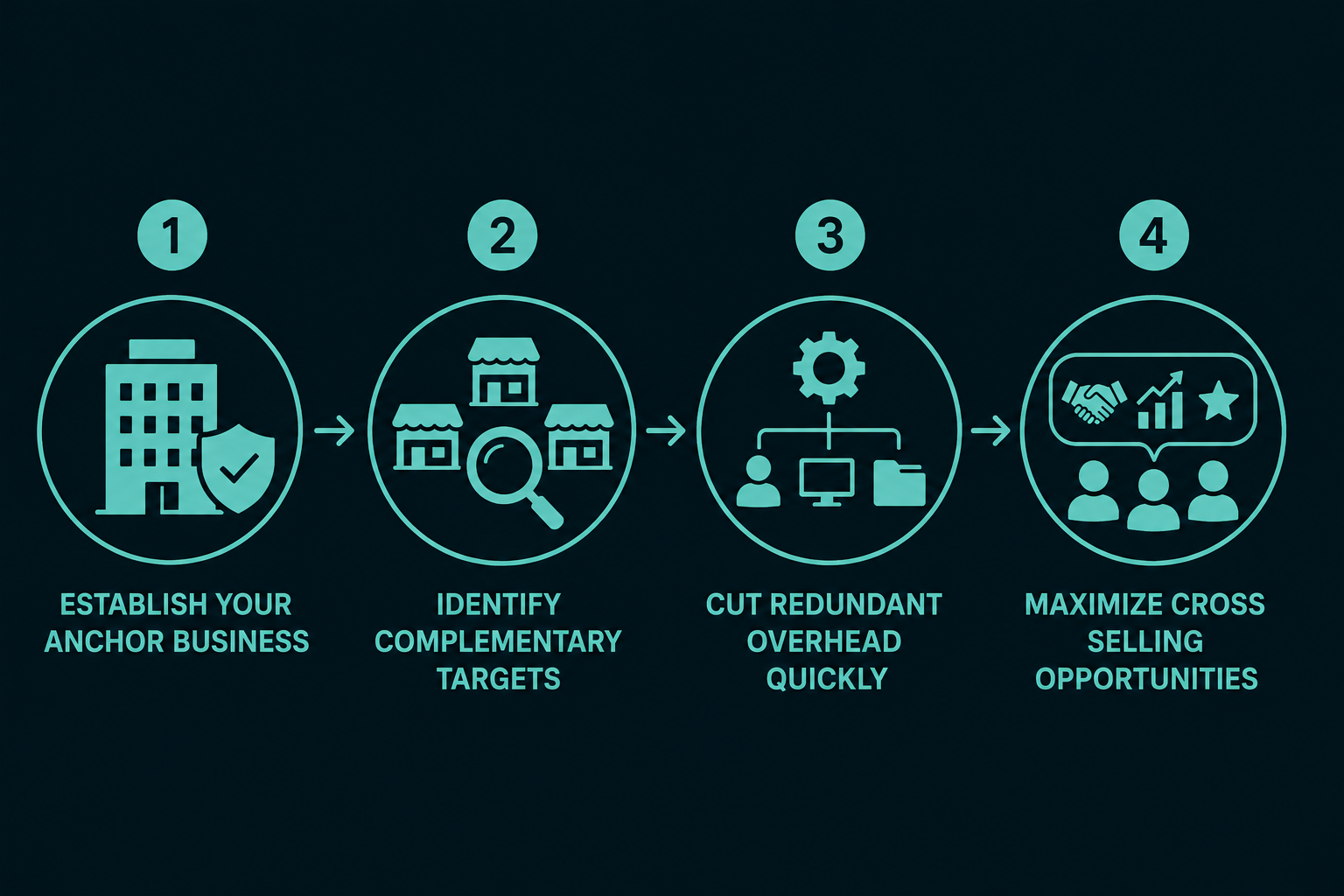
If you want to apply roll up equity to your own business journey, you need a clear plan from day one. It begins with selecting the right anchor business and identifying services that your existing customers are already paying for elsewhere. You can research economic trends and industry data on Canadian business growth through
- Establish Your Anchor Business: You need a strong base company that has reliable cash flow, established administrative systems, and a solid customer list. This base will serve as the foundation for future acquisitions.
- Identify Complementary Targets: Search for smaller service companies that cater to your target market. If you are new to making acquisitions, following a
step by step business acquisition process - Cut Redundant Overhead Quickly: As soon as an acquisition closes, merge administrative functions, software systems, and office spaces. For larger or multi company acquisitions, you may even want to
hire an integration manager to plan processes - Maximize Cross Selling Opportunities: Train your sales and customer service teams to introduce your expanded range of services to your entire client portfolio to boost customer lifetime value.
Final Thoughts: Scaling Smarter with Business Brokers
Roll up equity is one of the fastest ways to build significant enterprise value without relying solely on slow organic growth. By acquiring complementary companies at modest valuation multiples, streamlining operations, and cross selling services, you can build a formidable company that commands top dollar when you decide to exit.
Executing an M&A strategy requires careful planning, accurate valuations, and expert deal structuring. Working with experienced business brokers ensures you identify the right target companies, structure fair acquisition terms, and position your consolidated business for maximum value when you are ready to sell.