
When you work in business brokerage, your most precious asset is not your listing inventory or your contact list. It is your time. Every week, brokers receive inquiries from potential buyers who claim to be deeply interested in acquiring a company. They ask for confidential financial statements, want extended phone calls, and request site visits. Yet, when the time comes to draft an offer or make a deposit, many of these prospective buyers turn out to have zero actual cash to complete a purchase.
This raises a vital question for anyone managing commercial listings or buying and selling companies in Canada: should a brokerage enforce a strict, non negotiable proof of funds requirement before sharing sensitive deal details or scheduling extensive meetings?
The short answer is an emphatic YES.
Enforcing financial verification right from the first interaction is not about being difficult or turning people away. It is about running a highly effective professional practice that respects everyone involved. Implementing a proper system for
The Real Cost of Unqualified Buyers in Business Brokering

If you have spent any time in the business acquisition space, you already know that talking about buying a company is easy, but actually closing a deal is hard. A significant number of deal inquiries come from tire kickers who love the romantic idea of owning a profitable enterprise but lack the capital needed to make a reasonable down payment. Many of these casual lookers are heavily influenced by online no money down courses that promote hypothetical deal structures that rarely work in real transactions. Understanding
When a broker spends hours educating an unqualified buyer, answering endless email queries, and coaxing a cautious seller to open their books, energy is drained away from real clients. Even worse, exposing a business owner to a buyer who cannot actually close creates unnecessary stress and confidentiality risks. Sellers trust brokers to bring vetted, capable buyers to the table. Failing to verify capital undermines that trust and drags out the selling timeline indefinitely.
When you deal exclusively with buyers who have verified money ready to deploy, every conversation becomes more grounded and productive. Sellers feel confident that their confidential information is only being shared with serious contenders, and brokers can dedicate their energy to actual deal structuring rather than endless filtering.
Lessons from Managing High-Volume Listings
In the world of high volume business brokerage, efficiency is the ultimate advantage. One of the greatest operational secrets of top producing brokers is maintaining a strict, non negotiable proof of funds policy. This single practice is a major reason an experienced broker can effectively manage over one hundred active listings alongside just one assistant without burning out.
To operate at that level, your business hours must be strictly guarded and reserved for existing clients, trusted professional advisors, realistic business owners looking to sell, and buyers who have already demonstrated the financial capability to close a deal. Every minute spent on an unverified lead is a minute stolen from a client who has paid you to deliver results.
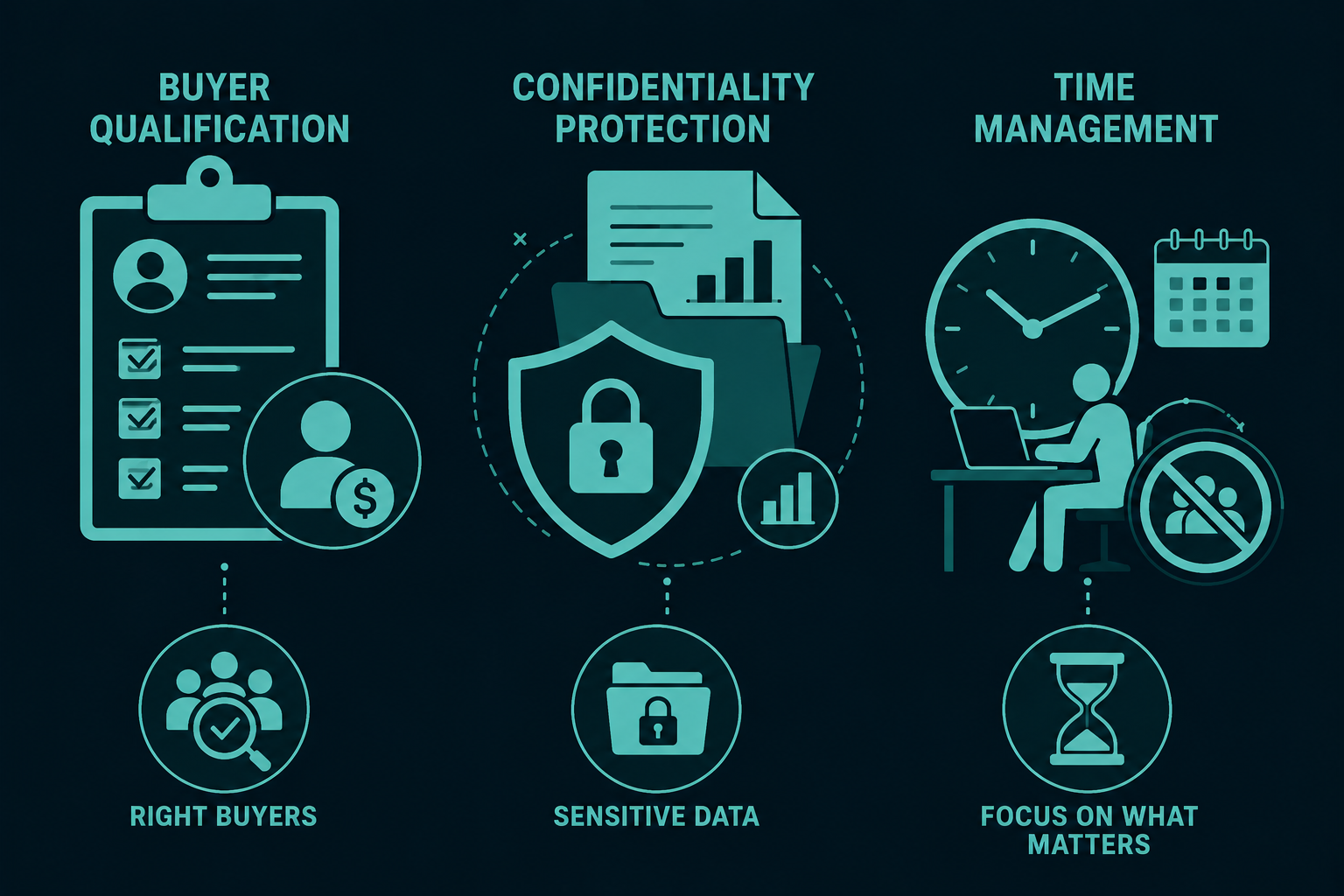
When you establish this rule early on, your workflow transforms dramatically across several core operational areas:
- Buyer Qualification: Confirming early on that the buyer actually possesses the liquid equity or overall net worth required to bring the deal across the finish line.
- Confidentiality: Protecting sensitive operational data, tax returns, and proprietary financial performance metrics from casual lookers, curious neighbors, or market competitors.
- Time Management: Preventing brokers, staff, and business owners from wasting valuable working hours on unviable negotiations that were doomed from the start.
Why Brokers May Require Proof Before Releasing a CIM
In standard Canadian business sales practice, brokers generally mandate financial verification before handing over a Confidential Information Memorandum, often referred to as a CIM. A CIM contains the heart and soul of a company, including detailed revenue numbers, customer concentration data, vendor contracts, and internal operational records. Releasing this information indiscriminately exposes the business owner to massive competitive risk, which is why deciding whether to
By asking prospective buyers to demonstrate financial capability prior to accessing the CIM, brokers may create a crucial security boundary when sensitive assets are involved. This process helps ensure that confidential corporate details stay restricted to individuals who possess the realistic means to execute a purchase agreement, keeping proprietary data safe while filtering out people who are merely curious about an industry.
Furthermore, this pre screening rule may establish an atmosphere of mutual accountability right at the beginning of the relationship. Serious buyers respect the fact that seller information is being protected with such diligence, because they know they will want the exact same level of privacy protection when they eventually decide to resell the business in the future.
Buyer Privacy Concerns and Data Security Risks
While the benefits for sellers and brokers are clear, it is equally important to acknowledge the transaction from the perspective of a legitimate purchaser. Buyers often express genuine hesitation when asked to provide sensitive financial documents to an intermediary they have only recently met online or over the phone.
These buyer concerns are entirely understandable and stem from two primary issues:
- Privacy Concerns: Buyers naturally hesitate to share raw personal bank statements or complete net worth profiles with an unfamiliar broker or intermediary before establishing formal trust.
- Data Security: Transmitting unencrypted personal financial records or corporate bank details over the internet increases exposure to modern data theft and identity privacy risks.
Recognizing these valid risks helps brokers design verification procedures that respect buyer privacy while still meeting the firm financial standards required to protect sellers. Financial verification should never feel like an invasive interrogation; it should feel like a secure, professional standard applied equally to all participants.
Best Practices for Providing Proof of Funds Safely
To bridge the gap between broker efficiency and buyer privacy, the industry relies on a few practical solutions that allow verification without unnecessary risk. Buyers do not need to expose every personal detail or reveal private account numbers to demonstrate financial capacity.
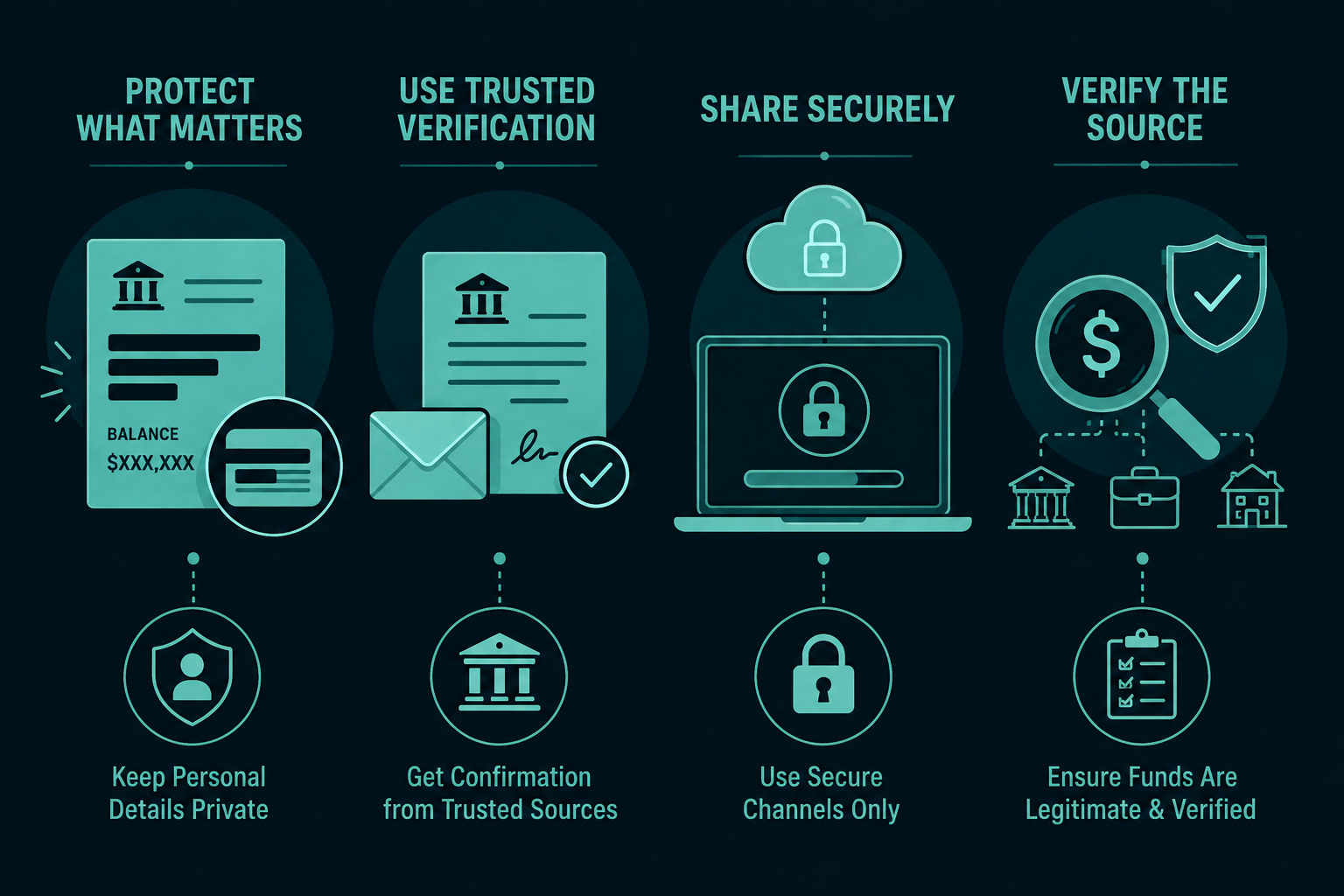
Both buyers and brokers can utilize these proven best practices to complete the verification step smoothly and securely:
- Redact Sensitive Info: Buyers can easily black out specific account numbers, social insurance numbers, or personal identifying codes while leaving the account holder name, institution branding, and total balance visible.
- Bank Comfort Letters: Prospective buyers can request a simple letter of introduction or sufficiency from their financial institution or Chartered Professional Accountant confirming available liquidity rather than submitting raw statements.
- Encrypted Communication: Brokers should provide secure upload portals or encrypted channels for receiving sensitive documentation rather than relying on standard email attachments.
- Source of Funds Verification: Beyond showing an available balance, buyers must be prepared to demonstrate where those funds originated. Under modern Anti-Money Laundering (AML) regulations, financial institutions and lenders will conduct rigorous checks to confirm that cash reserves are genuine equity to verify that the capital was not recently borrowed, secretly loaned, or unverified money being passed through an account.
Using an official CPA letter or a comfort letter from a recognized Canadian financial institution provides full confirmation of purchasing power without exposing line item bank transactions. This approach gives the seller complete peace of mind while keeping the buyer personal financial privacy fully intact.
Why Friction at Step One Is a Red Flag
Every successful business purchase requires dozens of moving parts to align perfectly. You need legal agreements, lease assignments, working capital adjustments, seller financing terms, regulatory approvals, and transition plans. Navigating the essential
A buyer who refuses to provide proof of funds, complains about standard verification policies, or creates unnecessary hurdles at the very beginning is almost never worth the investment of time. In almost every situation, strong resistance to basic financial verification indicates either a lack of real liquidity or an uncooperative mindset that will cause continuous problems during due diligence and legal closing negotiations.
Professional buyers who are experienced in acquiring companies understand that proof of funds is standard practice across corporate finance and commercial real estate. They expect the request, appreciate the professional boundary, and are happy to provide a masked statement or CPA comfort letter because it immediately sets them apart from unqualified shoppers.
Setting Your Standard for Smoother Closings
Requiring proof of funds is not an obstacle to closing sales; it is the foundation of a modern, professional business brokerage practice. By setting clear standards and enforcing them without exception, you protect your sellers, respect serious buyers, and maintain absolute control over your valuable working hours.
When buyers realize that your brokerage only presents vetted opportunities to financially capable purchasers, the quality of your entire business ecosystem improves. You waste far less time on non starters, build stronger trust with business owners, and create a smooth path toward successful transactions that actually reach the closing table.