What to Include in Your LOI When Buying or Selling a Business
When buying or selling a business, one of the first major documents involved in the process is the Letter of Intent, commonly called an LOI.
An LOI is essentially the roadmap for the deal before the final purchase agreement is drafted. It outlines the key terms both parties are discussing and helps make sure everyone is generally on the same page before spending more time and money on lawyers, accountants, and due diligence.
While many people treat the LOI as a simple formality, it can actually shape the entire transaction. A poorly written LOI can create confusion, delays, tax problems, or disagreements later in the process.
If you are preparing to buy or sell a business in Canada, here are the most important things you should include in your LOI.
What Is a Letter of Intent?
A Letter of Intent is a preliminary agreement between a buyer and seller that outlines the proposed terms of a business sale.
It is not usually the final legally binding contract, but it sets expectations and creates a framework for negotiations moving forward.
An LOI typically includes:
- Purchase price
- Deal structure
- Payment terms
- Due diligence timelines
- Transition expectations
- Confidentiality and exclusivity clauses
The LOI is often signed before lawyers draft the full purchase agreement.
For general guidance on buying and selling businesses in Canada, this resource from the Business Development Bank of Canada can also be helpful.
Is an LOI Legally Binding?
This is one of the biggest questions buyers and sellers ask.
In most cases, the majority of an LOI is considered non binding. That means either party can still walk away from the deal before the final agreement is signed.
However, some parts of the LOI can still be legally binding, including:
- Confidentiality clauses
- Exclusivity agreements
- Non solicitation provisions
- Deposit arrangements
This is why it is extremely important to have your lawyer review the LOI before signing anything.
The exact wording matters.
10 Important Things to Include in Your LOI
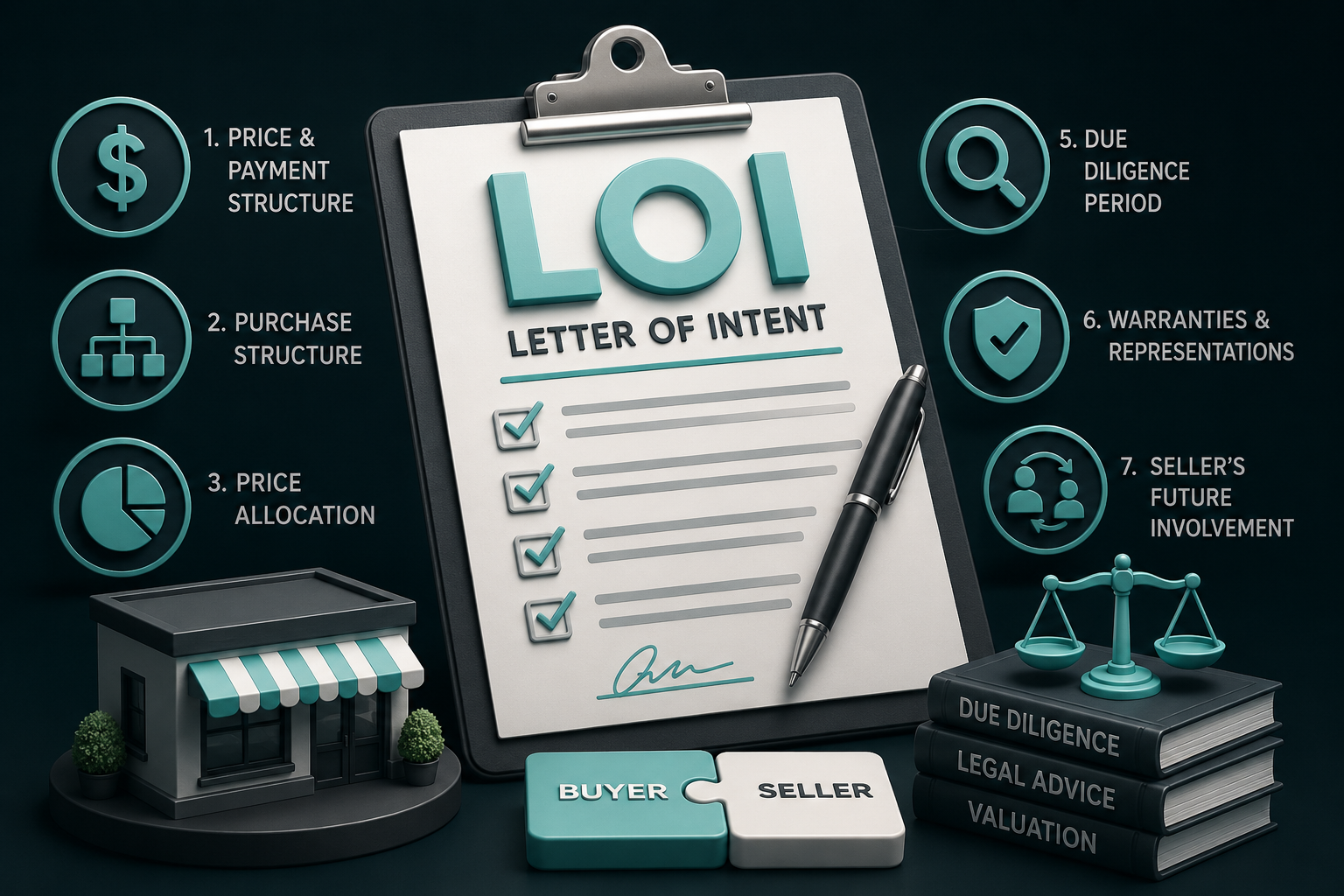
1. Price and Payment Structure
The purchase price is usually the first thing everyone looks at, but how the deal is paid can matter just as much.
Your LOI should clearly outline:
- Total purchase price
- Amount paid at closing
- Seller financing terms
- Earnouts or performance payments
- Deposits
- Financing conditions
Many buyers offer less than the asking price during the LOI stage, and negotiations often continue afterward.
The payment structure can also create major tax implications for the seller, so accountants and legal advisors should review everything before moving forward.
2. Purchase Structure
The LOI should explain whether the transaction is structured as:
- An asset sale
- A share sale
- An entity sale
Most small business transactions in Canada are structured as asset sales, but not always. If you are unsure whether an asset sale or share sale is better, check out our detailed guide on share sale versus asset sale for Canadian businesses.
The structure affects:
- Taxes
- Liabilities
- Employee obligations
- Contracts and leases
- Future legal exposure
This is one of the most important sections in the LOI because changing the structure later can significantly impact the entire deal.
3. Price Allocation
In an asset sale, the purchase price is often allocated across different categories such as:
- Equipment
- Inventory
- Goodwill
- Intellectual property
- Vehicles
- Furniture and fixtures
Why does this matter?
Because different allocations are taxed differently.
Both the buyer and seller usually need to agree on how the price is allocated before closing. Having this discussion early can help prevent major disputes later in the process.
4. Purchase Exclusions or Additions
Not every asset automatically transfers with the business.
Your LOI should specify:
- What is included in the sale
- What is excluded
- Whether inventory is included
- Whether cash remains in the business
- Any equipment or assets being removed by the seller
This section prevents misunderstandings.
For example, a buyer may assume certain vehicles or software licenses are included while the seller plans to keep them.
5. Due Diligence Period
Before entering due diligence, many sellers also request buyer financial verification and proof of funds. Read more about buyer prequalification and proof of funds.
The LOI should outline:
- How long due diligence will last
- What documents will be reviewed
- Confidentiality requirements
- Conditions for extending the timeline
Most small business due diligence periods are relatively short, but more complex transactions can take longer.
A good LOI also states that confidential information cannot be shared outside the buyer’s professional advisors without permission.
6. Warranties and Representations
This section covers the seller’s statements about the business.
For example, the seller may confirm:
- Financial statements are accurate
- Taxes are current
- There are no undisclosed lawsuits
- Assets are owned free and clear
These representations become extremely important later if disputes arise.
Sellers should carefully review this section with their lawyer because you generally want to guarantee accuracy to the best of your knowledge, not guarantee perfection or completeness beyond what you reasonably know.
7. Seller’s Future Involvement
Many buyers want the seller to stay involved after closing for a transition period.
The LOI should explain:
- Training responsibilities
- Consulting arrangements
- Transition timelines
- Compensation if applicable
- Expected hours or involvement
Some deals may also include a non compete agreement preventing the seller from starting or joining a competing business for a certain period of time.
This section should clearly define the geographic area and timeframe involved.
8. Exclusivity Agreements
An exclusivity clause means the seller agrees not to negotiate with other buyers during a specific period.
This protects buyers who are investing time and money into due diligence and legal work.
The LOI should clearly state:
- Length of exclusivity
- What activities are restricted
- What happens if the agreement is breached
Exclusivity periods are common, but sellers should avoid overly long timelines that unnecessarily delay other opportunities.
9. Cancellation and Exit Terms
Not every deal closes.
That is why your LOI should explain:
- How either party can terminate negotiations
- What happens to deposits
- Whether there are penalties
- Which obligations survive cancellation
Clear exit terms help reduce legal disputes if the transaction falls apart.
10. Additional Conditions and Operating Requirements
The LOI should also address any additional terms that affect operations during the closing process.
This may include:
- Whether the seller must continue operating normally
- Restrictions on major purchases or contracts
- Employee retention expectations
- Landlord approvals
- Financing conditions
- Regulatory approvals
Many LOIs also specifically state that the agreement is non binding except for certain clauses.
A Letter of Intent may seem like an early stage document, but it plays a huge role in shaping the success of a business sale.
A strong LOI creates clarity, reduces misunderstandings, and helps both parties move through the transaction process more smoothly.
Before signing an LOI, it is always smart to involve:
- A business broker
- An accountant
- A lawyer experienced in mergers and acquisitions
The earlier you identify potential issues involving taxes, liabilities, financing, or deal structure, the easier the transaction usually becomes.
Whether you are buying your first business or preparing to sell a company you built over many years, taking the time to properly structure your LOI can save you significant stress, money, and legal complications later on.