When you start thinking about the future of your company, finding the right exit strategy can feel overwhelming. Many business owners want to transition out of their company without selling to a competitor or watching their hard work crumble under new management. This is where an Employee Share Ownership Plan, commonly known as an ESOP, becomes a powerful tool for Canadian entrepreneurs. An ESOP offers a structured pathway that allows employees to acquire equity in the business they help build every day. By turning team members into shareholders, owners can secure a smooth transition while keeping company culture intact.
In Canada, employee ownership strategies have gained significant traction, especially in provinces like British Columbia that offer generous government programs. Whether you run a thriving tech firm in Vancouver, a trade business in Victoria, or a family enterprise anywhere across the country, understanding how ESOPs work will give you a major advantage when planning your next move. In this comprehensive guide, we will break down how ESOPs operate, the unique incentives available in British Columbia, registration requirements, and how this strategy serves both buyers and sellers in a business transaction.
Understanding Employee Share Ownership Programs

An Employee Share Ownership Plan is an arrangement that gives eligible staff members the opportunity to purchase or earn equity shares in their employer company. Rather than treating employment purely as a paycheck for hours worked, an ESOP aligns the long term interests of the workers with the overall financial health of the business. When the company performs well, the value of the employees shares increases, creating a shared commitment to profitability and growth.
In British Columbia, the government actively encourages this model through the official Province of British Columbia Employee Share Ownership Program portal. This program provides clear legal frameworks and financial support to help private companies issue equity to their staff. Comparing ESOPs with the federal
Key Financial and Tax Incentives for Companies and Employees
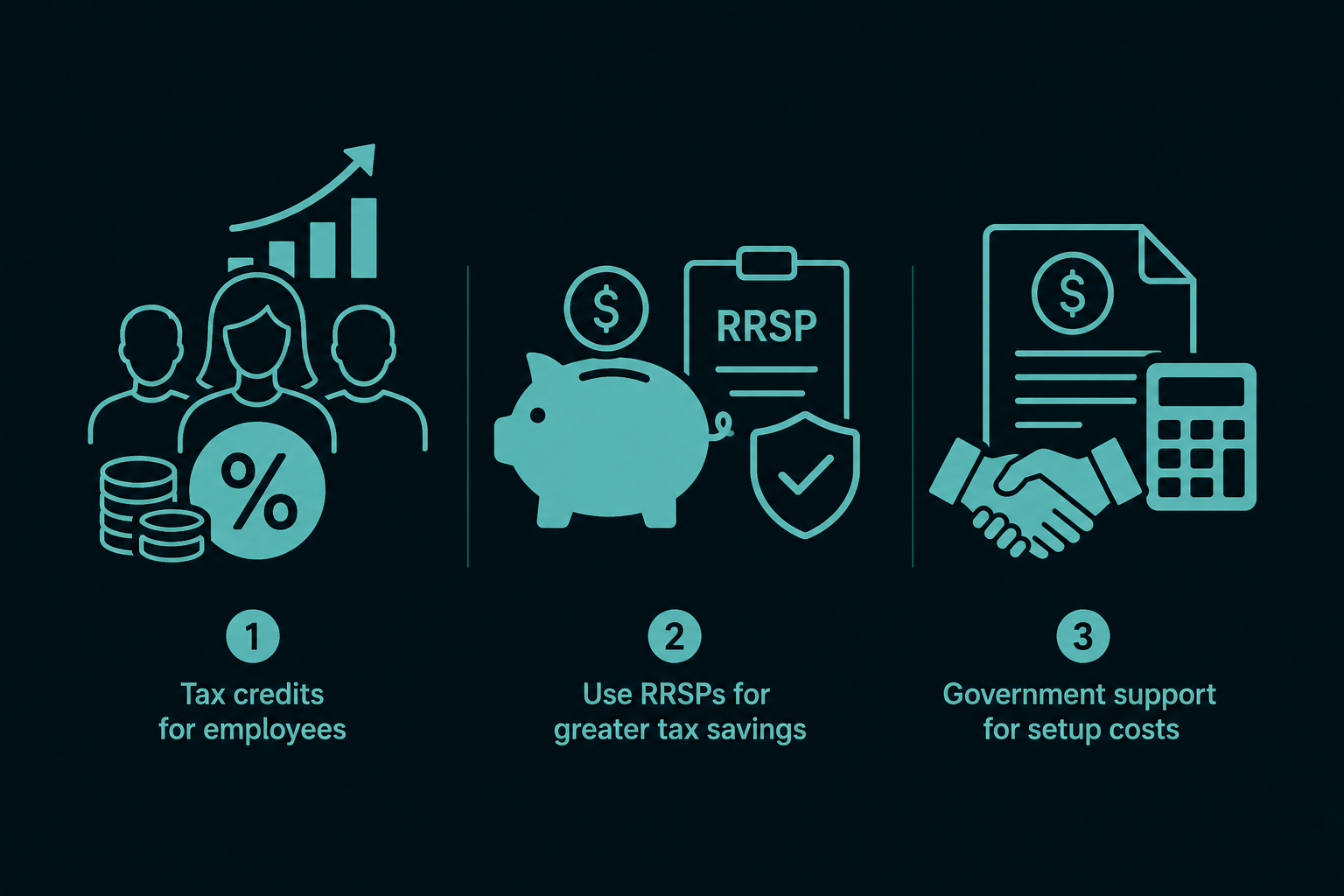
One of the biggest advantages of setting up an ESOP in British Columbia is the robust framework of tax credits and financial incentives provided by the provincial government. These benefits reduce the financial burden on participating employees while lowering the administrative costs for business owners who want to establish a plan. Official guidelines from the Ministry of Jobs, Economic Development and Innovation confirm that both business owners and employees enjoy substantial advantages when enrolling in an authorized plan.
To make participation as attractive as possible, the provincial program incorporates several valuable financial mechanisms:
-
Direct Tax Credits for Staff: Employees who invest in their employer business receive a twenty percent provincial tax credit on their share purchases. Residents of British Columbia can claim up to two thousand dollars in tax credits every single year. There is no lifetime limit on the amount of tax credits an individual can accumulate over time, making continuous investment highly rewarding for long term staff.
-
Registered Retirement Savings Plan Eligibility: In many cases, employees can hold their acquired shares inside a self directed Registered Retirement Savings Plan. This allows workers to combine the provincial tax credit with federal tax deductions managed by the Canada Revenue Agency, creating substantial immediate tax relief for participants.
-
Government Cost Sharing Support: Setting up an ESOP involves professional expenses such as legal drafting and business valuations. To assist growing companies, the provincial government provides cost sharing reimbursements that help offset a portion of these initial administrative expenditures.
Strategic Benefits of Employee Ownership

Transitioning to an employee owned model delivers advantages that extend far beyond simple tax savings. When staff members hold a real stake in the business, the entire operational dynamic of the workplace shifts in a positive direction. Owners frequently report higher morale and stronger operational resilience after implementing a plan.
The official government summary of employee ownership benefits highlights several key areas where private companies gain a competitive edge:
-
Enhanced Employee Engagement and Loyalty: Workers who own shares view their daily responsibilities through the lens of a business owner. This psychological shift increases daily productivity, reduces staff turnover, and encourages creative problem solving across all departments.
-
Recruitment and Retention Advantage: Skilled talent is always in high demand across Canada. Offering equity participation serves as a powerful recruiting tool that sets your company apart from competitors who only offer standard salary packages.
-
Sustainable Capital Growth: For expanding companies, issuing treasury shares through an ESOP creates a fresh source of internal equity capital. This non debt capital can be reinvested into operations, equipment, or geographic expansion without relying solely on high interest commercial loans.
ESOPs as a Business Succession Planning Tool
For many retiring business owners, finding a qualified external buyer who appreciates the company legacy can be challenging. Selling to a large competitor often leads to staff layoffs, brand dilution, or structural disruption. An ESOP provides a realistic alternative that keeps the business grounded in its local community while offering a clear exit for the founding owner. If you are actively considering
Provincial guidelines on business succession planning emphasize that employee ownership bridges the gap between exiting owners and key staff. The program offers two main plan models designed for distinct company transition goals:
-
Standard ESOP Structure: This plan focuses on long term growth and employee engagement. It allows current owners to sell a minor stake in the business to employees while maintaining full operational control and driving company performance over time.
-
Succession ESOP Structure: This specialized application facilitates a total or partial transfer of business control from retiring owners to the employee group. Under this model, employees receive provincial tax credits when purchasing shares directly from the exiting owner, enabling a structured transfer of ownership over a defined timeline.
Navigating Plan Registration and Eligibility
To access provincial tax credits and ensure full regulatory compliance, companies must formally register their plan with the government. The registration process ensures that the business meets specific financial criteria and that share offerings remain fair to all participants.
Navigating the registration requirements involves meeting specific provincial criteria and establishing clear administrative safeguards for share holdings:
-
Eligibility Criteria for Companies and Staff: To qualify, a Canadian business together with its affiliates must hold less than five hundred million dollars in total assets. The company must also pay at least twenty five percent of its total payroll to workers residing in British Columbia. Eligible employees must reside in British Columbia, work an average of twenty or more hours per week, and cannot already be major shareholders.
-
Implementation Process and Escrow Rules: Establishing an ESOP requires designing plan terms, consulting with staff, and submitting formal applications. Shares purchased under the program must be newly issued equity shares from treasury or qualifying succession shares. These shares are held in escrow by an authorized depository for a mandatory three year holding period to ensure long term commitment.
-
Registration Requirements and Valuations: The company must submit complete organizational documents and financial statements. Official provincial guides outline five distinct share valuation methods based on revenue multipliers, book value minus dividends, maintainable earnings, retained earnings, or adjusted shareholder equity.
-
Official Guidelines and Sample Documentation: Business owners and their legal advisors do not need to build their plans from scratch. The province provides official resources including sample plan agreements and comprehensive guidelines available directly from the British Columbia government portal to help guide companies through every stage of plan creation.
How ESOPs Work for Sellers and Buyers of a Business
Understanding how an ESOP functions in practice requires looking at the transaction from both sides of the deal. At Vancouver Island Business Brokers, we work closely with entrepreneurs to explore whether an internal employee buyout or a partial ESOP transition fits their financial goals better than an open market sale.
The Perspective of the Business Seller
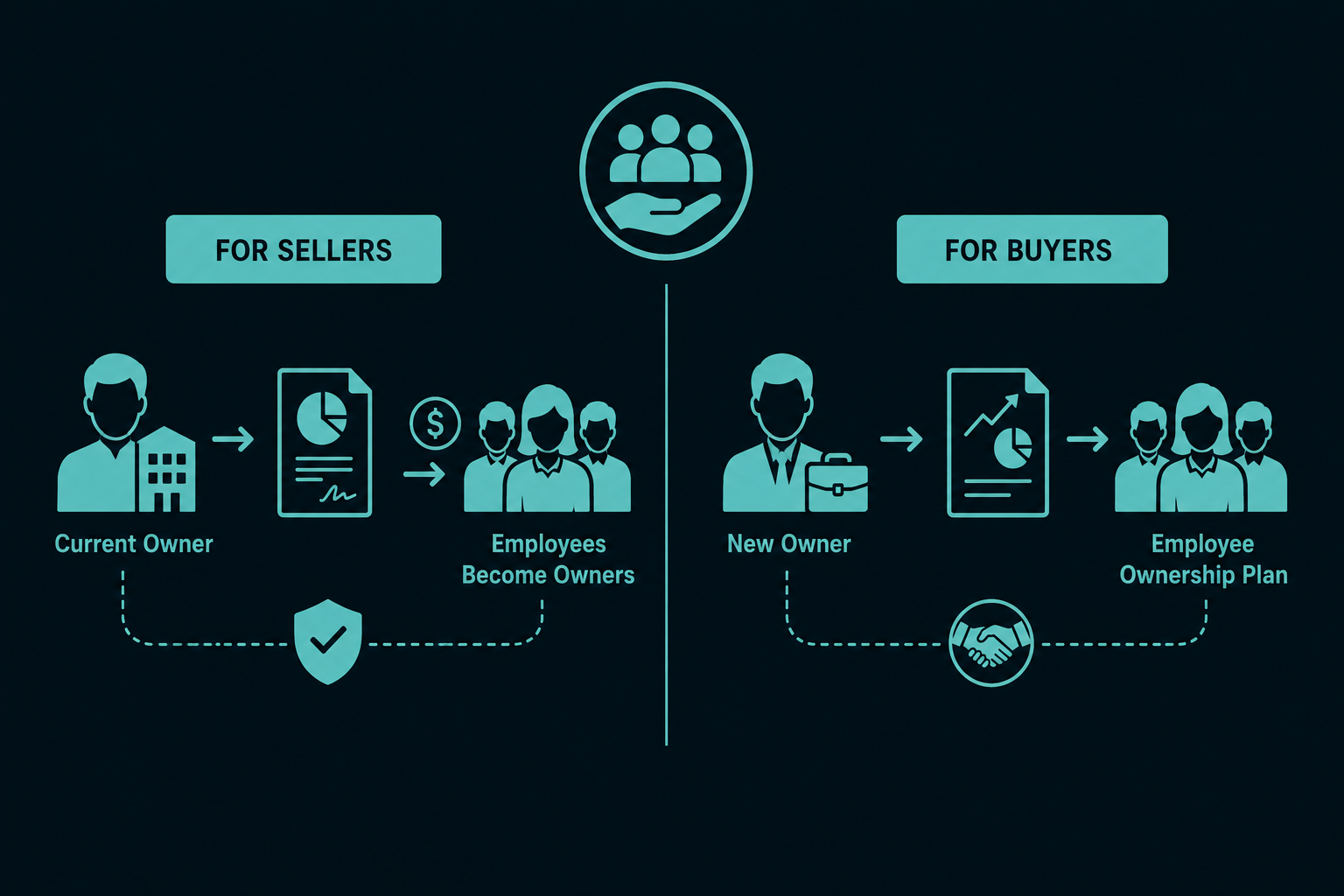
For a selling business owner, an ESOP solves one of the hardest parts of succession planning by finding a reliable, trustworthy buyer group. Selling to key employees eliminates the risk of sensitive financial data leaking to market competitors during extended negotiations.
-
Flexible Exit Options: Sellers can choose an immediate full payout or a gradual phased departure over several years. A gradual exit allows the founder to slowly step back from day to day management while training the new leadership team.
-
Preserving Legacy and Culture: Exiting founders retain peace of mind knowing that the business will stay in the hands of the people who helped build it. The company name, client relationships, and community presence remain secure.
-
Tax Efficiency and Fair Valuation: Selling through a Succession ESOP allows owners to realize fair market value for their equity while providing buyers with provincial tax incentives that help fund the purchase. Evaluating key
share sale versus asset sale considerations
The Perspective of the Business Buyers and Employees
From the viewpoint of employees and key managers, an ESOP turns dedicated workers into real business owners. Obtaining business equity on the open market often requires massive upfront capital that individual employees simply do not have.
-
Accessible Ownership Pathways: An ESOP breaks down financial barriers by allowing staff to buy shares incrementally through payroll deductions or structured share purchases over time.
-
Wealth Creation and Dividend Returns: Employee owners share directly in the profits of the company through potential dividend payments and long term capital appreciation as the business grows.
-
Preserved Job Security and Ownership Culture: Unlike a corporate buyout by a third party buyer who might eliminate duplicate roles, an ESOP keeps existing jobs safe and empowers workers to shape the future of their workplace.
Final Thoughts on Implementing an ESOP
An Employee Share Ownership Plan is one of the most effective ways for Canadian business owners to secure their financial future while rewarding the team members who drive their success. By leveraging provincial tax credits and structured registration frameworks, companies across British Columbia can create win win succession outcomes that protect local jobs and promote lasting economic growth. If you are considering selling your business or exploring innovative succession strategies, consulting with professional business brokers and legal experts will ensure your plan is structured for maximum success.