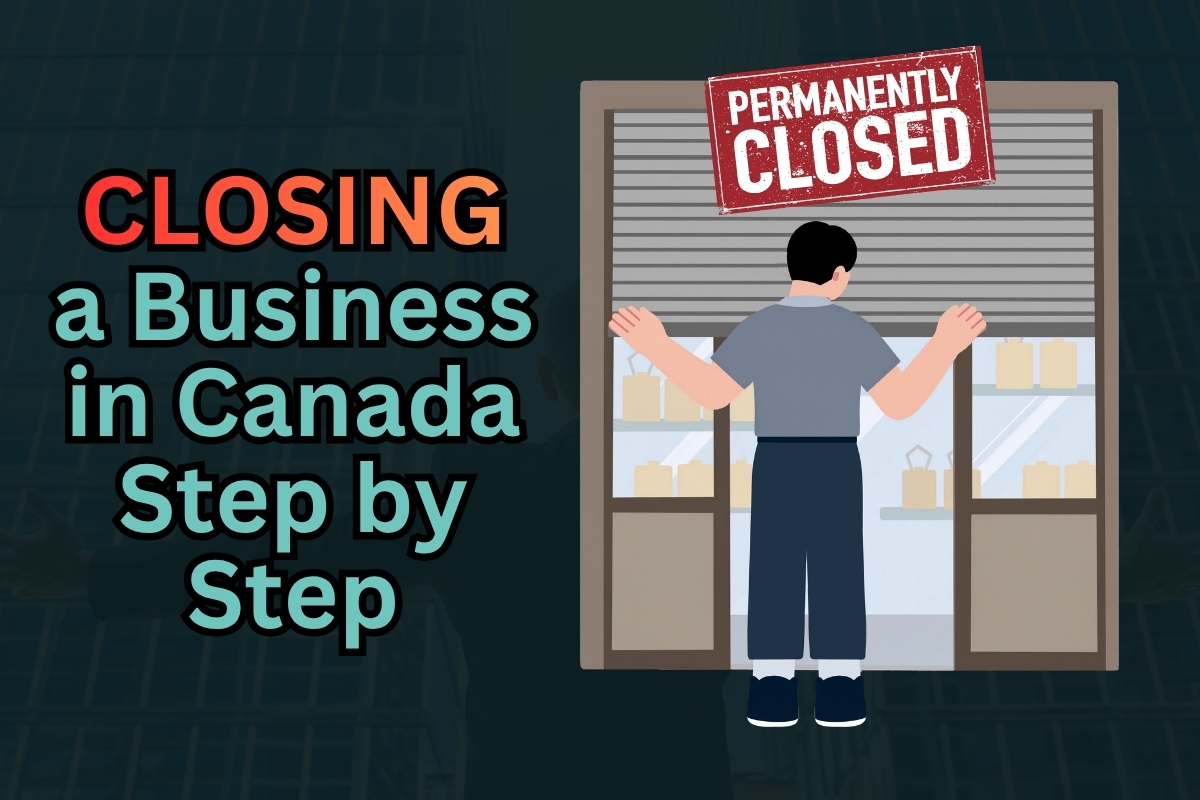
Deciding to close down your business is a major step for any entrepreneur. Whether you are retiring, moving on to a fresh venture, or simply wrapping up operations, wrapping things up properly is just as important as starting out. Simply turning off the lights and walking away is never enough in Canada. If you leave open corporate registrations or active tax accounts, you could face unexpected penalties, continuous filing demands, or lingering financial liabilities long after you stop operating.
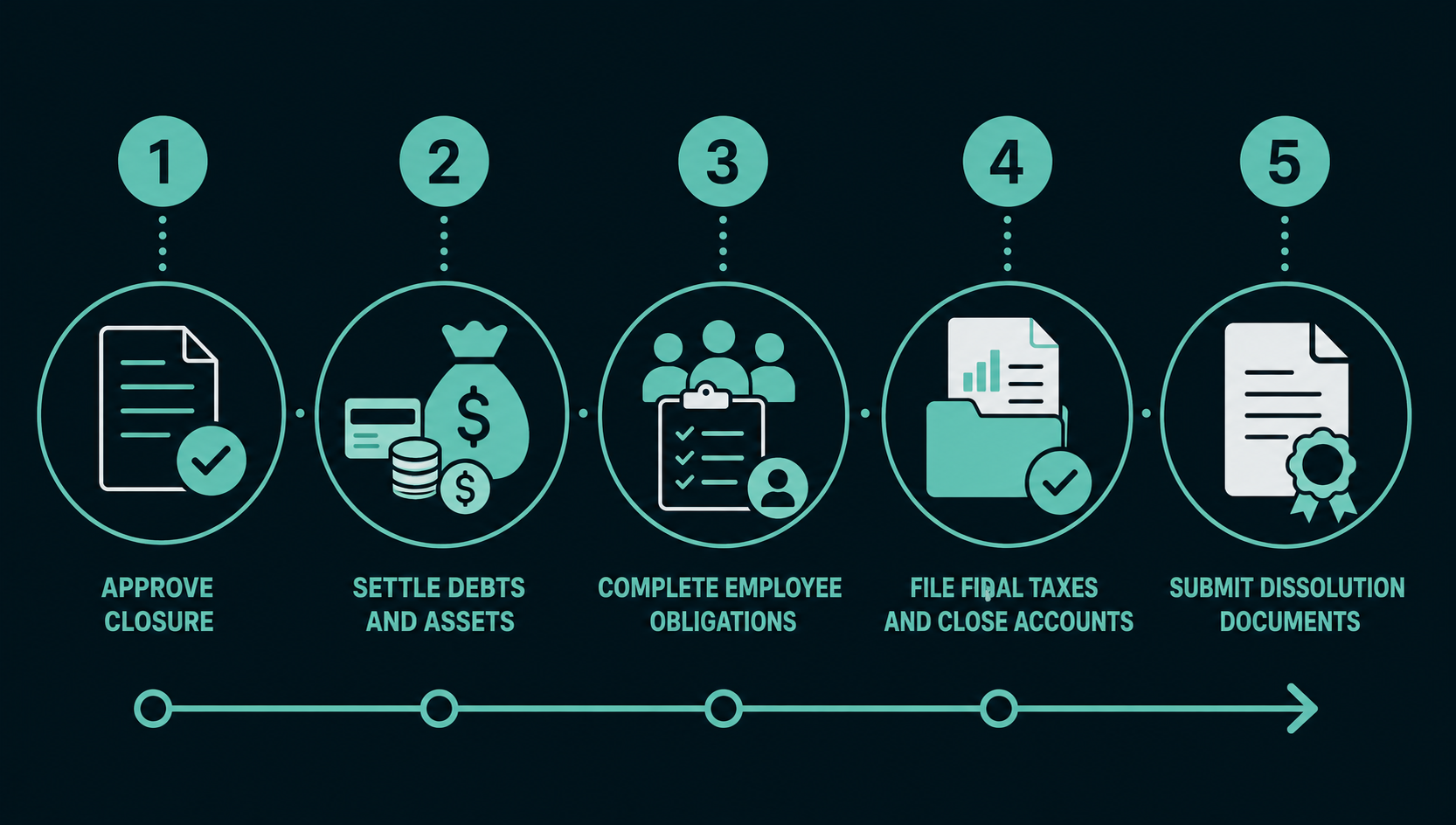
Taking the time to formally dissolve your Canadian business protects your personal assets and brings clean closure to your journey. The legal winding down process involves shutting down corporate structures, clearing records with the Canada Revenue Agency, paying off liabilities, and distributing leftover assets to shareholders. Here is a comprehensive guide to help you navigate each step smoothly and legally.
Step 1: Pass a Formal Resolution to Dissolve
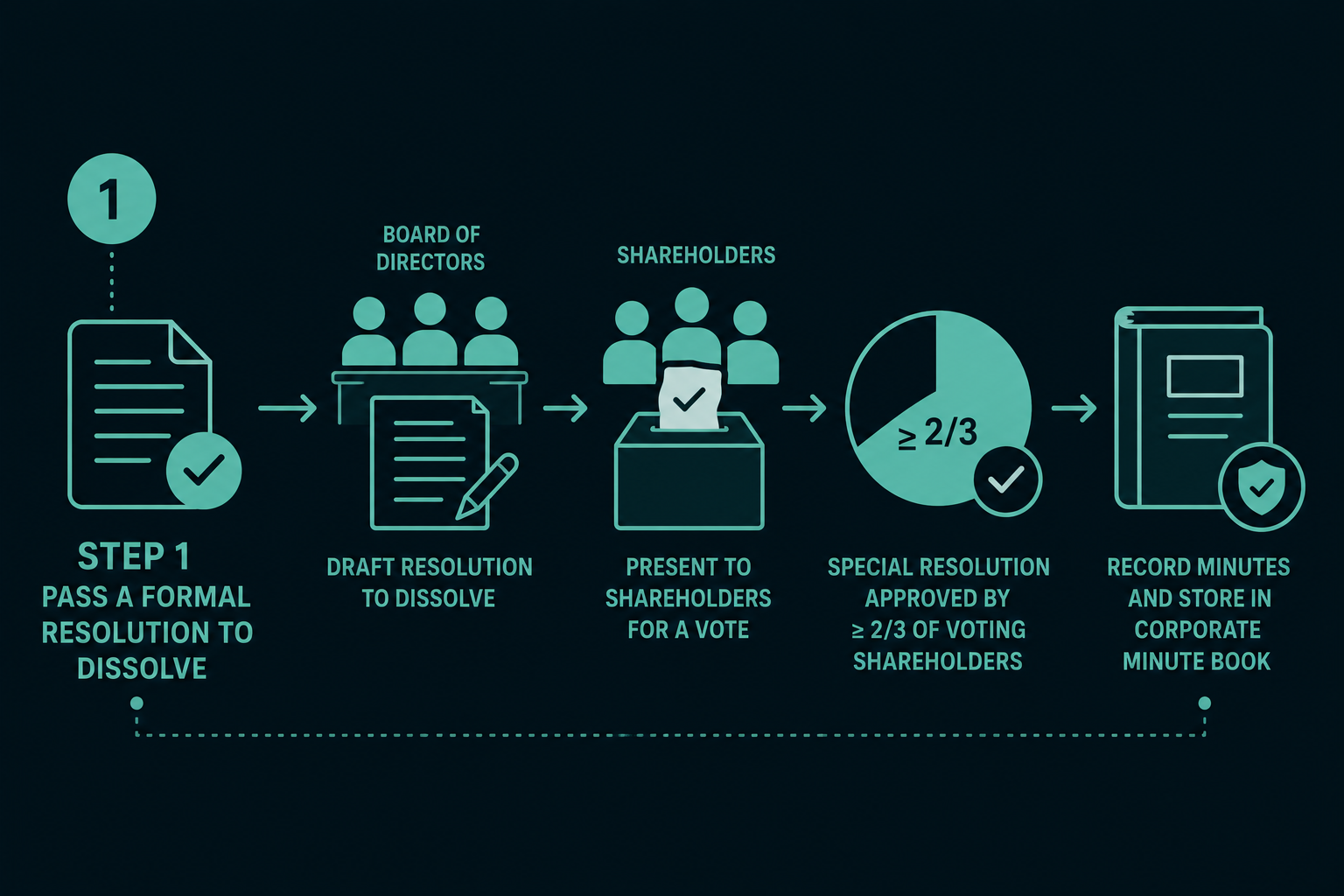
Before you file any legal paperwork with government registries, you must obtain official authorization from your internal team. If you operate as a sole proprietorship, you have the personal authority to shut down operations at your own discretion. However, for incorporated businesses, the decision must be formally documented according to your corporate bylaws and provincial or federal regulations.
To initiate a voluntary dissolution of a corporation, the board of directors must draft a resolution to liquidate assets and dissolve the entity. This proposal is then presented to the shareholders for a vote. In most Canadian jurisdictions, a special resolution requires approval from at least two thirds of the voting shareholders. Once the resolution passes, record the minutes and store them securely in your corporate minute book for future legal reference.
Step 2: Settle All Debts and Liquidate Business Assets
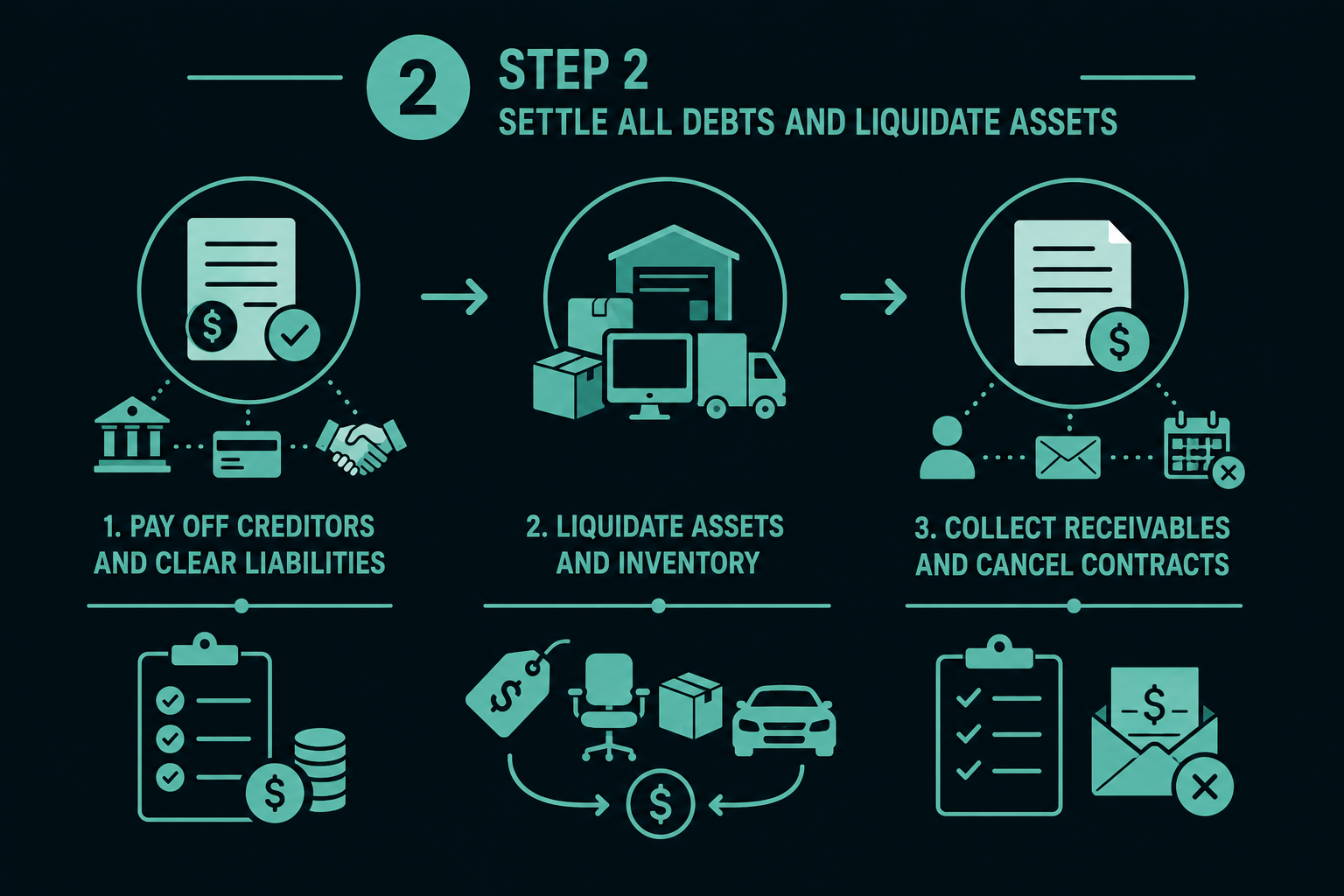
A corporation cannot be officially dissolved while it still holds active debts or ongoing liabilities. Canadian laws require companies to clear all financial obligations before submitting final dissolution paperwork. This stage requires careful inventory tracking and open communication with your creditors, suppliers, and service providers.
- Pay off your creditors and clear liabilities. Start by making a detailed list of every outstanding debt, including vendor invoices, commercial loans, and equipment leases. Reach out to all known creditors to inform them of your intention to close, then pay off the balances in full or establish mutually agreed settlement terms. Clearing all claims prevents future legal disputes or personal exposure for corporate directors.
- Liquidate physical inventory and company equipment. Sell off remaining stock, office furniture, vehicles, and real estate to generate cash for settling accounts, keeping in mind how a
share sale versus asset sale for Canadian businesses - Collect outstanding receivables and cancel vendor contracts. Review your accounting ledgers to collect all unpaid customer invoices before closing your primary operations. At the same time, give formal cancellation notices for recurring service subscriptions, software tools, commercial leases, and utility accounts so you do not incur unnecessary ongoing expenses.
Step 3: Handle Final Employee Obligations and Payroll
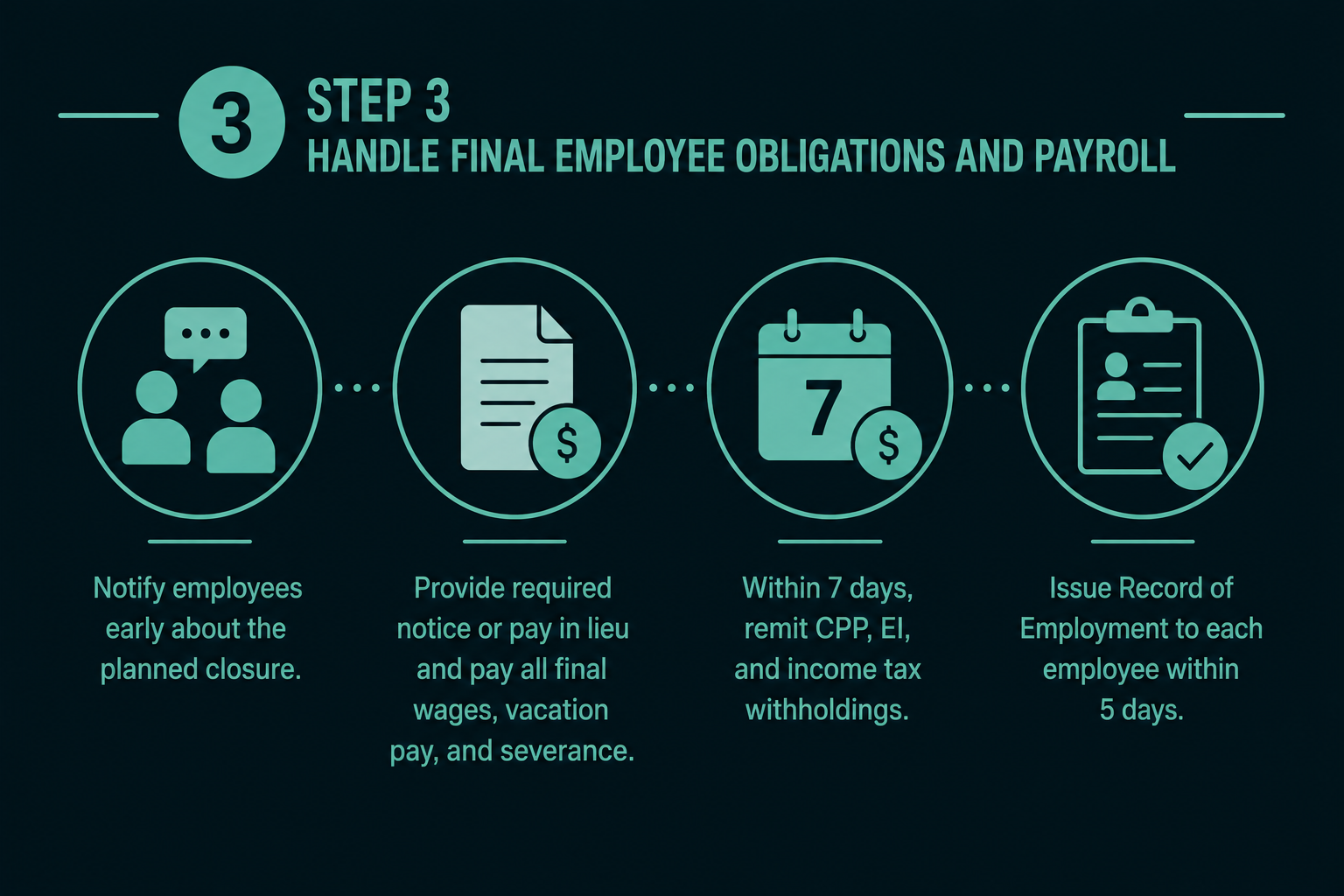
If your business employs staff, taking care of your workers is both a ethical priority and a legal obligation. Understanding
Notify your employees about the planned closure as early as possible. Provide statutory written notice or pay in lieu of notice in accordance with your provincial labor standards and employment contracts. You must calculate and pay out all final wages, accumulated vacation pay, and any applicable severance pay.
Within seven days of your final payroll run, remit all remaining Canada Pension Plan contributions, Employment Insurance premiums, and withheld income tax to the tax authorities. Furthermore, you must issue a Record of Employment through Service Canada for every staff member within five calendar days after the end of the final pay period. This step allows your former workers to access government unemployment benefits without delay.
Step 4: File Final Tax Returns and Close CRA Accounts
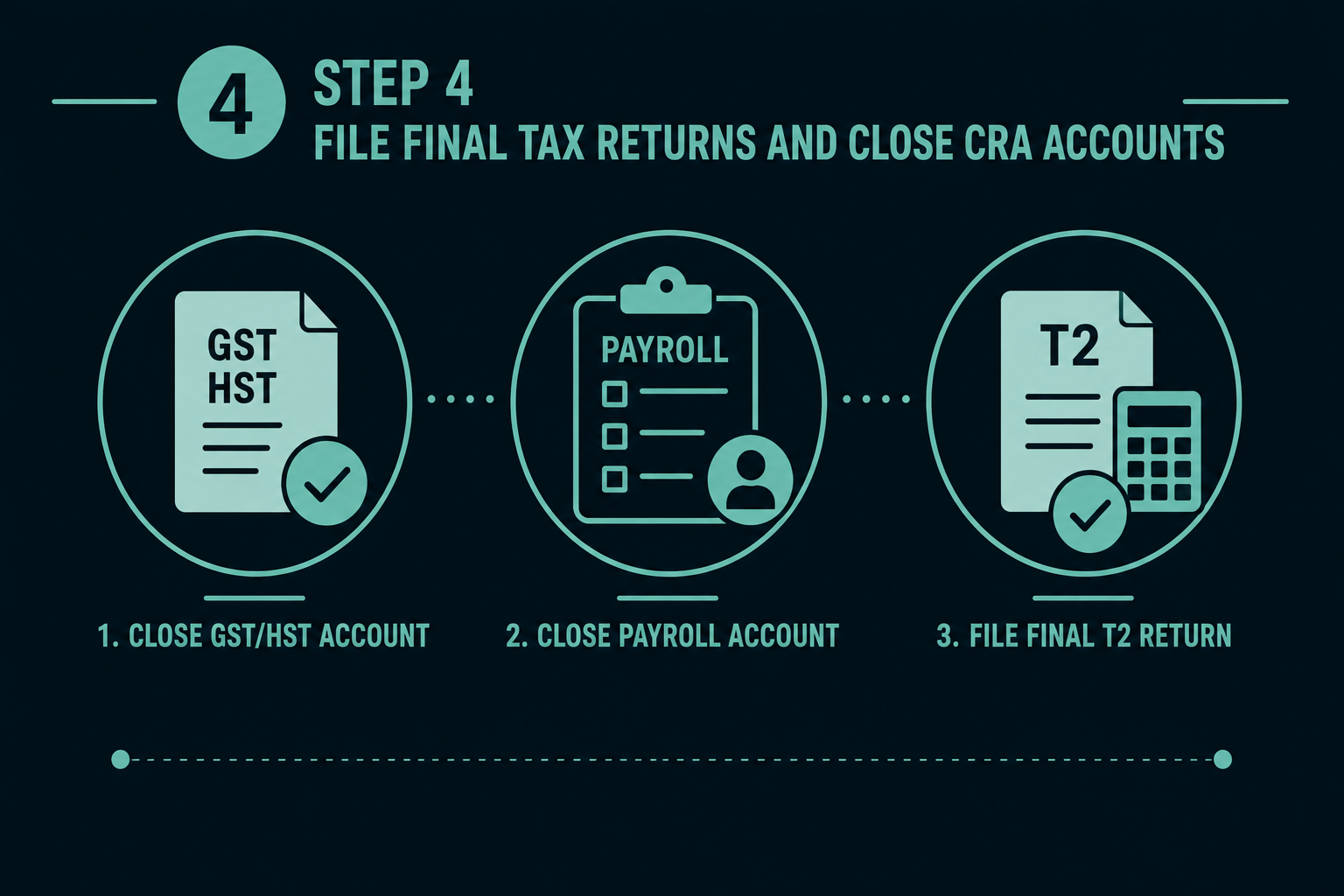
Closing your physical doors does not automatically inform the federal government that your business activity has ended. You must proactively file final returns and request account cancellations with the Canada Revenue Agency to prevent automatic non filing penalties.
- Close your GST or HST program account. Continue collecting and remitting GST or HST on sales and asset liquidations up until your last active day of business. Once all sales activity stops, file your final GST or HST return and pay any remaining balance owing. You can submit your cancellation request online through the CRA My Business Account portal or by submitting Form RC145. For complete federal tax guidelines, you can review the official
CRA Closing CRA Program Accounts - Complete final payroll forms and cancel the RP account. After distributing all final wages and remitting source deductions, prepare and submit your T4 slips and T4 Summary electronically. Send copies of the T4 slips to your former employees, then ask the tax agency to close your payroll deduction program account.
- File the final corporate income tax return. Incorporated businesses must continue filing annual T2 corporate income tax returns every year until the corporation is officially dissolved by its incorporating authority. On your final T2 return, check the box indicating that this is your final return up to the date of dissolution. For further details on closing GST or HST accounts, visit the
CRA GST Account Closure Guide
Step 5: Submit Articles of Dissolution
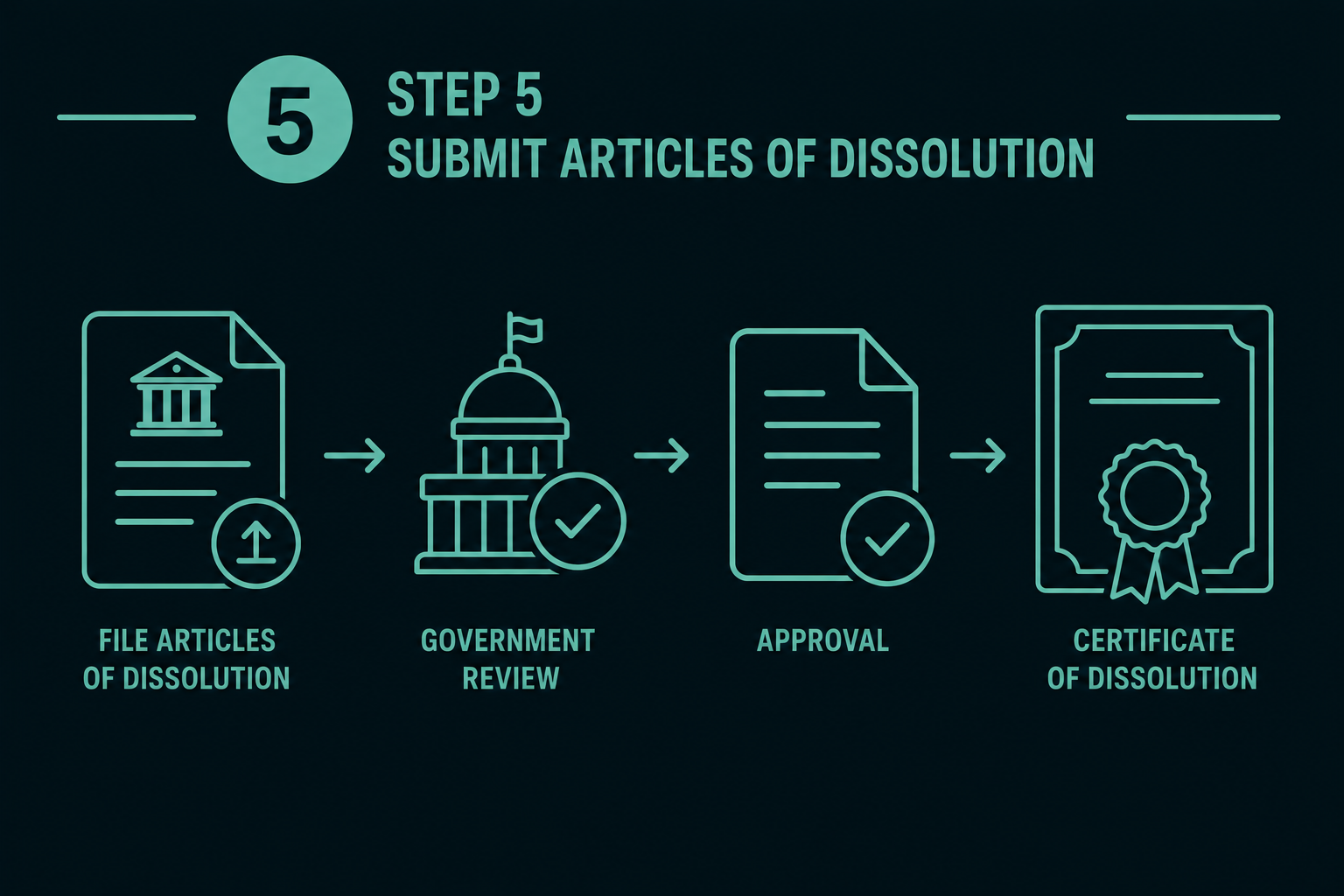
The final administrative step to legally end a corporation is filing Articles of Dissolution with the registry where your business was incorporated. Federal corporations file their paperwork through Corporations Canada, while provincially incorporated companies file with their respective provincial corporate registries.
Submitting Articles of Dissolution confirms that your corporation has no remaining assets, no lingering debts, and full approval from its shareholders. Once the government body approves your application, it will issue a Certificate of Dissolution. This certificate serves as official legal proof that your corporation no longer exists. To explore federal requirements and forms, check out the official
Other Important Things to Remember
Winding down a business requires attention to several small details that people often overlook during the legal process. Keeping these extra points in mind will ensure a stress free closure.
- Keep your main corporate bank account open temporarily. Do not close your corporate bank account too early in the winding down process. You will need an active business bank account to receive final tax refunds, clear final supplier checks, or pay last minute accountancy fees. Only close the account once every single transaction has settled, all taxes are cleared, and the account balance reaches zero.
- Maintain detailed business records for six years. Canadian tax laws require business owners to keep accounting books, tax filings, invoices, receipts, and bank statements for at least six years from the end of the relevant tax year. In some cases involving dissolved corporations, holding onto core corporate documents indefinitely is recommended to protect past directors from future inquiries.
- Cancel business names, licenses, and permits. If you operate under a registered trade name or partnership, ensure you file a notice of amendment or cancellation with your local municipal or provincial business registry. Additionally, cancel any professional operating permits, health inspection licenses, or specialized municipal commercial permits so you are not billed for annual renewal fees.
Should You Sell Instead of Close?
Many profitable businesses end up being dissolved simply because the owner doesn’t realize there’s a market for them.
Even small businesses can have value through:
- Equipment
- Customer lists
- Trained employees
- Brand recognition
- Existing contracts
- Recurring revenue
We’ve seen many owners who planned to shut down discover that selling their business produced a much better financial result.
Even if you’re unsure whether your business has value, getting a professional opinion before dissolving your corporation can be well worth your time.
Final Thoughts
Closing a business properly takes planning, but it’s worth doing right.
By paying outstanding debts, filing your final tax returns, closing your CRA accounts, dissolving your corporation, and keeping your records organized, you’ll avoid many of the headaches that come from leaving loose ends behind.
If you’re considering closing your business, don’t assume that dissolution is your only option. In many cases, selling your business can put money back in your pocket instead of simply walking away from years of hard work.