
Starting a business has never been easier. Growing one into a profitable, sustainable company is a completely different story.
Every year, thousands of Canadians launch new businesses with great ideas, plenty of enthusiasm, and big plans. Unfortunately, many of those businesses never make it past the first few years. Even businesses that survive often struggle to generate enough profit to provide a comfortable income for their owners.
That is one of the reasons successful businesses are so valuable. They have already survived the toughest years, built systems, developed loyal customers, and proven there is real demand for what they offer.
Interestingly, many of the world’s most successful entrepreneurs rarely stop after building just one business. Instead, they often go on to start, buy, or invest in several companies throughout their careers.
Here’s why.
Most Businesses Never Reach Long Term Success
Owning a profitable business sounds appealing, but the numbers show just how difficult it really is.
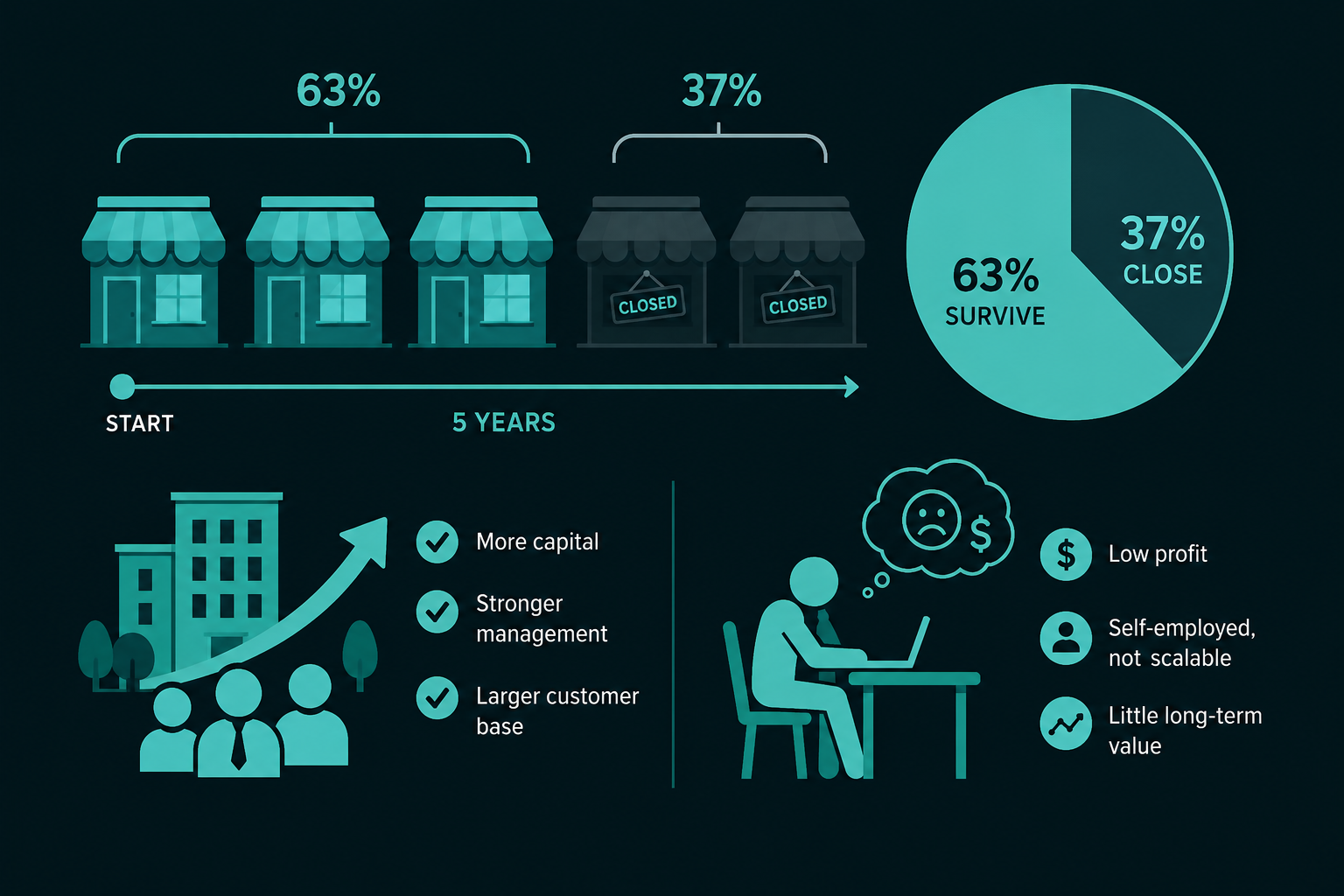
According to ISED, businesses that start with only one to four employees have an average five year survival rate of approximately 63 percent. That means roughly 37 percent close within their first five years. Businesses with more employees generally survive at higher rates because they often begin with more capital, stronger management, and larger customer bases.
The OECD reports similar findings internationally, with roughly half of new businesses surviving five years across many developed economies.
Simply staying open, however, does not necessarily mean the business is successful.
Many companies continue operating while producing very little profit. Some owners essentially create jobs for themselves instead of building valuable businesses that can eventually be sold.
Why Truly Successful Businesses Are So Rare

Building a company that thrives long term requires mastering several complex domains simultaneously. If an owner falls short in even one critical area, the entire operation can quickly come under pressure.
-
Product Market Fit Is Hard to Sustain: Many companies launch with a great concept, but consumer preferences and market conditions constantly evolve. What works brilliantly today might become obsolete in a few years if customer needs shift or newer competitors enter the space.
-
Cash Flow and Capital Mismanagement: Managing cash flow is a constant struggle for growing businesses. A company can show strong paper profits on an income statement yet still go out of business if invoices remain unpaid and operational expenses come due.
-
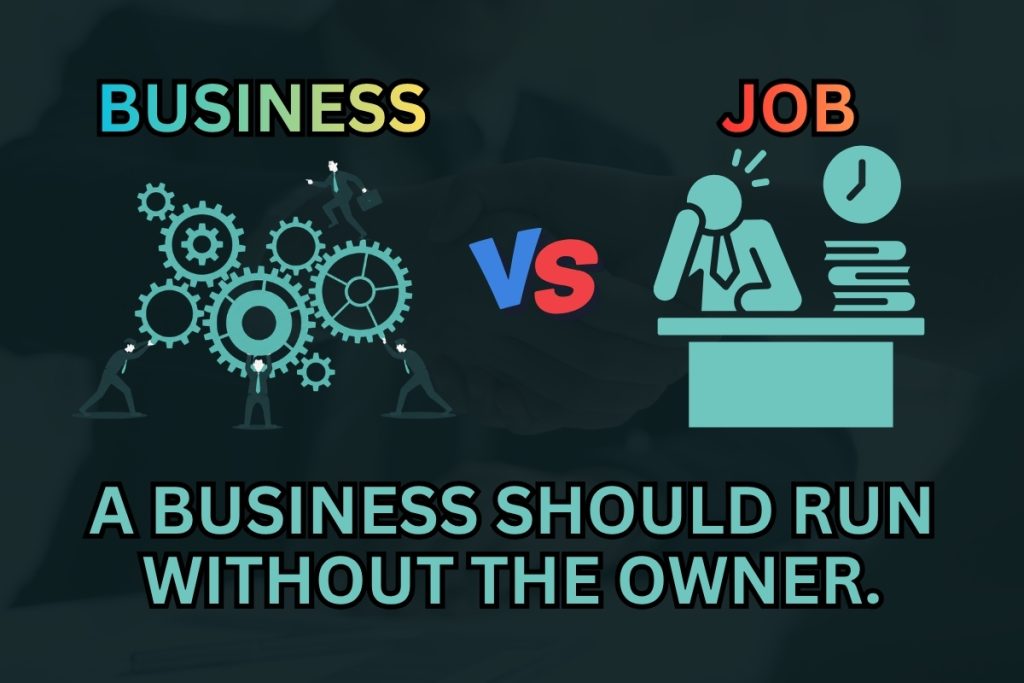
Operational Dependency on the Owner: Many small businesses are essentially high-paying jobs for their founders rather than self sustaining assets. If the business cannot run efficiently without the owner present every single day, scaling becomes nearly impossible.
-
Navigating Economic Shifts and Regulation: External factors like inflation, supply chain bottlenecks, labor shortages, and regulatory changes constantly test a company’s resilience. In the end, economic cycles heavily influence small business solvency across various sectors.
Because these obstacles require totally different skill sets to solve, only a small percentage of founders build companies that last.
Why Successful Founders Take on Multiple Companies
Given how challenging it is to create a winning enterprise, it might seem surprising that successful entrepreneurs choose to do it repeatedly. Yet serial entrepreneurs are common in the business world, and their decision to build or acquire multiple companies is driven by very logical factors.
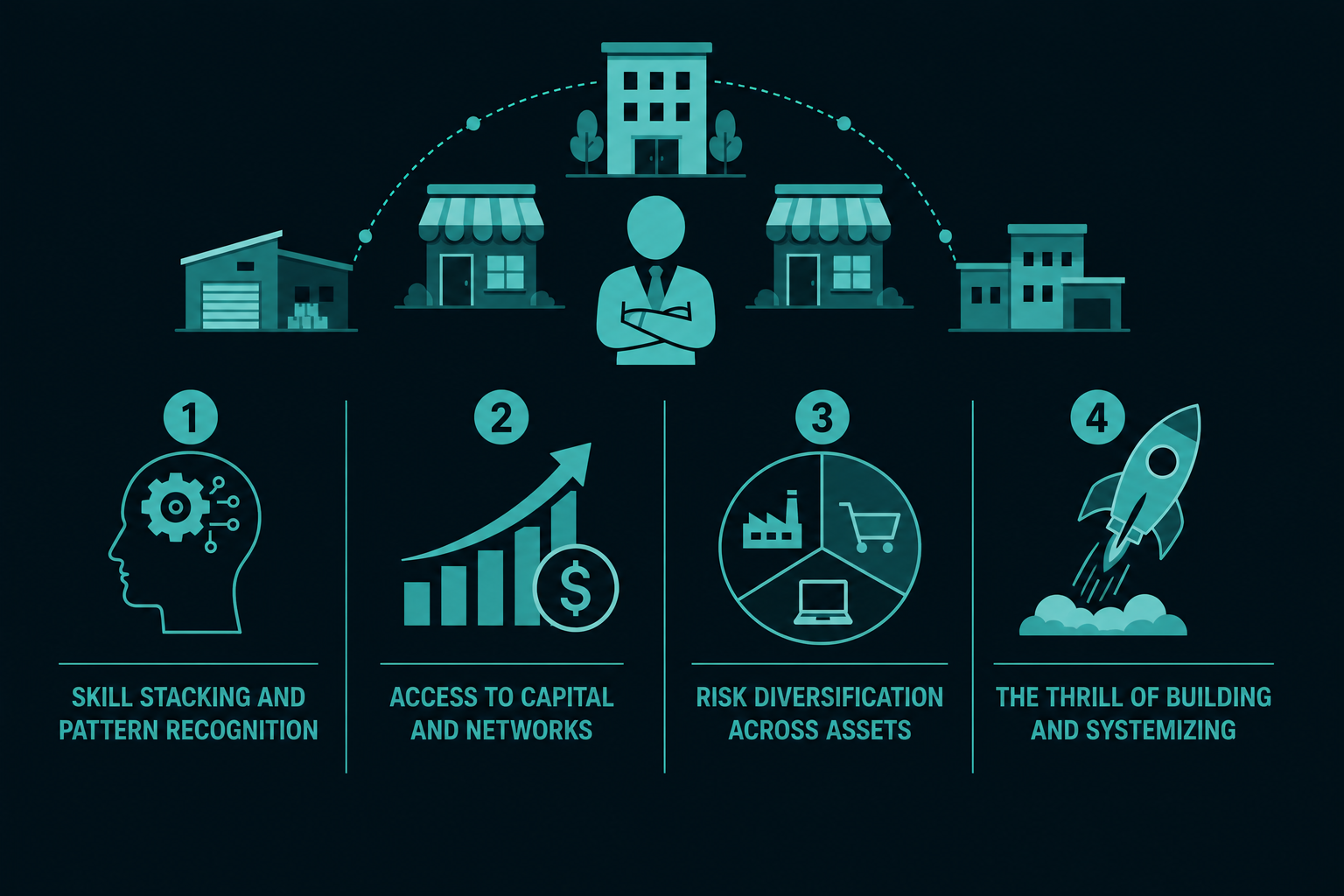
1. Skill Stacking and Pattern Recognition
When an entrepreneur successfully builds their first business, they acquire a rare toolkit of experience. They learn how to read financial statements, understand EBITDA and Seller’s Discretionary Earnings (SDE), hire top talent, navigate crisis management, and structure efficient operations.
When they enter their second or third venture, they do not start from scratch mentally. They recognize market patterns quickly and avoid the costly beginner mistakes that derail first time founders.
2. Access to Capital and Networks
A founder with a proven track record finds it significantly easier to raise capital, secure loans, and form strategic partnerships. Wealth created from an initial business sale or ongoing dividend distributions provides the financial cushion needed to fund new opportunities. Banks, investors, and vendors prefer working with proven operators, which gives serial founders a distinct head start.
3. Risk Diversification Across Assets
Holding all your personal net worth inside a single business creates high financial risk. Successful business owners often choose to buy or launch additional companies across different industries to spread their risk. If one market sector faces a temporary downturn, revenues from another business line can help balance the portfolio.
4. The Thrill of Building and Systemizing
Many entrepreneurs are builders at heart who thrive on problem solving and growth rather than day to day administration. Once a business matures and reaches stable operations, these founders often put a professional management team in place. Freeing up their schedule allows them to look for new acquisitions or launch fresh ventures where their strategic energy creates the highest return.
Buying an Established Business Versus Starting From Scratch
Because creating a successful enterprise from the ground up carries such high failure rates, many experienced founders choose a different route for their next venture. Instead of building from zero, they look to acquire established, profitable companies with existing customer bases, trained staff, and proven cash flow. If you’re considering this route, here’s our complete guide on how to buy a business step by step.
Acquiring an established business eliminates the risky guessing game of finding product market fit and setting up initial operations. For buyers, taking over an existing entity allows them to apply their operational expertise immediately to scale profits.
Of course, buying an existing company still requires careful due diligence because buying the wrong business can become an expensive mistake.
For current owners looking to transition out, selling to an experienced buyer or serial entrepreneur ensures that their hard earned legacy continues to thrive.
Final Thoughts
Thriving, long term businesses are rare because overcoming the early hurdles of capital, market demand, and operations requires an incredible amount of coordination. When an entrepreneur masters these skills, building or buying additional companies becomes a logical path to compound wealth and leverage experience. Whether you are an aspiring owner looking to buy a proven company or evaluating acquisition opportunities, understanding how to value a business is one of the most important skills you can develop.