
When starting a business, choosing a name is one of the first decisions you will make. You want something that customers remember, reflects what you offer, and helps your business stand out. But as you look into registration, you may come across terms like DBA, business name, trade name, and legal name. It can get confusing, especially if you are starting a business in Canada.
The good news is that these terms are easier to understand once you know how they work. A DBA, which stands for Doing Business As, generally refers to a name a business uses that differs from its legal name. A business name is a broader term that can refer to the name under which a business is registered or operates.
In Canada, the exact terminology and registration requirements depend on the province or territory. If you are starting or buying a business on Vancouver Island, understanding these differences can help you avoid unnecessary paperwork and make better decisions about your business structure.
What Is a DBA?
DBA stands for Doing Business As. It describes a situation where a person or company operates under a name different from its official legal name. In some places, this is also called a trade name, operating name, or assumed name.
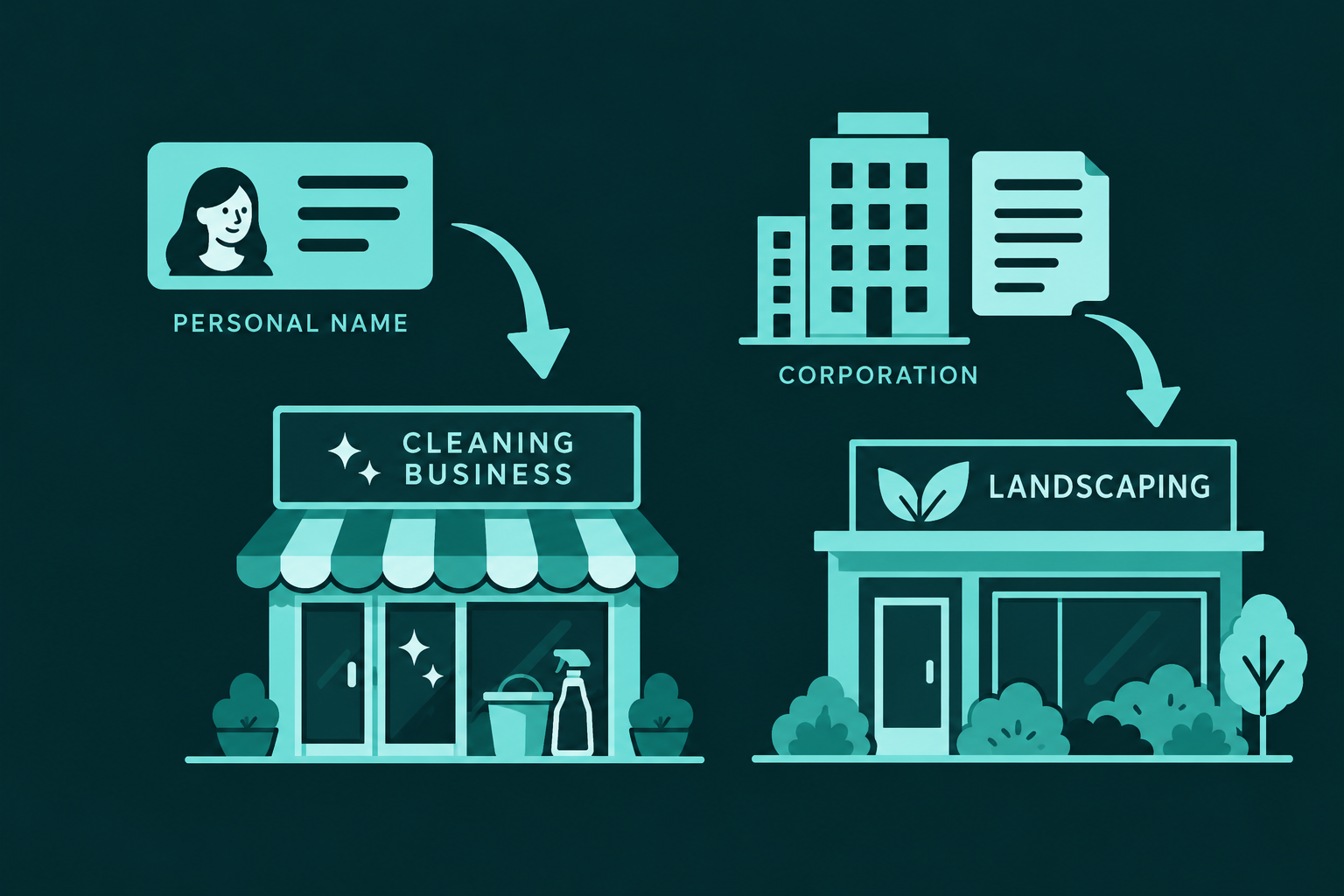
For example, imagine that Sarah Wilson starts a home cleaning business. She operates as a sole proprietor but wants customers to recognize her company as Island Shine Cleaning. Depending on the applicable provincial rules, she may need to register that business name rather than operate solely under her personal name.
A DBA can also be useful for an established corporation. Suppose a company called 1234567 BC Ltd. wants to operate a landscaping business under the name Coastal Green Landscaping. Registering an appropriate operating name can help the company build a recognizable brand without necessarily creating another corporation.
As explained in BizBuySell’s article about DBAs, an alternative business name allows an owner to build a separate public identity without setting up an entirely new business structure.
However, the term DBA is used differently across jurisdictions. In British Columbia, registering a business name for a sole proprietorship or partnership is not necessarily the same process as registering a DBA for an existing company. It is important to follow the rules that apply to your specific business.
What Is a Business Name?

A business name is the name people use to identify a business. It might appear on a storefront, website, invoice, advertisement, or business card. Depending on the business structure, it may be the legal name of the business or a name it uses to operate publicly.
For example, a person running a small consulting business under their own full legal name may not need to register a separate business name in British Columbia. If you are still planning your venture, this guide to starting a business in Canada explains the steps involved in getting started. If they decide to operate as Pacific Strategy Consulting instead, they generally need to reserve and register that name as a sole proprietorship.
A corporation has a different arrangement. Its legal name is the name under which it was incorporated. If it wants to operate under another name, it may need to register that additional name.
According to the Government of British Columbia’s guidance on sole proprietorships and partnerships, businesses operating under a name other than the owner’s personal name have specific registration requirements.
The important point is that a business name does not always describe a separate legal entity. It may simply identify the business to customers.
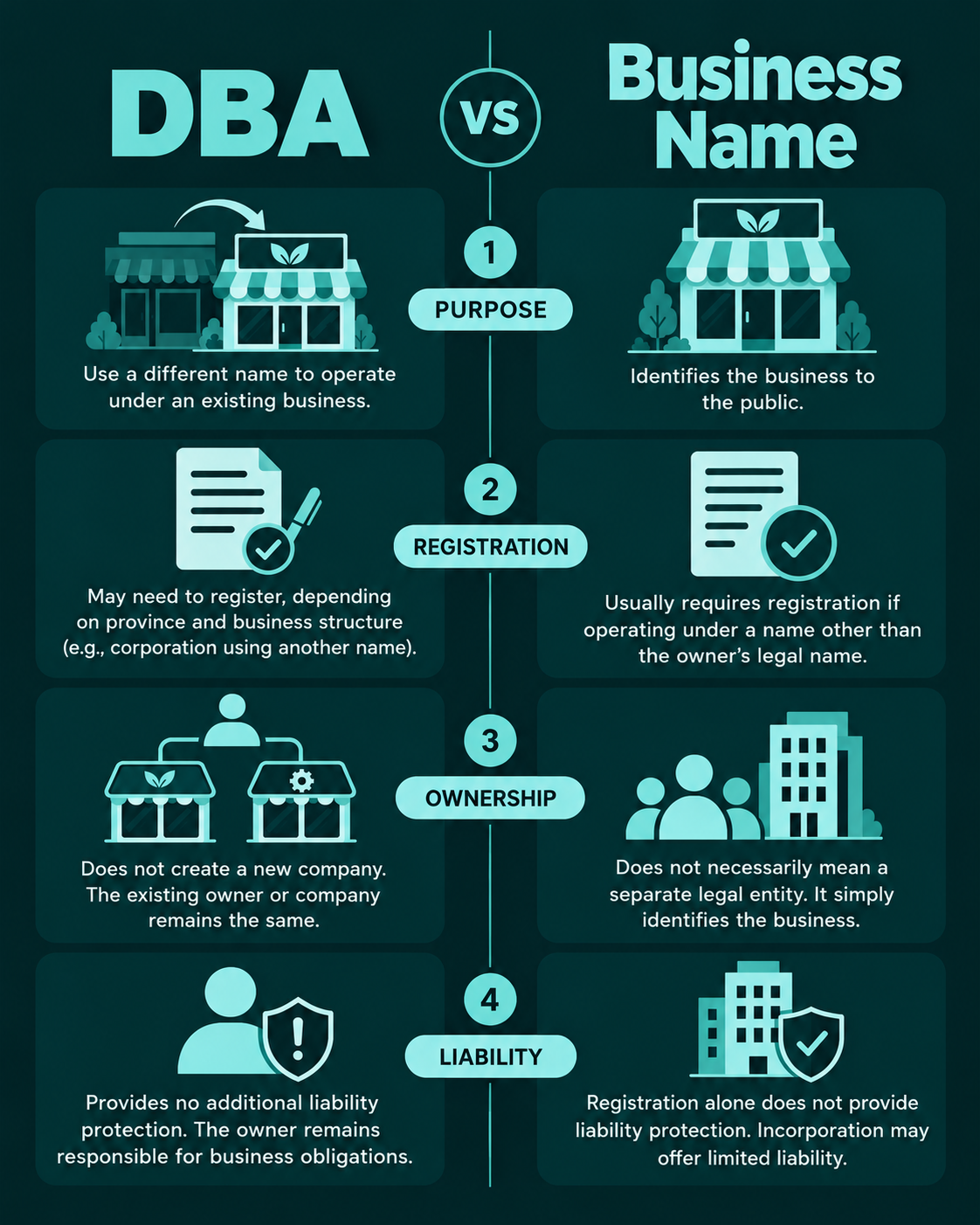
DBA vs Business Name: The Main Differences
Although the terms are related, they are not always interchangeable. A DBA generally describes using an alternative operating name, while business name can refer to the name used to register or identify the business.
Here are the main differences to understand.
1. Purpose
A DBA allows an existing owner or company to operate under a different public facing name. This can be useful when a business wants to introduce a new brand, target another customer group, or offer additional services.
A business name identifies the business itself. Depending on its structure, it may be the registered name of a sole proprietorship, partnership, or corporation.
2. Registration
Both arrangements may involve registration, but the requirements depend on the province and business structure. In British Columbia, a sole proprietor generally needs to reserve and register a business name when operating under a name other than their own.
An existing corporation that wants to operate under another name may need to register a DBA. The BC Registries website provides information about the applicable registration processes.
Do not assume that registering a name in one province automatically gives you the right to use it everywhere in Canada.
3. Legal Ownership
A DBA does not automatically create a new company or change who owns the business. The existing individual or legal entity remains responsible for the business’s obligations.
A registered business name also does not automatically mean a separate corporation exists. If you want a separate legal entity, you need to consider incorporation rather than relying on a name registration alone.
4. Liability
Registering a different business name does not provide liability protection by itself. If you operate as a sole proprietor, you generally remain personally responsible for the business’s debts and obligations.
An incorporated company is a separate legal entity, which can provide limited liability protection subject to applicable laws and exceptions. Using a DBA does not remove or replace that structure.
Why Would a Business Use a DBA?
There are several reasons a business owner might want to operate under a different name. The right choice depends on the company’s goals and how it plans to grow.
Common reasons include:
- Building a stronger brand: A memorable name can help customers understand what your business offers and make it easier to market your services.
- Expanding into new services: A company can use another operating name for a different service line without necessarily creating another corporation.
- Keeping branding separate: A business owner operating multiple brands may want each one to appeal to a different audience.
- Making the business easier to recognize: A customer friendly name may be more memorable than a numbered company name.
- Maintaining an established identity: A business buyer may want to continue using a familiar name after acquiring a company.
For example, a Vancouver Island company that provides property maintenance might expand into landscaping. It could consider a separate operating name for the new service if the registration requirements allow it and the branding strategy makes sense.
The key is to remember that a new name does not automatically mean a new business entity, separate liability protection, or separate tax treatment.
Does Registering a Business Name Protect It?
Not necessarily. Registering a business name and protecting a brand are two different things. You should also understand whether your business needs a licence, as explained in this guide to business licences in Nanaimo.
In British Columbia, name approval and registration help establish a public record of a business. However, the provincial government explains that sole proprietorships and partnerships do not receive the same name protection as incorporated companies.
Even incorporation does not automatically provide complete trademark protection for a brand across Canada. If your name is an important part of your business identity, you should check for existing businesses, similar names, and registered trademarks before investing heavily in branding.
The Canadian Intellectual Property Office provides information about trademarks and how they can help protect brand identifiers.
This matters when you are choosing a name for a new business or planning to expand an existing one. Finding out about potential conflicts early can save you from having to change your branding later.
What Should You Know When Buying or Selling a Business?
Business names can become particularly important during a sale. Understanding the difference between a share sale and an asset sale in Canada can also help buyers and sellers understand how a transaction is structured. A buyer may be interested not only in the company’s equipment, contracts, and earnings but also in its reputation and recognizable brand.
Suppose you are buying an established cleaning company on Vancouver Island. Customers know the business by its operating name, and it has built a strong reputation over many years. Keeping that name may help maintain customer confidence after the acquisition.
However, you should not assume that the name automatically transfers with the business. The purchase agreement should clearly identify the assets being acquired and address the business name, relevant intellectual property, domain names, and other branding assets where applicable.
Before completing a transaction, buyers should confirm:
- The legal name of the business and the entity that owns it.
- Whether the operating name is properly registered.
- Whether the seller owns or has the right to transfer the relevant branding assets.
- Whether trademarks, websites, and social media accounts are included in the agreement.
- Whether any registrations, licences, or contracts need to be updated after the sale.
Sellers should also make sure their records accurately identify the business and its ownership. Clear documentation helps reduce confusion during due diligence and makes the transaction easier to manage.
Which Option Is Right for Your Business?
The right approach depends on what you are trying to accomplish. If you are a sole proprietor in British Columbia and want to operate under a name other than your own, registering a business name may be the appropriate starting point.
If you already operate through a corporation and want to use a different name for a service or brand, registering a DBA may be an option. If you need a separate legal entity, however, you should explore incorporation rather than treating a name registration as a substitute.
Before making a decision, consider the following:
- How do you want customers to recognize your business?
- Are you operating as a sole proprietor, partnership, or corporation?
- Do you plan to offer additional services under different brands?
- Do you need trademark protection for your name?
- Are you planning to sell the business in the future?
The answers can help you choose a naming approach that supports your business today and leaves room for future growth. If you are unsure about your legal obligations, consult a qualified lawyer or accountant who understands your business structure and provincial requirements.
Final Thoughts
A DBA and a business name are closely related, but they do not always mean the same thing. A DBA generally refers to operating under a name different from the legal name, while a business name can refer to the name used to identify or register a business.
For business owners in British Columbia, the most important step is understanding how the rules apply to their particular structure. Registering a name can help establish your business identity, but it does not automatically create a corporation, provide liability protection, or guarantee trademark rights.
Whether you are starting a new company, expanding into another service, or preparing to buy or sell an established business, getting the naming and registration details right can help prevent problems later. If selling is part of your long term plan, explore these ways to increase your business value before putting your company on the market.