
Buying or selling a gym, personal training studio, or fitness center requires a clear view of market values. The health and wellness industry in Canada continues to show strong activity as owners focus on community health. However, calculating the actual cash value of a facility requires looking beyond shiny equipment and workout areas. When
Investors and buyers across Canada look at standard metrics to determine fair market value. Understanding these benchmarks allows owners to position their business for a successful exit while helping buyers make smart acquisition decisions.
Standard Valuation Multiples for Fitness Businesses
Business appraisers rely on multiples based on earnings and revenue. The most common profit metric for small to medium facilities is Seller Discretionary Earnings, often called SDE. SDE measures the total financial benefit a single owner operator receives from the business each year, including salary, perks, and net profit. If you are unfamiliar with how these earnings metrics are calculated,
Industry transaction data from the BizBuySell Insight Report shows distinct valuation ranges across different fitness business models:
-
Gyms and Full Service Fitness Centers: These larger facilities typically sell at multiples between 1.7 and 3.0 times annual SDE. The average earnings multiple sits near 2.5 times SDE, while revenue multiples average around 0.7 times annual gross revenue.
-
Boutique Studios and Personal Training: Smaller studios that focus on group classes or one on one personal training generally command lower multiples. Average earnings multiples hover between 2.0 and 2.2 times SDE, while revenue multiples sit around 0.6 times annual revenue.
Higher revenue facilities with predictable membership dues usually sit at the top of these valuation ranges. Smaller studios with inconsistent client retention or heavy reliance on a single lead trainer tend to sell near the lower end.
| Fitness Business Category | Average SDE Multiple | Average Rev. Multiple |
| Gyms & Full Service Centers | 1.7x – 3.0x (Avg 2.5x) | 0.7x |
| Personal Training & Studios | 2.0x – 2.2x | 0.6x |
Why the Fitness Industry Is a Hard Business
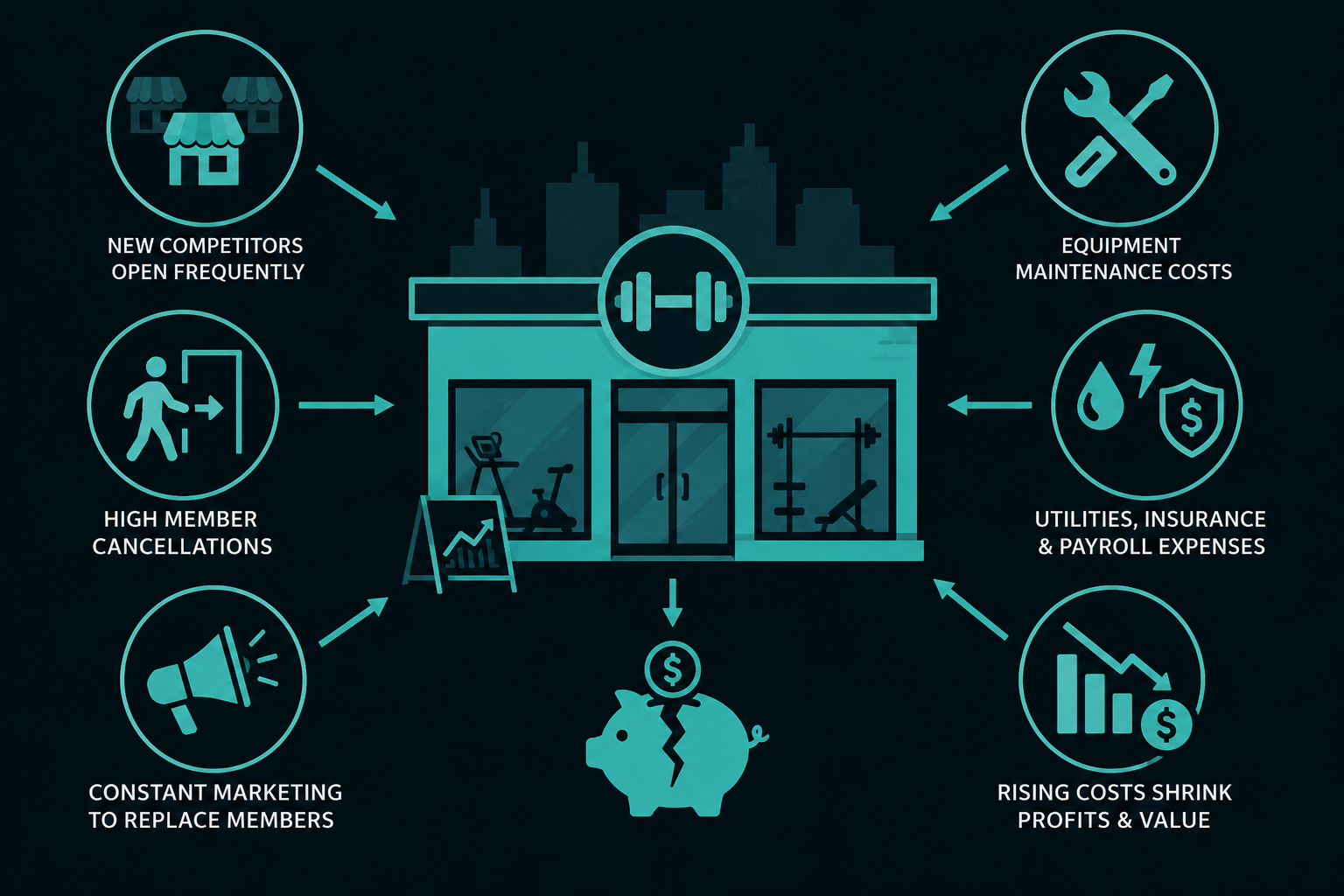
Operating a gym or fitness facility is notoriously demanding. While the idea of owning a wellness space sounds inspiring, maintaining healthy profit margins requires constant effort and active operational management.
Low barriers to entry mean new competitors open frequently, forcing existing owners to continuously invest in marketing and retention. Member churn is naturally high in the workout space because life changes, budget cuts, or simple loss of motivation cause clients to cancel. Replacing lost members requires ongoing ad spending, which compresses overall net profit.
Equipment maintenance adds another layer of ongoing expense. Treadmills, weight rigs, and cardio machines require regular servicing or replacement to keep members satisfied and safe. When combined with utility costs, insurance, and payroll for qualified trainers, operating costs quickly consume revenue if not strictly managed.
Data gathered by
Classes, Fitness, and Community Culture
The modern fitness market thrives on specialized consumer experiences rather than basic access to weights. Successful boutique operators build strong communities by offering targeted group classes, functional fitness programs, and personal coaching.
Imagine a group workout class taking place outdoors in a quiet green meadow on a summer morning. That type of memorable member experience builds deep brand loyalty and keeps clients coming back month after month. Studios that create a welcoming environment enjoy lower churn rates and higher customer lifetime value.
However, buyers must evaluate whether that community connection relies entirely on the current owner. If clients only show up because they love one specific coach, the business carries higher risk for a buyer. Transferable value exists when members are loyal to the brand, the schedule, and the overall program rather than a single individual.
Professional organizations such as
The Rent Obstacle: Leases Are Big and Non Transferable
Location and physical real estate represent one of the largest ongoing expenses for any gym or training center. Square footage requirements for weight rooms, group class rooms, and change facilities mean monthly rent payments are substantial.
A critical issue that catches many buyers and sellers off guard is lease transferability. Commercial leases are rarely transferable without explicit landlord approval and new contract negotiations. Landlords are under no legal obligation to assign an existing lease to a new owner under the exact same terms. Properly
When a fitness business changes hands, landlords often require a full credit check of the incoming buyer. They may demand updated personal guarantees, higher security deposits, or rental rate increases to match current market values. If a landlord refuses to assign the lease or demands unreasonable terms, the entire business sale can fall through.
Sellers should review their commercial lease agreements well before listing their business. Securing long term lease extension options or establishing good communication with the property owner removes a major roadblock during due diligence.
How Owners Can Increase Business Value Before Selling
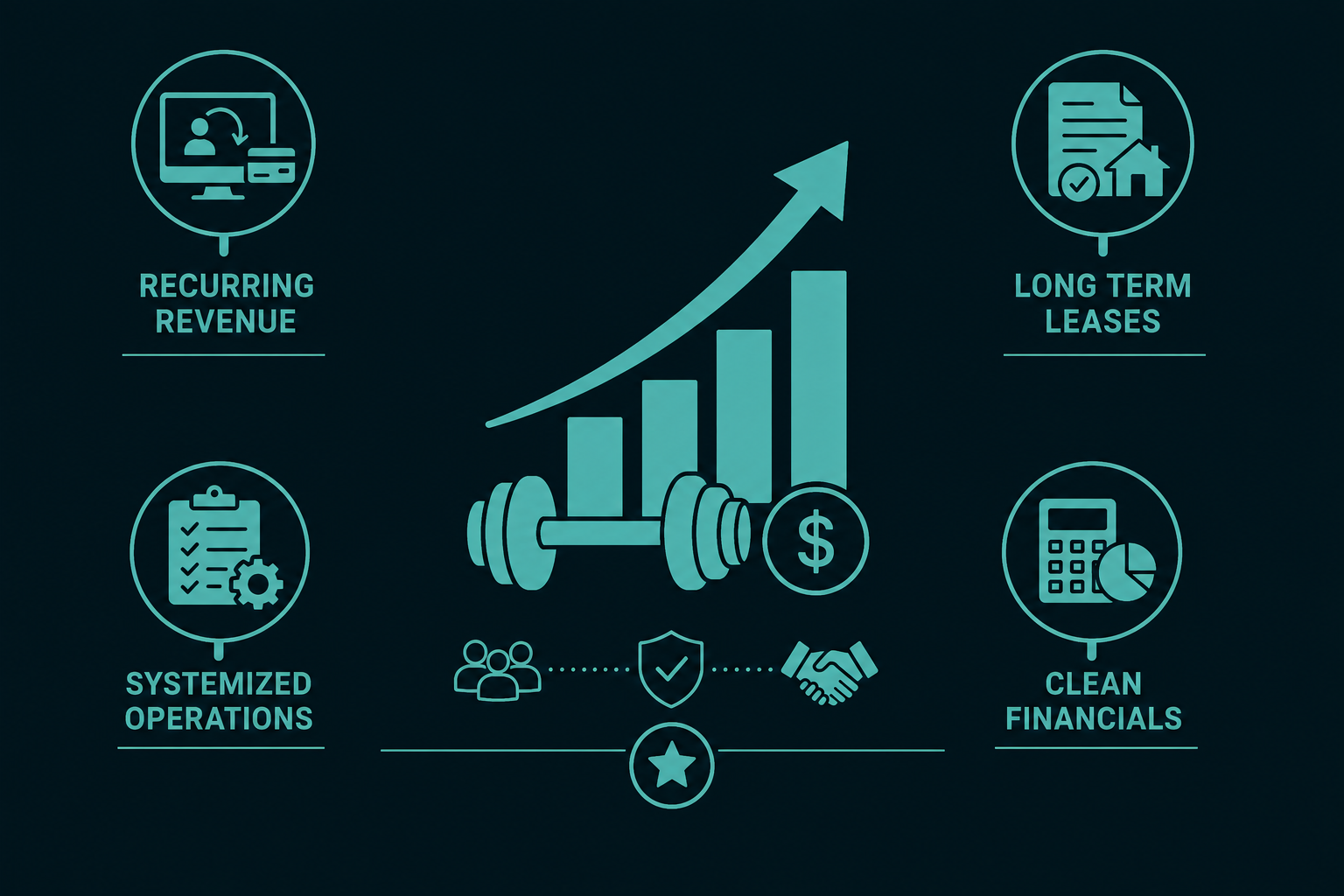
Gym owners who plan to sell within the next few years can take specific actions to push their valuation multiple toward the higher end of the industry average.
-
Build Recurring Automated Revenue: Shift as many clients as possible onto recurring monthly electronic fund transfers or credit card auto pay agreements. Predictable subscription revenue reduces financial volatility and makes cash flow much easier for buyers to forecast.
-
Secure Long Term Facility Leases: Ensure your location lease has multiple years remaining along with clear renewal options. A secure lease removes facility risk and reassures buyers that the business can remain in its established location.
-
Systemize Daily Operations: Document all standard operating procedures for opening, closing, sales follow up, and member onboarding. When a gym runs smoothly without requiring the owner to work on the floor every day, buyers view it as an investment rather than a full time job.
-
Maintain Clean Financial Statements: Keep personal expenses separate from business accounts and ensure tax filings match internal accounting software. Clear bookkeeping makes it simple for brokers and lenders to verify reported discretionary earnings.
Selling a fitness business requires balancing real estate realities, recurring revenue quality, and financial performance. By understanding industry multiples and addressing operational challenges early, owners can successfully transition their business at maximum value.