Buying a business can be one of the fastest ways to become an owner instead of starting from scratch.
You skip a lot of the early uncertainty because there is already revenue, customers, equipment, systems, and hopefully a proven business model. But buying a business also comes with risk.
A listing can look great on paper and still turn into a stressful situation after closing if the numbers are weak, the owner does everything themselves, or the lease cannot be transferred.
That is why asking the right questions matters.
Most bad acquisitions do not happen because buyers paid too much. They happen because buyers did not fully understand what they were buying.
If you are early in the process and want a broader overview first, check out our guide on how to buy a business step by step.
Here are 10 questions every buyer should ask before moving forward.
1. Why Is The Owner Selling?

This should always be one of the first questions because the reason behind the sale can tell you a lot about the health of the business and the kind of transition you may be walking into.
Sometimes the answer is completely normal and nothing to worry about. The owner may be retiring after many years, moving to another city, dealing with health issues, or simply ready for a different stage of life. Those are all common and understandable reasons to sell, and in many cases they do not reflect a problem with the business itself. In fact, a business that is being sold for personal reasons rather than operational problems can often be a strong opportunity for the right buyer.
But sometimes the real reason is not so simple, and that is where you need to pay closer attention. A business may be for sale because revenue has started to decline, competition has become stronger, staffing has become difficult, or the owner is feeling burned out and no longer wants to keep pushing the business forward. In some cases, the business may still look fine on the surface, but the owner knows there are challenges ahead and wants to exit before those issues become more obvious. That is why it is important to listen carefully and not just accept a quick answer at face value.
You should also compare the explanation with the financial records and with what you see during your meetings and site visits. If the owner says everything is going well but the numbers show falling sales or shrinking margins, that is a sign to dig deeper. If they say the business is thriving but the staff seems uncertain or the operation feels disorganized, that mismatch matters too. The goal is not to accuse anyone of hiding something. It is to understand whether the business still has real opportunity once the current owner steps away and whether the challenges are temporary, fixable, or more serious than they first appear.
A helpful follow up question is, “What would you do differently if you kept the business for another three years?” That question often opens the door to a more honest conversation. The answer can reveal whether the owner sees growth potential, whether they believe the business needs investment, or whether they are simply ready to move on no matter what. It can also give you insight into what improvements a new owner might be able to make after closing.
2. What Do The Financials Actually Look Like?
Revenue is interesting because it gives you a quick snapshot of how much money is coming through the business, but it does not tell the full story. A company can have strong sales and still struggle if expenses are too high, customers pay slowly, or margins are thin. That is why cash flow matters much more when you are evaluating a business to buy.
Cash flow shows whether the business can actually cover payroll, rent, inventory, debt payments, and day to day operating costs without constant stress. It also gives you a better sense of how much money may be left for the owner after everything is paid. When you are reviewing the numbers, do not stop at top line sales. Look closely at how money moves in and out of the business, because that is what will tell you whether the opportunity is truly healthy and sustainable.
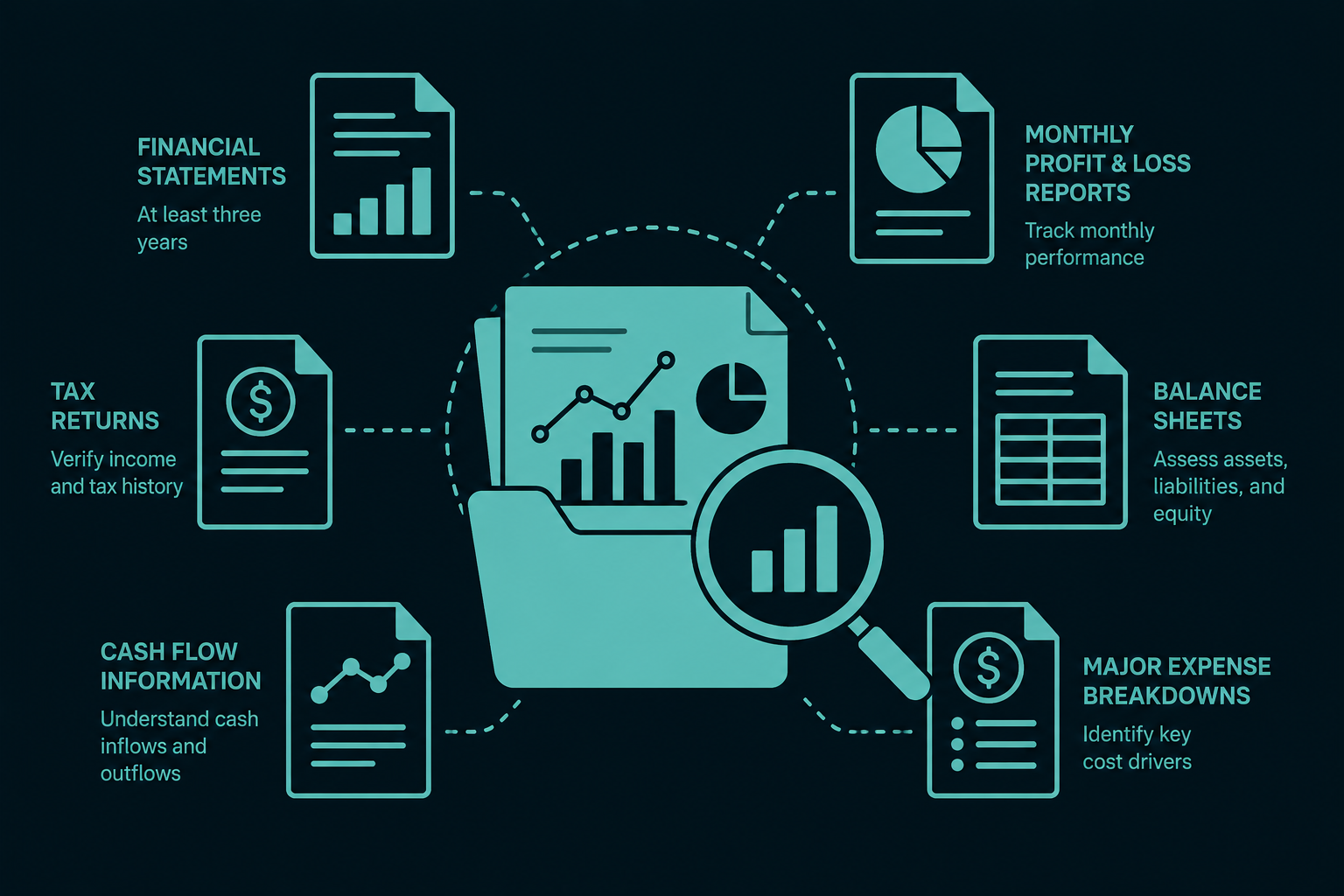
Ask for the following financial documents so you can verify the business’s real performance:
- At least three years of financial statements
- Tax returns
- Monthly profit and loss reports
- Balance sheets
- Cash flow information
- Major expense breakdowns
Look beyond total sales to understand the business’s true profitability and cash flow, which is what really shows whether it can support your investment.
Ask:
- Is revenue growing or declining?
- Are margins stable?
- Are there seasonal swings?
- Were there unusual expenses?
Many buyers also compare the reported financials to tax filings to make sure the numbers line up and there are no surprises hiding in the books. It is also smart to ask for supporting documents such as bank statements, aged receivables, and expense records so you can see whether the business is really performing the way it appears on paper.
Do not rely on summaries or verbal explanations alone, because those can leave out important details. This is where accountants earn their fee, since they can help you spot inconsistencies, understand the true cash flow, and decide whether the asking price makes sense.
Understanding valuation methods can also help you decide whether the numbers support the asking price, so take a look at our article on how to value a business.
3. Is The Owner The Business?
This question gets overlooked constantly, but it can make a huge difference in how the business performs after the sale. If all customer relationships, pricing decisions, sales, scheduling, and daily operations live inside the owner’s head, you may not be buying a business in the true sense.
You may be buying a job that still depends heavily on one person to keep everything moving. That can create a lot of risk for a new owner, especially if there are no written systems, no trained team, and no clear process for handling the day to day work.
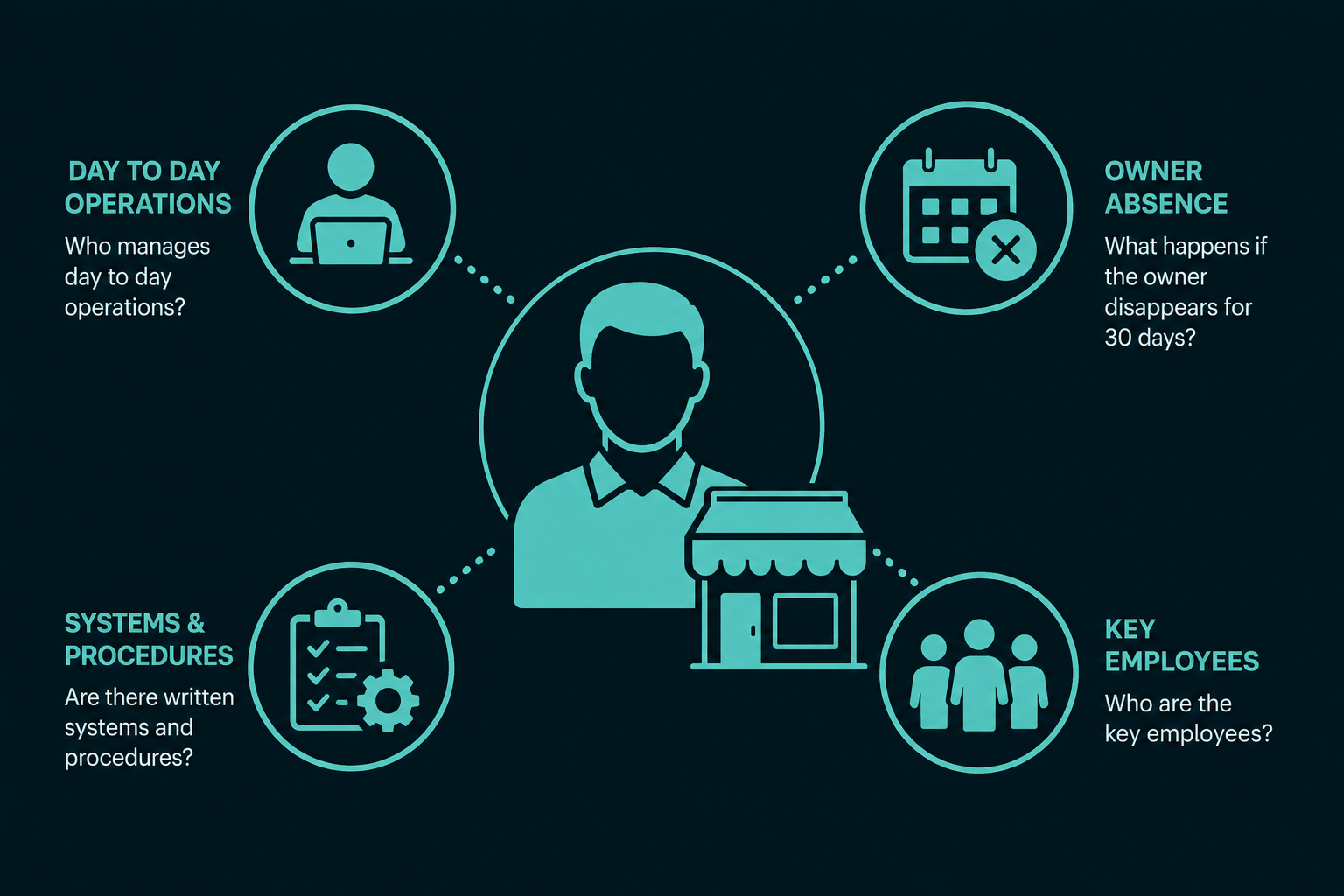
Ask questions and verify the answers before you move forward:
- Who manages day to day operations?
- What happens if the owner disappears for 30 days?
- Are there written systems and procedures?
- Who are the key employees?
Businesses that run without constant owner involvement are usually easier to transition and scale.
This connects closely with something we have talked about before: buying a business you cannot personally operate does not mean you automatically become hands off.
Someone still has to lead the business every day, even if the owner is no longer involved in every decision.
4. Where Does Revenue Actually Come From?
Customer concentration can create major risk if too much of the business depends on only a few clients. If one customer makes up a large share of revenue, losing that account could have a serious impact on cash flow and overall stability.
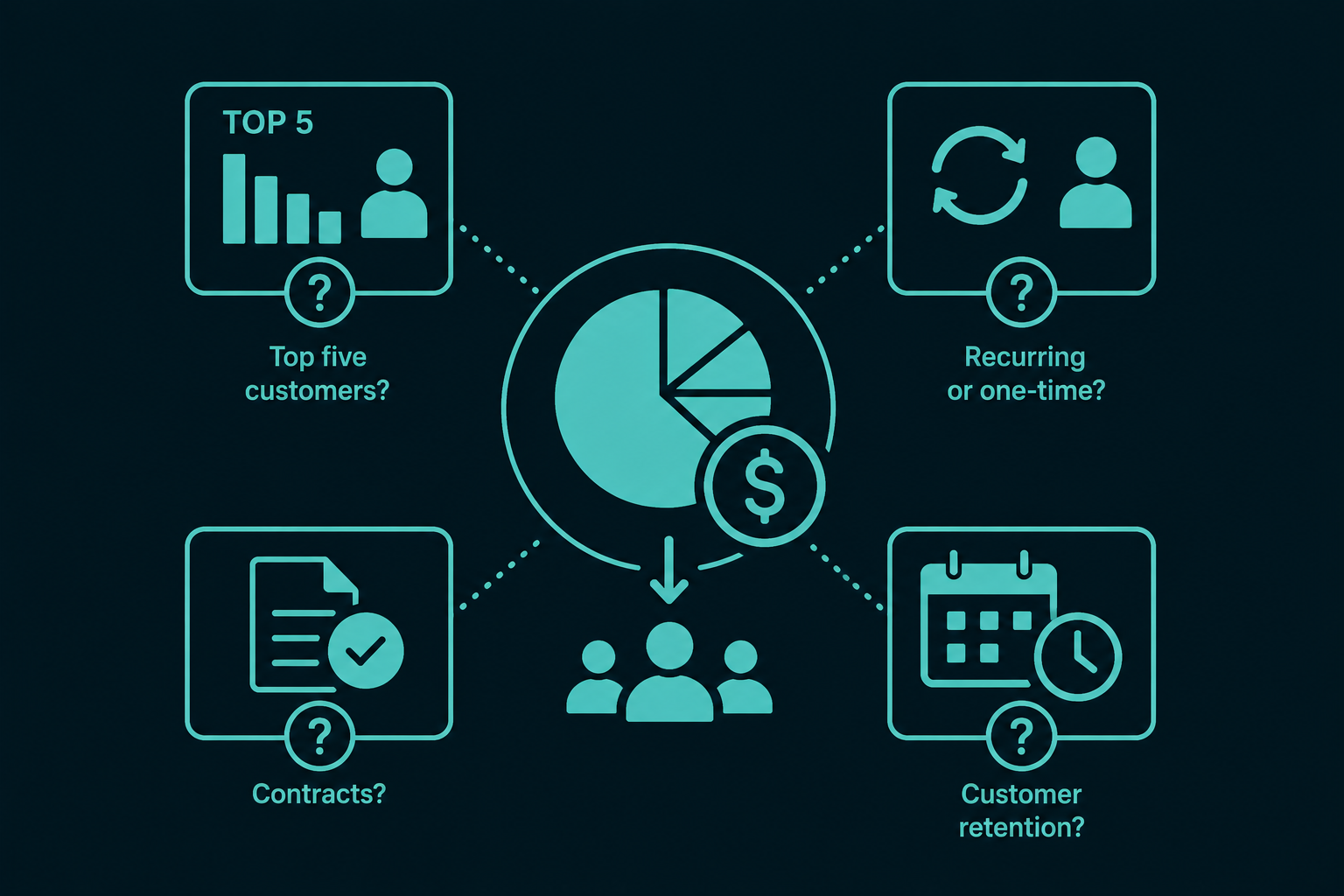
You should ask the following questions:
- What percentage comes from the top five customers?
- Are customers recurring or one time?
- Are there contracts?
- How long do customers typically stay?
If one customer makes up half the revenue, losing that customer could dramatically change the value of the business and create a serious cash flow problem almost immediately. That is why it is important to understand where the sales are really coming from and whether the business depends too heavily on just a few accounts.
A healthy business usually has a more balanced mix of customers and income sources, which makes it easier to handle slow periods, pricing changes, or the loss of a major client. When revenue is spread across multiple customers, the business is generally more stable and less vulnerable to sudden shocks, which gives a buyer more confidence about the future.
5. Can You Take Over The Lease?
This deserves more attention than most buyers give it.
You might love the business and agree on price only to discover later that the landlord will not approve the transfer, or that the lease terms change in a way that makes the deal less attractive than it first appeared. A strong business can quickly become a weak purchase if the location is not secure or the lease cannot be assigned properly.
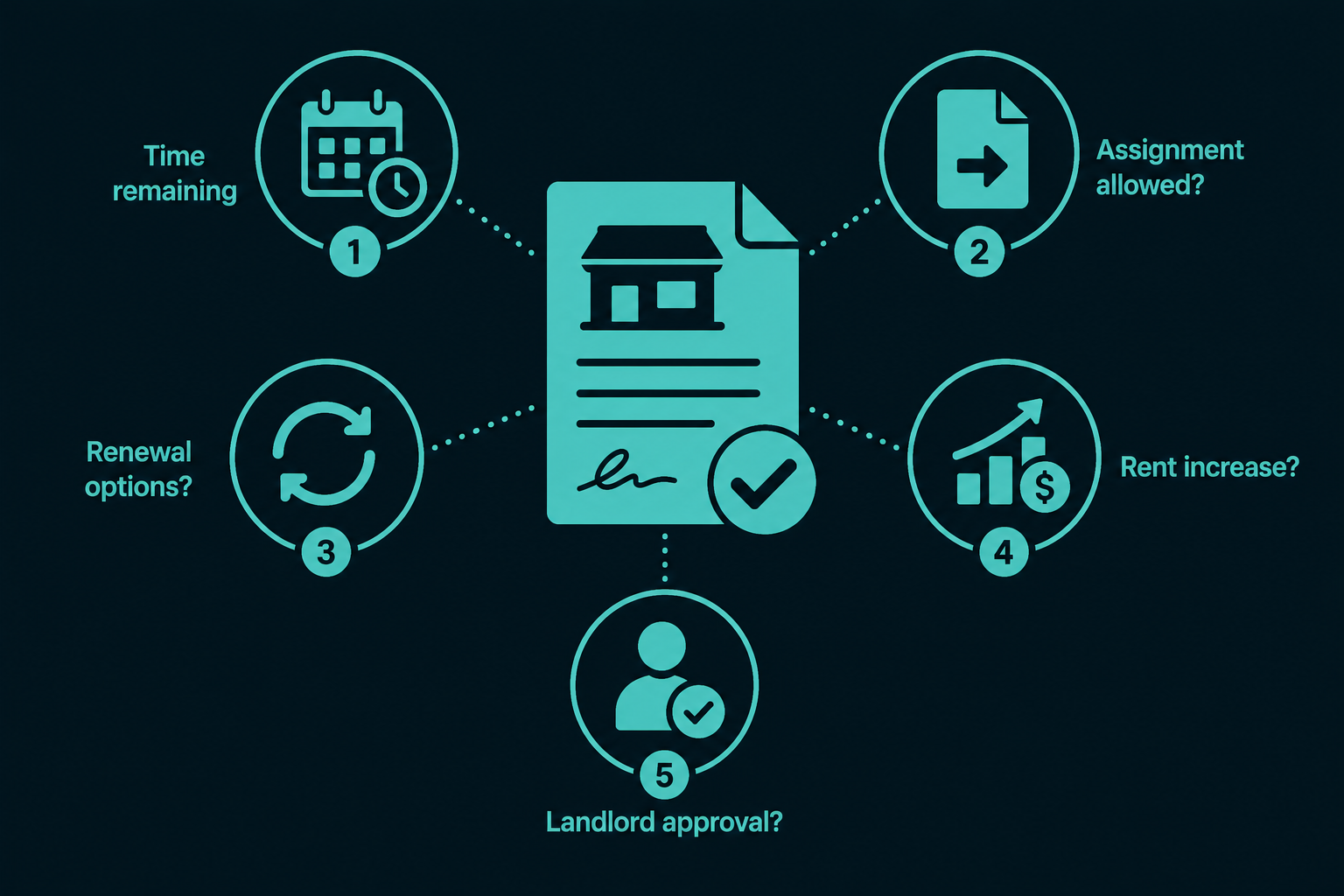
Ask the seller these questions:
- How much time remains on the lease?
- Is assignment allowed?
- Are there renewal options?
- Will rent increase after transfer?
- Does the landlord need approval?
If location matters to the business, the lease matters too.
This is especially important for restaurants, retail shops, service businesses, and any customer facing operation that depends on a specific address or neighbourhood. A strong business can lose a lot of its value if the lease is short, expensive, hard to renew, or impossible to transfer to a new owner.
A great business without a secure location can quickly become a bad deal, so always review the lease carefully and make sure you understand the landlord’s approval process, renewal terms, and any rent increases that could affect your bottom line.
If you want a deeper breakdown of how lease transfers work during an acquisition, read our article on commercial lease assignment.
6. What Assets Are Actually Included?
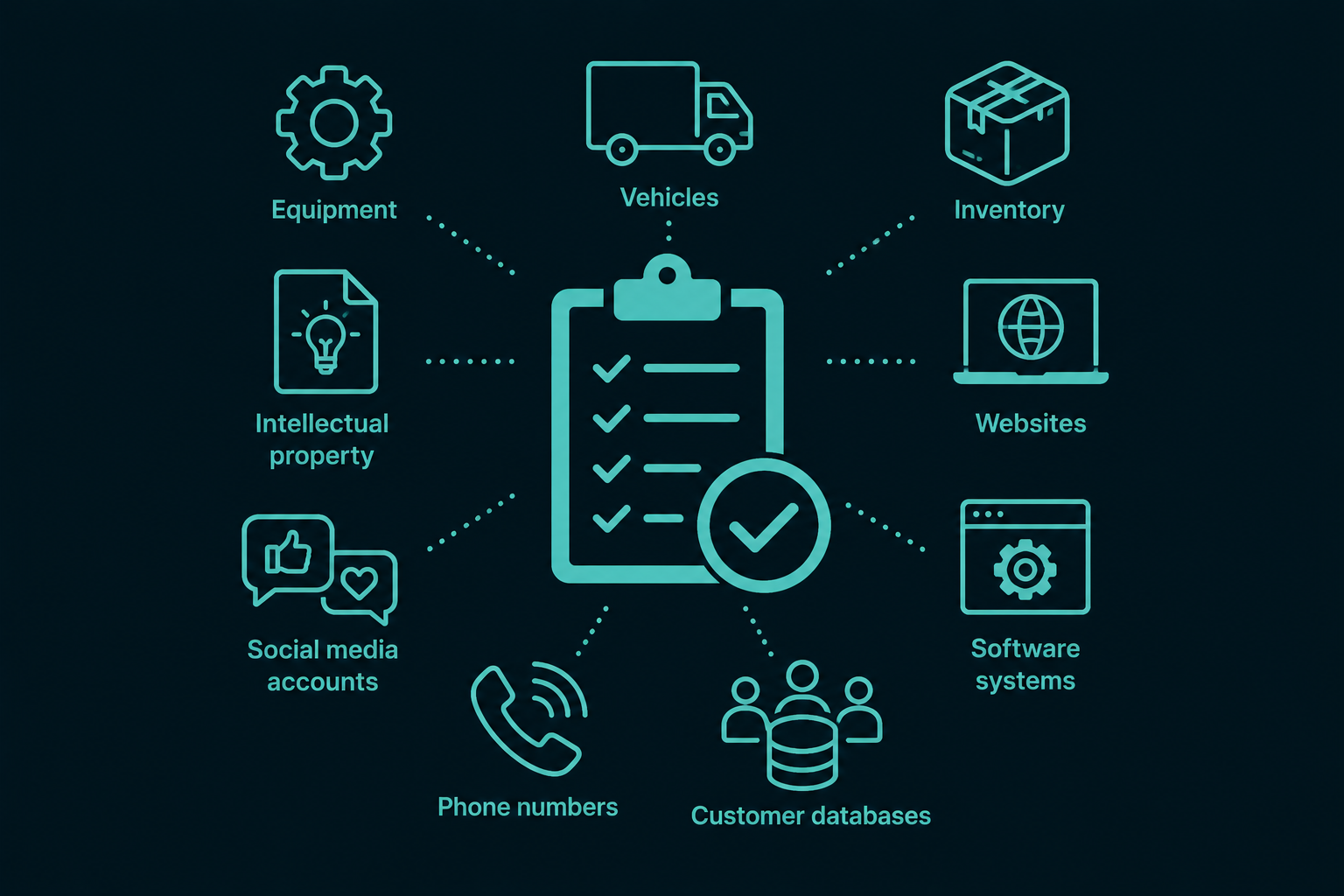
Never assume anything is included just because it was mentioned in the listing or discussed verbally.
Ask for a detailed asset list so you know exactly what is being transferred, what is excluded, and whether any items are owned outright, leased, or financed.
This may include:
- Equipment
- Vehicles
- Inventory
- Intellectual property
- Websites
- Social media accounts
- Software systems
- Phone numbers
- Customer databases
Also ask whether the assets are owned outright or financed, because that can affect both the value of the deal and the obligations you inherit after closing. If equipment, vehicles, or other major assets still have loans attached to them, you need to know exactly what remains to be paid and whether those debts stay with the business or become your responsibility in some way.
This is the kind of detail that can easily be missed if you only look at the asking price, but it can make a big difference to your cash flow and overall risk. You do not want any surprises after closing, especially when it comes to assets you assumed were included free and clear.
This also connects to understanding whether a deal is structured as an asset purchase or share purchase, which we explain in share sale versus asset sale for Canadian businesses.
7. Are There Any Legal Or Compliance Issues?
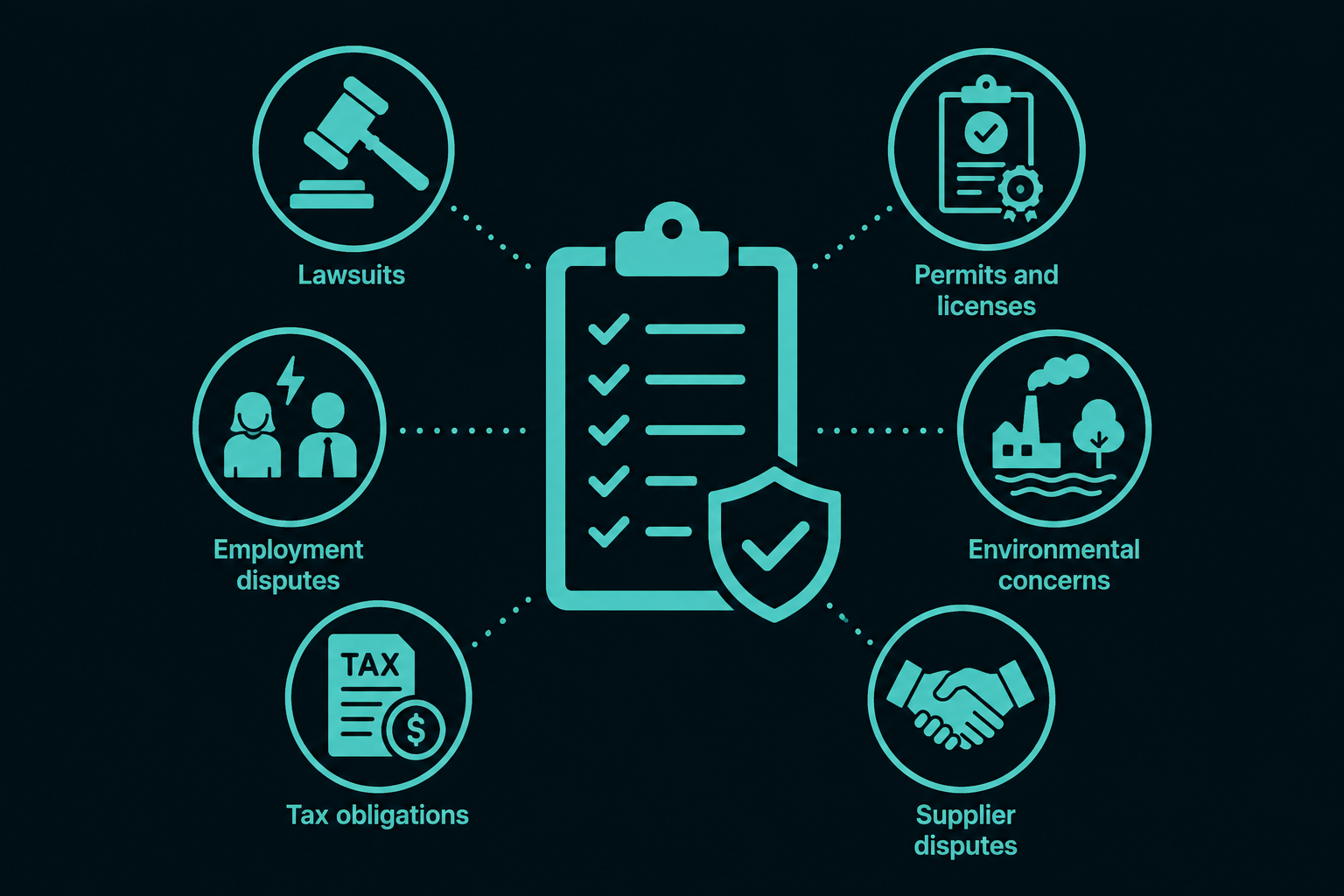
No buyer wants to inherit problems, especially the kind that can turn into expensive surprises after the deal is done. That is why it is so important to ask about any legal, tax, employment, licensing, or compliance issues before moving forward.
A business may look healthy on the surface, but unresolved disputes, missing permits, unpaid taxes, or regulatory concerns can create serious headaches for a new owner. Even smaller issues can take time and money to fix, so it is worth digging deeper and asking for full disclosure early in the process.
Ask about the following details when reviewing the business:
- Lawsuits
- Employment disputes
- Tax obligations
- Permits and licenses
- Environmental concerns
- Supplier disputes
Even small issues can create unexpected costs later, especially if they involve permits, contracts, taxes, or employee matters that were not fully disclosed upfront.
This is where legal review becomes important. A lawyer can help you spot red flags, review agreements, and make sure you understand what obligations you may be taking on after closing. The cheapest due diligence is almost always before closing, because fixing a problem after the deal is done usually costs far more in time, money, and stress.
8. How Dependent Is The Team?
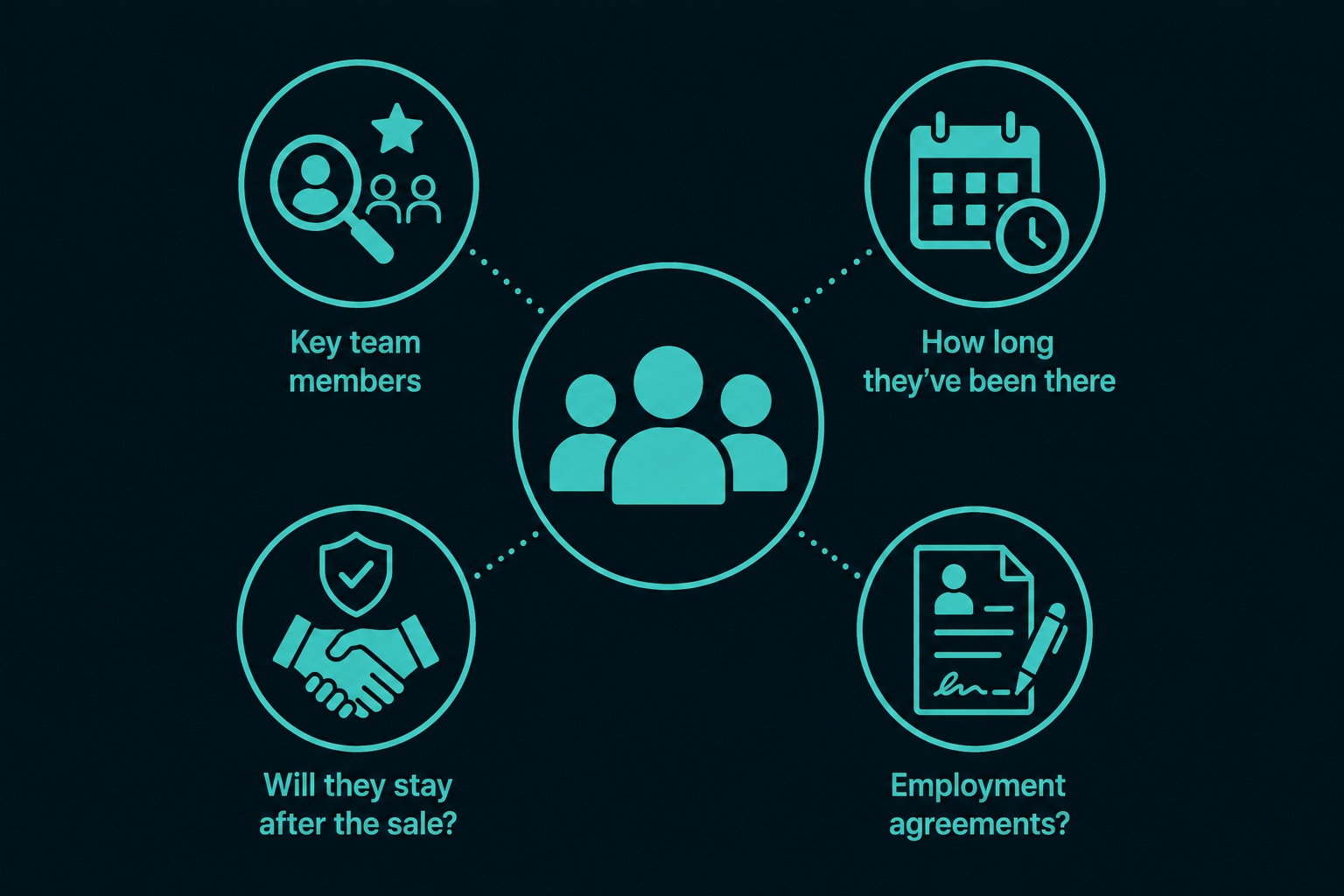
Employees often carry more value than equipment because they understand the day to day operations, customer relationships, and the little details that keep the business running smoothly. A strong team can make the transition much easier, while losing key people right after closing can create major problems and slow down the business quickly.
You should ask the following questions:
- Who are the key team members?
- How long have they been there?
- Will they stay after the sale?
- Are there employment agreements?
If one employee handles everything and plans to leave immediately, you need to know. That kind of dependency can create a serious problem after closing, especially if that person holds key customer relationships, manages daily operations, or knows how to use important systems that no one else fully understands.
Transitions are usually much smoother when knowledge is spread across the team. A business with trained staff, clear processes, and shared responsibilities is easier to take over and much less risky for a new owner.
9. What Growth Opportunities Are Still Left?

You are buying the future, not just the past. A business may have a strong track record, but what really matters is whether there is still room to grow after you take over.
Ask the seller direct questions about the business, including why they are selling and what challenges they have faced:
- Why has growth slowed?
- Are there underserved markets?
- Could pricing improve?
- Are there expansion opportunities?
- What marketing channels work best?
Sometimes a business performs well simply because the owner stopped pushing growth, even though there is still room to improve sales, marketing, or operations.
Other times growth opportunities are genuinely limited because of the market, location, competition, or the type of service being offered.
Understanding that difference matters because it helps you figure out whether you are buying a stable business with untapped potential or one that has already reached its natural ceiling.
10. What Is The Deal Structure? Is This An Asset Sale Or A Share Sale?
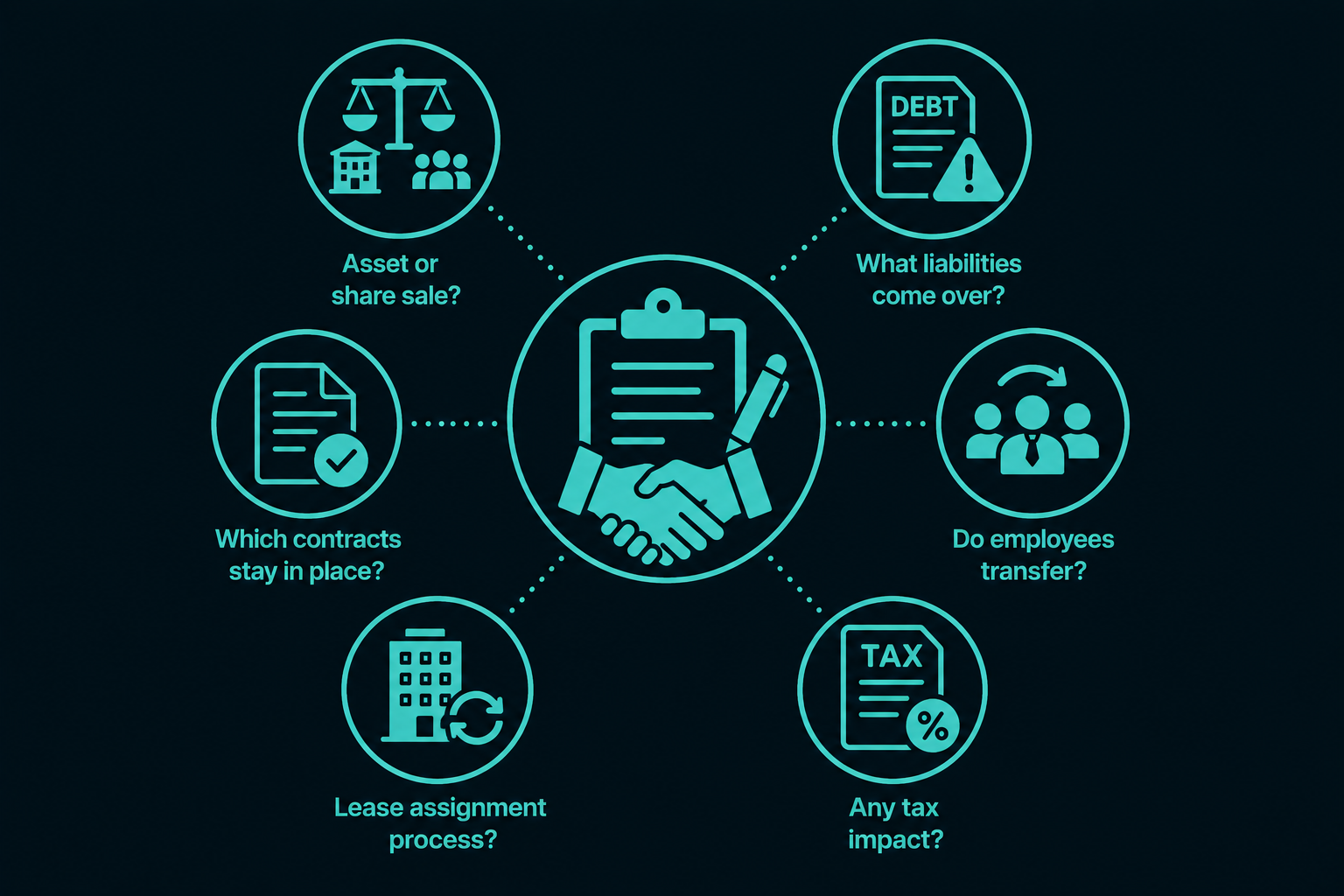
A lot of buyers focus on price first, but structure can sometimes matter just as much as the number itself.
One of the most important questions to ask early is whether you are buying assets or buying shares. The difference affects taxes, liabilities, financing options, employee obligations, legal complexity, and what actually transfers to you after closing.
With an asset purchase, you are usually buying selected assets from the business rather than the legal entity itself. That may include equipment, inventory, customer lists, intellectual property, websites, and sometimes the lease if approved. Buyers often prefer asset deals because they can leave behind certain liabilities and start with a cleaner structure.
With a share purchase, you are acquiring the corporation itself along with its contracts, history, relationships, and potentially its liabilities. Share purchases can sometimes make transitions smoother but often require more due diligence because you are stepping into the existing legal entity.
Ask questions like:
- Is this an asset sale or share sale?
- What liabilities transfer to me?
- What contracts remain in place?
- Will employees transfer automatically?
- Does the lease assignment process change?
- Are there tax implications to the structure?
Deal structure also affects financing. Certain lending programs and banks may prefer one structure over another.
This is why understanding the structure early can save time and avoid surprises later in the process.
Follow Up (Or Afterthoughts): What Could Go Wrong After Closing?

Ask this directly.
Good sellers usually answer honestly, and their response can tell you a lot about how self aware they are about the business. You are looking for real insight here, not a polished sales pitch. If they can clearly explain the biggest risks, the weak spots, and the things that could cause trouble after closing, that is usually a good sign.
Questions to ask:
- What keeps you awake at night?
- What challenges does the business face?
- What would concern a new owner?
- What would you fix first?
The answer often reveals risks you would not think to ask about, including problems with staffing, customer retention, pricing pressure, or operational issues that may not show up in the financial statements right away.
Asking difficult questions early can help you avoid expensive mistakes later, which is something we discuss further in buying the wrong business worst decision.
It can also show whether the seller is transparent and willing to have an honest conversation about the business, which is a very good sign when you are deciding whether to move forward.
Key Takeaways Before You Buy
Buying a business is exciting, and for a lot of people it feels like a major step toward independence and long term financial growth. But excitement should never replace due diligence. The goal is not to find a perfect business because those do not exist. The real goal is to understand exactly what you are buying, what risks come with it, and whether the opportunity actually fits your skills, finances, and long term goals.
A business can look strong on the surface and still have hidden issues in the financials, the lease, the staff, or the owner’s role in daily operations. That is why it is so important to ask questions, verify the answers, and bring in professionals where needed.
Buyers who prepare financing and documentation early also tend to move faster and negotiate more confidently, which is why we also recommend reading how to be bankable when buying a business.
Accountants, lawyers, and experienced brokers can help you spot problems early and give you a clearer picture of the deal before you commit.
It also helps to understand what buyers and sellers usually agree to before due diligence begins, so you may want to read our business LOI checklist Canada article.
Taking the time to slow down and review everything properly can save you from expensive mistakes later. And sometimes the best deal you make is the one you walk away from, especially if the numbers do not make sense or the risks are too high. If you are considering buying a business on Vancouver Island and want help evaluating opportunities, speaking with experienced business brokers early can save a lot of time, stress, and expensive surprises later.