Selling a business through a share sale is an exciting milestone for any entrepreneur. Unlike comparing a
Navigating this process requires a clear understanding of the transition from early discussions to the final closing documents. Having the right legal and accounting professionals on your team ensures that your financial interests stay protected, tax obligations remain optimized, and the transaction closes smoothly without unwanted surprises down the road.
Moving From the Signed LOI to Due Diligence
Signing a Letter of Intent, commonly known as an LOI, marks the formal starting line of the transaction. The LOI lays out the main commercial terms of the deal, such as purchase price, target closing date, and basic payment structures. However, an LOI is generally non binding regarding the final purchase. Once that document is signed, the real work shifts immediately into the legal requirements and due diligence phase.
During due diligence, the buyer and their professional team dive deep into your company records to verify every claim made during preliminary discussions. They will inspect corporate minute books, historical financial statements, customer contracts, employee agreements, property leases, and tax filings. Your legal team plays a key role here by organizing these corporate records into a secure virtual data room and answering formal legal inquiries. You can explore general planning recommendations through the
Accounting Requirements and Managing Tax Implications

Accounting during a share sale involves much more than simply handing over profit and loss statements. Accountants must perform thorough financial reviews, verify working capital levels, and ensure that all tax accounts with the Canada Revenue Agency are fully compliant and up to date. One of the biggest advantages of selling corporate shares in Canada is the potential to access the Lifetime Capital Gains Exemption, often abbreviated as LCGE.
To benefit from this significant tax shelter, your corporation must meet specific statutory criteria set by Canadian tax law. Your accountant will conduct tests to confirm that your company qualifies as a Qualified Small Business Corporation. Key accounting tasks during this phase include:
-
Purifying the Balance Sheet: Tax laws require that a vast majority of the company assets be actively used in running the Canadian business at the time of sale. If your business holds excess cash, passive investments, or real estate not directly used in operations, your accountant will help remove or reorganize those items prior to closing.
-
Working Capital Adjustments: Buyers and sellers must agree on a target working capital amount necessary to operate the business on day one after closing. Your accountant calculates this baseline and performs post closing adjustments to settle any difference between the agreed target and actual working capital on the closing date.
-
Filing Specific Tax Forms: Detailed reporting is required to claim capital gains deductions. Sellers can review official guidance regarding eligibility and limits on the
Canada Revenue Agency Capital Gains Deduction Page
What is Included in the Share Transfer Agreement
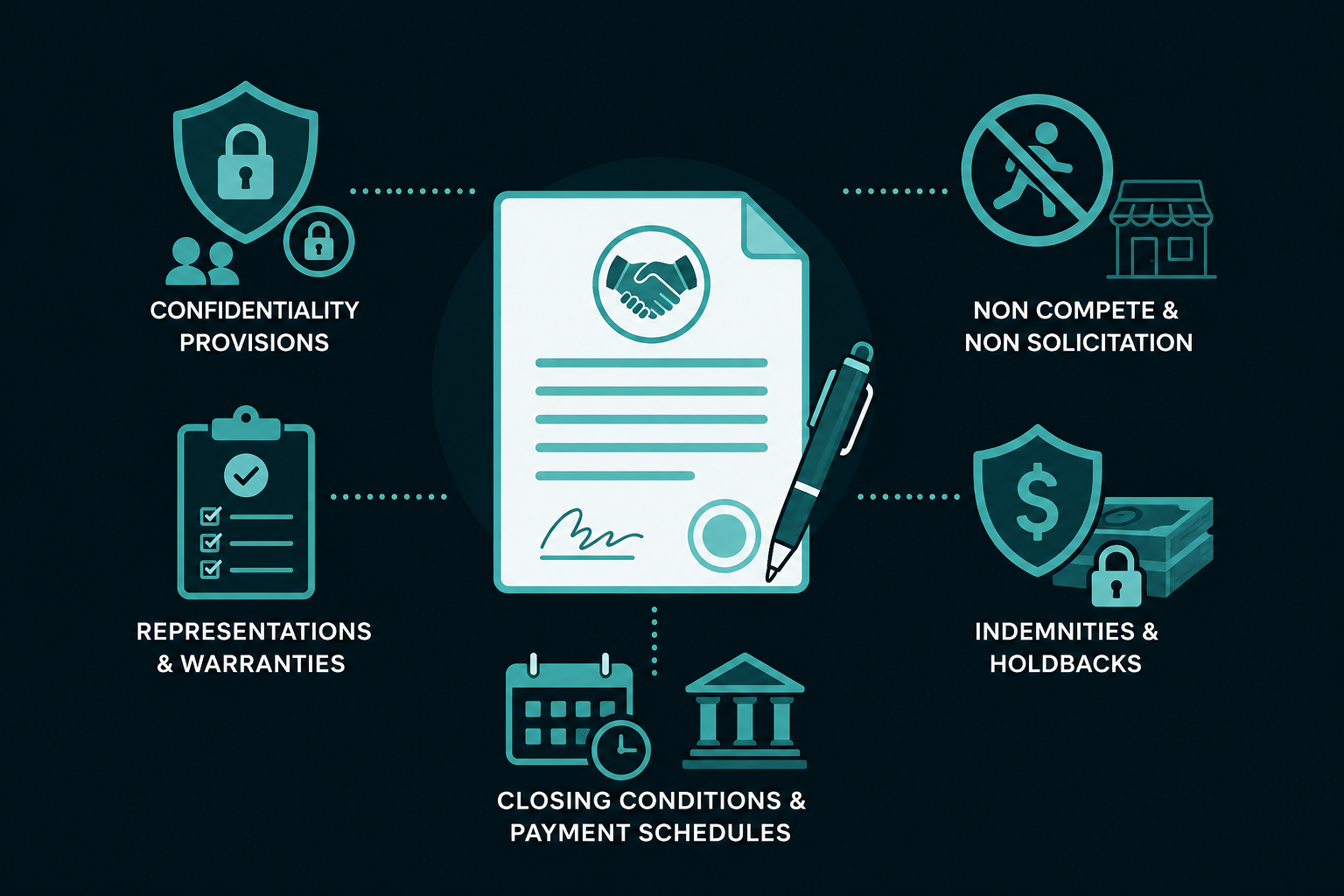
The primary legal document in any transaction of this nature is the Share Purchase Agreement, often called the SPA. This legally binding contract details every parameter of the sale, outlining exact obligations for both parties before, during, and after the transaction completes. A comprehensive share purchase agreement contains several critical components and restrictive covenants designed to protect both buyer and seller:
-
Non Disclosure and Confidentiality Terms: While a standalone non disclosure agreement, or NDA, is usually signed early in discussions, the final agreement reinforces that proprietary business data, trade secrets, and customer info remain strictly confidential.
-
Non Compete and Non Solicitation Clauses: Buyers are purchasing the goodwill of the business and want assurance that the seller will not start a directly competing business nearby. These clauses restrict the seller from opening a similar business or poaching existing clients, suppliers, or key employees for a specified number of years within a defined geographic area.
-
Representations and Warranties: These are formal statements of fact made by the seller regarding the health of the company. They cover tax compliance, ownership of intellectual property, absence of undisclosed liabilities, and accuracy of financial records.
-
Indemnities and Holdbacks: If a representation turns out to be untrue or an unexpected legal issue arises post sale, indemnity clauses outline how the seller will compensate the buyer. Often, a portion of the purchase price is placed in an escrow check or holdback account for six to twelve months to cover potential indemnity claims.
-
Closing Conditions and Payment Schedules: The contract sets out clear terms on how and when money moves, including wire instructions, certified checks, vendor promissory notes, or earn out structures tied to future performance.
How Much Do Legal Services Cost for a Share Sale?
Business owners frequently ask how much they should budget for legal costs when selling their company shares. The cost varies depending on deal complexity, the organization of company records, and how much negotiation occurs between the parties.
For a very simple small business transaction with straightforward contracts and clean records, basic legal fees might range from CAD $3,000 to $5,000. However, in reality, for most standard small to medium sized business sales across Canada, legal fees easily reach CAD $10,000 or more. Complex negotiations, extensive due diligence reviews, multi party shareholding structures, or custom deal terms can push legal fees even higher.
It is vital to note that these legal estimates cover attorney fees alone and do not include accounting costs. Quality accounting work, including tax planning, balance sheet purification, quality of earnings reports, and closing tax filings, will incur separate professional fees. Viewing these legal and accounting expenses as essential investments rather than mere costs protects the full value of your payout and prevents future litigation.
Final Thoughts on Managing Your Share Sale
Completing a share sale is a momentous event that rewards years of hard work. By surrounding yourself with experienced business brokers, specialized legal counsel, and knowledgeable accountants early in the process, you can navigate due diligence smoothly, minimize your tax liabilities, and enter closing day with total confidence.